Back in Nepal, Deuba seeks to reclaim Congress leadership
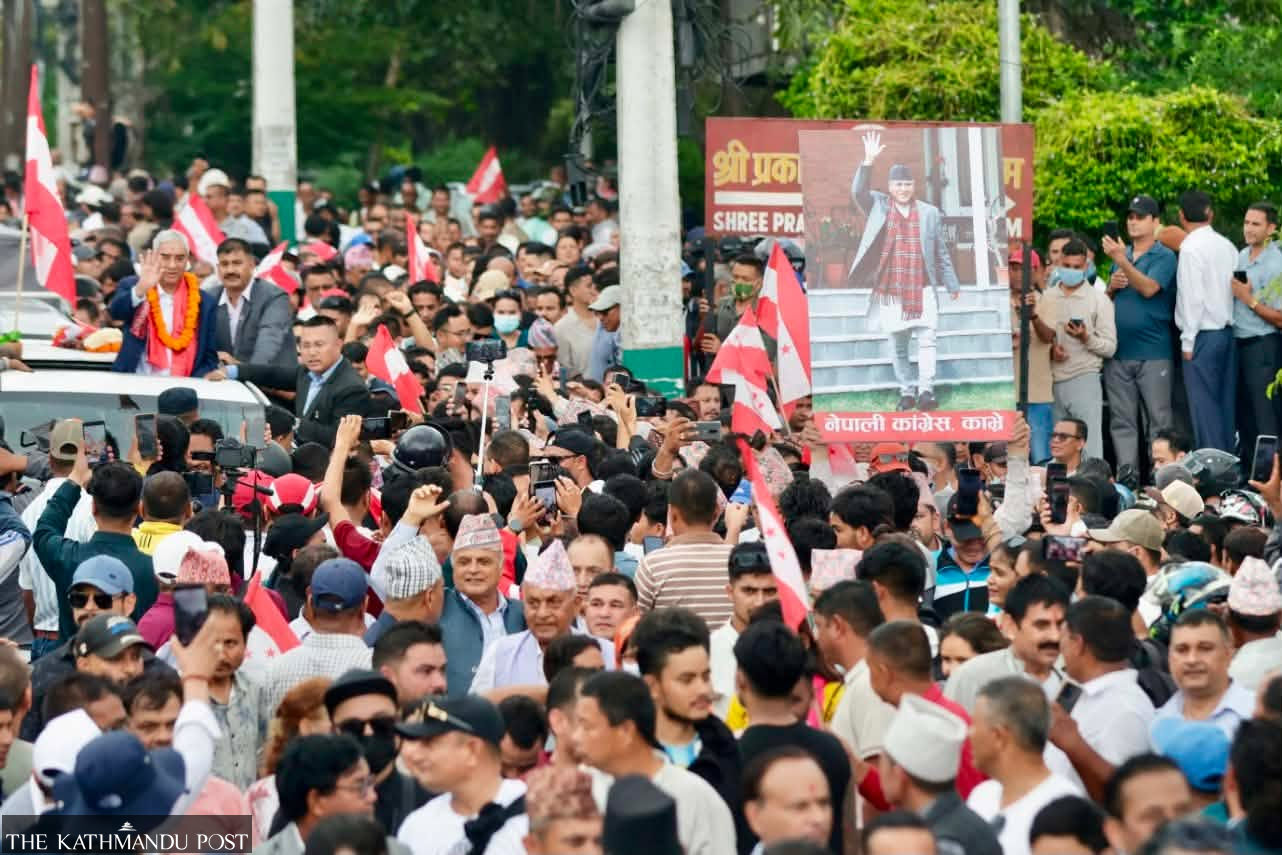
General Secretary Paudel rejects proposal to restore Deuba as party president, saying: ‘That does not make sense legally, procedurally or politically’.Deuba arrived in Kathmandu on Thursday after a five-month stay abroad. Hemanta Shrestha/TKP
Dispute in the Nepali Congress has taken a new turn after leaders close to former president Sher Bahadur Deuba proposed accepting him as party president and holding the 15th general convention under his leadership.
The proposal follows the Supreme Court’s decision to allow a review of its April 17 verdict recognising the Gagan Thapa-led Congress panel as the legitimate party leadership. The Deuba faction now says there are two options: wait for the court’s final ruling or agree to hold the general convention under Deuba.
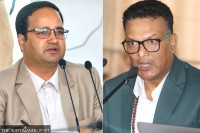
“We can either wait for the court’s final verdict or accept the central working committee elected under Sher Bahadur Deuba’s leadership from the 14th general convention and go to the general convention,” said Prakash Sharan Mahat, a leader close to Deuba.
“Naturally, Sher Bahadur Deuba should conduct the 15th general convention. There was an accident in between in the name of a special convention. Now that the Supreme Court has agreed to review its earlier decision, if the other side is ready to hold the general convention under Sher Bahadur Deuba’s leadership, there is no need to wait for the final verdict. Unity can be achieved in the meantime.”
Mahat said Deuba’s leadership would make it easier to accommodate rival groups. “Everyone can come together under Sher Bahadur Deuba’s leadership. No one will be favoured or sidelined,” he said.
The proposal is a shift from the Deuba camp’s earlier position. Before the review was allowed, its leaders had been preparing a gathering that some said could lead to a new party if the court upheld Thapa’s leadership.
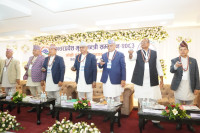
The court’s decision has ended the immediate prospect of a split, but has not settled the dispute. Deuba-aligned leaders are holding a gathering from Friday to Sunday at the Miracle Party Venue in Kathmandu. Any decision from the meeting on reconciliation or separation could shape the next phase of the crisis.
Deuba, the five-time prime minister and Congress president for two terms, returned to Nepal on Thursday after about five months abroad. He travelled directly from the airport to the contact office of his faction at Chundevi, where leaders and cadres had gathered. At their request, he briefly addressed them and rejected allegations including financial irregularities levelled against him.
Suggesting the hollowness of accusations, including political charges against him during the partyless Panchayat era, the direct rule of King Gyanendra and the latest period of the Rastriya Swatantra Party government led by Balendra Shah, Deuba said, “King Gyanendra could not do it; can anyone else do it here?”
Before reaching Chundevi, Deuba had issued an appeal for an end to disagreement and dissatisfaction within the Congress. Warning that the dispute in the country’s democratic party could weaken national unity, he urged leaders, cadres, supporters, well-wishers and voters to move ahead by respecting the sacrifices and struggles.
Hemanta Shrestha/TKP
Deuba also said young leaders should move forward in Congress politics, while warning against portraying experienced politicians as worthless and allowing a leader’s social-media fame to take over party responsibilities.
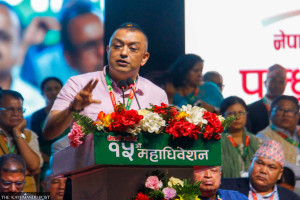
The dispute stems from the special general convention held in January. The convention, demanded by more than 40 percent of the general convention delegates, elected Thapa as president. After the Election Commission recognised the Thapa-led committee, the Deuba faction challenged that decision in the Supreme Court.
On April 17, a division bench of the court recognised the Thapa faction as the official Nepali Congress, ending a three-month dispute over leadership. The court upheld the Election Commission’s recognition of the Thapa-led committee and validated its decisions.
The Deuba faction then sought a review, arguing that the verdict was flawed legally. The Supreme Court registered the petition on July 22 after a preliminary examination. Its decision to allow the review has reopened the legal question over party leadership.
General Secretary Pradip Paudel rejected the proposal to restore Deuba as president. “There is no question of going to the general convention by accepting again as president the leadership displaced through the lawful process of the special general convention. That does not make sense legally, procedurally or politically,” said Paudel.
He said Deuba, who has already served two terms as party president, should remain above the factional contest and play a guardian-like role for the broader unity of the party. “We had hoped he would correct the situation saying, ‘I am not the president, so do not call me the president.’ We still believe he will take the initiative for unity.”
Thapa welcomed Deuba’s return at the beginning of Thursday’s Central Working Committee meeting. “Former president Sher Bahadur Deuba had gone abroad for medical treatment. He has returned after recovering, and I warmly welcome him [back],” said Thapa.
The Congress statute provides a four-year term for the Central Working Committee, with a possible one-year extension. Paudel warned that failing to hold the convention within the given period could put the party in a difficult spot. Leaders close to Deuba argue that the constitution allows additional time.
The previous central working committee had set October 2 to 5 for the general convention, Paudel said, adding that the schedule would remain in place, with only some dates for lower-level conventions adjusted.
The Deuba camp has indicated that it could knock on the Supreme Court’s door if the Thapa-led leadership proceeded with the convention on a “premature” date.
“If the Supreme Court issues a stay order, everyone will have no option but to wait for the final verdict,” said a Congress leader close to Deuba. “If it does not, we will hold a separate convention. Then congress will then split into two.”
The leadership crisis has been compounded by Deuba’s legal troubles. While he was abroad, the Department of Money Laundering Investigation pursued an investigation involving his family. Deuba and his wife, former foreign minister Arzu Rana Deuba, had been issued arrest warrants from the Kathmandu District Court.
The Supreme Court on May 25 directed the authorities not to arrest the Deuba couple, ruling that the warrants had no legal validity. It said offences investigated by the Department of Money Laundering Investigation fall under the Special Court’s jurisdiction and that sufficient legal grounds for arrest had not been established. Interpol also declined to issue a Red Notice against the couple.
The money-laundering investigation continues. In July, investigators filed a chargesheet at the Special Court detailing a Rs26 million transaction involving companies owned by Deuba’s son, Jayabir Deuba.
Deuba’s personal secretary Bhanu Deuba said there had been no discussion yet on how the former prime minister would respond to the investigation following his return.




 14.5°C Kathmandu