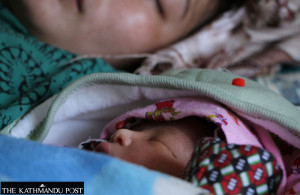
Women continue to die from abortion-related complications over two decades after the procedure was legalised. Experts say over-the-counter abortion kits are fuelling unsafe practices. Post Illustration
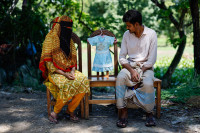
Twenty-nine-year-old Gita Pandey from ward 2 of Bagnaskali Rural Municipality of Palpa district succumbed to complications on Sunday following an abortion.
Pandey had reached the Butwal-based Khatri Nursing Home about two weeks ago for a pregnancy test after her 12-week pregnancy was confirmed. She was told that the fetus was abnormal and was advised to undergo an abortion. She was asked to visit the nursing home last Friday for the procedure.
Pandey, who reached the nursing home with her husband, referred her to the Zonal Pharmacy Clinic at Hospital Line, Butwal. There, the pharmacist collected an advance payment, gave her two types of medicines, and asked her to return the next day for abortion. She, however, died during the procedure, due to complications.
Her death has renewed concerns among doctors and public health experts to the unsafe use of medical abortion kits and gaps in abortion services in Nepal, despite the procedure being legal for over two decades.
Doctors say hundreds of women across the country suffer from serious side effects, or even die, after using medical abortion kits or seeking abortion services at under-equipped health facilities. Even so-called “safe abortion” is never completely risk-free and abortions carried out by use of over-the-counter medicine are unsafe, which must be stopped immediately, according to doctors.
Although the nursing home where Pandey sought abortion service is legal and run by trained professionals, experts say failure to diagnose complications early, delay in treatment, and lack of access to emergency obstetric care are major reasons for maternal deaths from excessive bleeding and infections.
“Video X-ray (ultrasound) only may not confirm all abnormalities and complications,” said Dr Shree Prasad Adhikari, director at the Paropakar Maternity and Women’s Hospital in Kathmandu. “Multiple tests may be required in some cases and complicated abortions should be carried out at advanced centers equipped with life-saving facilities.”
Abortion was legalised in Nepal in 2002, a milestone for women’s reproductive rights, their empowerment, and their right to bodily autonomy. With legalisation, persecution and jail terms for women who terminated unwanted pregnancies ended and unsafe abortions fell markedly.
But despite this progress, women continue to die from abortion-related complications, especially from services being offered by illegally operated clinics and from medical abortion kits sold over-the-counter, without proper counseling and medical supervision.
“Every month, we receive over half a dozen cases of complications following the use of medical abortion,” said Adhikari. In some cases, we have to perform immediate surgery and even remove the uterus to save a woman’s life.”
According to the latest census report six percent of maternal deaths are linked to abortion or miscarriage.
Every year, around 100,000 women undergo abortions at legally-authorised clinics and health facilities in Nepal. Gynaecologists, however, say the actual number could be much higher, as many abortions, especially the medical abortions, go unreported.
According to a recent UNFPA report on the “neglected crisis of unintended pregnancy,” half of the 1.2 million pregnancies in Nepal in 2017 were unintended and nearly 359,000 were terminated.
The report further stated that “the toll of these pregnancies is—and has long been—unseen.”
Doctors suspect that ‘medical abortion kits’—designed to terminate pregnancy within nine weeks—are being misused as a contraception tool.
Between 1996 and 2016, the maternal mortality rate in Nepal fell from 539 to 239 per 100, 000 births, with the country achieving the Millennium Development Goal—a feat for which the legalisation of abortions played a significant role, doctors say.
Nepal has reduced maternal deaths by over 70 percent since 2000, according to a WHO report.
The UN health body’s report says that 142 Nepali women currently die from maternity-related complications per 100,000 live births.
Under the UN’s Sustainable Development Goals, the target is to reduce the maternal mortality rate to 75 per 100,000 live births by 2030.
Doctors say it will be difficult to further reduce maternal deaths unless deaths caused by abortion and unsafe abortion are prevented. Studies show that unsafe abortions are still rampant in many places throughout the country, and women are denied services.
According to the report by the Center for Research on Environment Health and Population Activities (CREHPA), and the University of California, San Francisco (UCSF), one in 10 women seeking abortion at health facilities is denied care.
The study further found that four in 10 women (42 percent) with more than 10 weeks of pregnancy or who were unaware of their gestational age were turned away. In over 80 percent of cases, the reason cited was advanced gestation age.
Sixty percent of women who were denied services at authorised health facilities attempted to end their pregnancies elsewhere, according to the report
Section 4 (15) of the Safe Motherhood and Reproductive Health Rights Act allows abortions as late as 28 weeks in cases of rape, incest, serious health risks to the mother or if the fetus is found to have genetic defects. General abortions can be conducted at up to 12 weeks, according to the Act.
Arjun Poudel is a health reporter for The Kathmandu Post. Before joining the Post, he worked for Sagarmatha Television, Naya Patrika, Republica and The Himalayan Times.




 13.86°C Kathmandu