Nepal’s only dedicated mental hospital is stretched beyond capacity
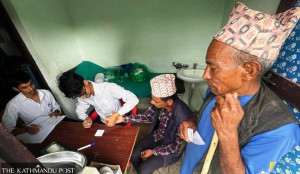
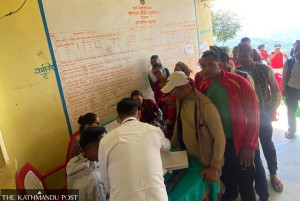
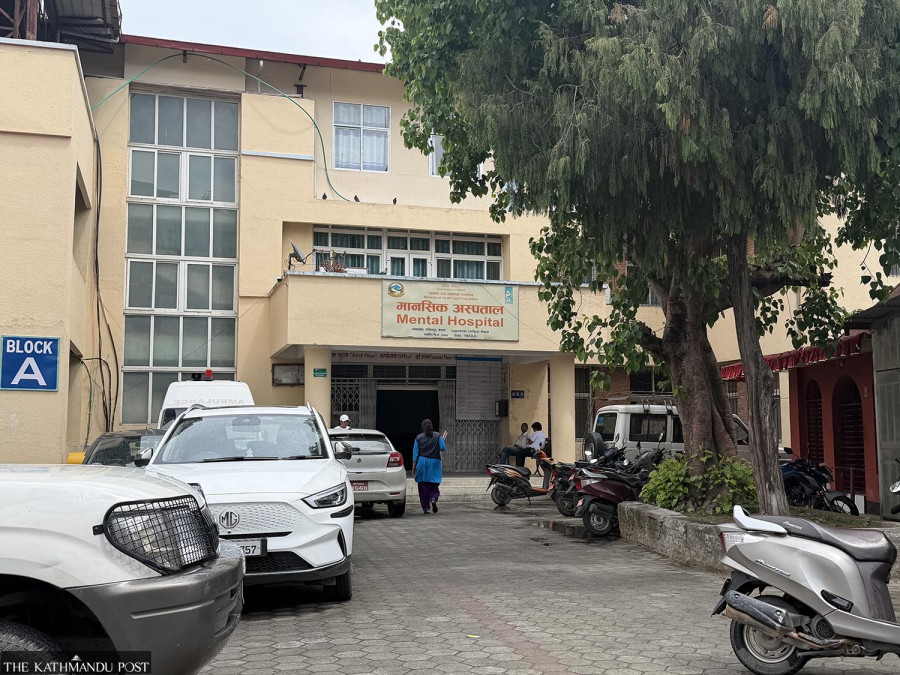
Officials complain of shortages of beds, manpower and funding are limiting care capacity. Mental Hospital, Lagankhel is the only government-run central mental hospital in Nepal, accommodating over 150 patients in the OPD every day. Tara Prakash/TKP
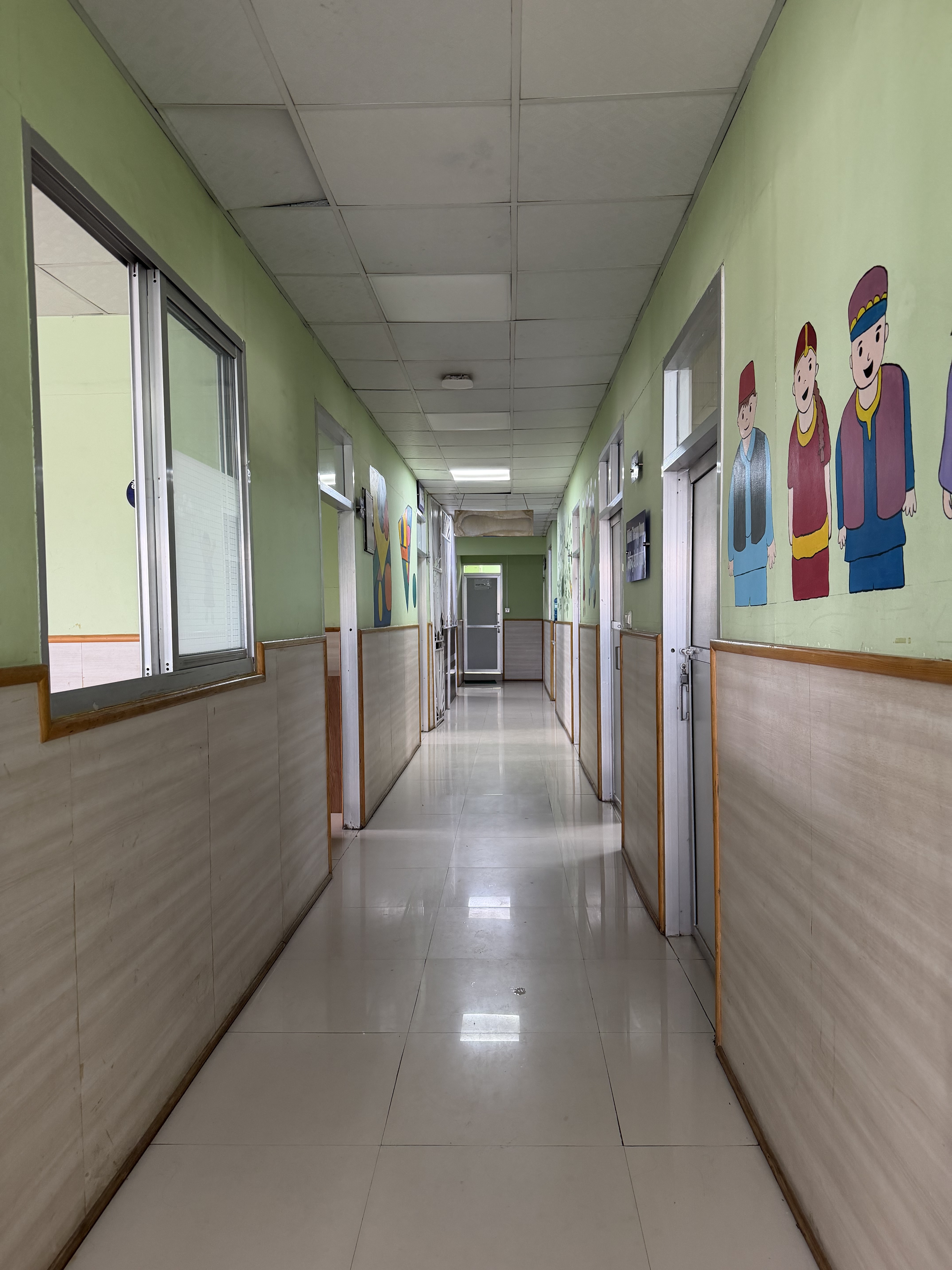
The corridor of the adolescent ward is long. The chipped walls are painted mint green, what looks like a weak attempt to make the space more cheerful. The doors to the rooms are cracked open, revealing rows of beds. Some patients have family members surrounding them, mothers and fathers sitting at the foot of the mattress or on the benches beside it. Other patients are alone. They lie curled on sagging mattresses, thin blankets tossed over them, watching the fan spin circles above them. Across the hall is the art room, splashed in stickers and bright colours. There are sketch pads and markers and colouring books for the children to play with.
Several flights below, in the waiting room, plastic chairs fill quickly. People sit shoulder to shoulder, mostly in silence, wringing their hands, staring at the floor or watching the nurses. Doctors move patients in and out of consultation rooms, listening to stories of anxiety, addiction, depression and sleeplessness that have often gone untreated for months, sometimes years. For many patients, their condition has worsened to the point that receiving hospital care is no longer optional.
Every day, people arrive at Mental Hospital, Lagankhel from different corners of Nepal, seeking psychiatric support that many districts still cannot provide. Inside the crowded wards, doctors and nurses juggle limited beds, medication facilities and manpower to accommodate them all.
“We have to compromise on everything,” says Sushila Dangol, the head of Nursing at Mental Hospital, Lagankhel while describing a ward that holds far more patients than it was built for.
Somehow, despite the urgent need for additional assessments, adequate infrastructure, human resources, an increased budget and a greater psychiatric support system, “we are managing the place” has become the hospital’s default response.
Started within the premises of Bir Hospital’s psychiatric outpatient department (OPD) in 1961, a separate psychiatric unit was eventually established in Lagankhel in 1984. Today, the Mental Hospital stands as the only government-run central mental hospital in Nepal, accommodating over 150 patients in the OPD every day. It also includes 14 psychiatrists and five resident doctors.
With a history of more than six decades, the Mental Hospital is a preferred refuge for mental health patients from all 77 districts of the country. Perhaps it is the affordability that causes people to choose this hospital. “I believe, as this is the only government mental hospital, people still come here because of the cost issues,” says Dangol.
Patients arrive at the hospital with a wide range of mental health conditions. In the OPD, doctors commonly treat anxiety disorders, psychotic disorders, substance use disorders, depressive disorders, bipolar disorders, dissociative disorders and epilepsy. Among anxiety-related conditions, the hospital also sees cases of obsessive-compulsive disorder (OCD).
“In depression cases, we usually see severe depression, sometimes accompanied by suicidal ideation,” says Dr Suraj Tiwari, director of Mental Hospital, Lagankhel. Before diagnosing a patient, the medical team evaluates multiple possibilities and consults with the psychology department. Only after this process do they formally diagnose the disorder.
Once patients meet with a psychiatrist in the OPD, they officially enter the hospital’s care system. If doctors believe a patient requires further psychological assessment, they are referred to the psychology department. Some patients may also undergo laboratory investigations, though psychiatrists say mental health diagnoses rely primarily on patient history and mental state examinations rather than physical testing.
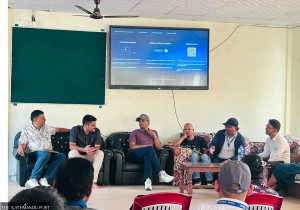
Nurses, too, express dissatisfaction with the Mental Hospital’s management. Tara Prakash/TKP
Patients are typically asked to return for a follow-up appointment after two weeks, the period in which doctors assess whether medication is working and determine the next stage of treatment. According to hospital staff, anxiety disorders often require long-term care, with many patients continuing treatment for at least a year even after symptoms begin to resolve.
However, not all patients remain consistent with their treatment. The hospital sees many relapse cases, where patients are discharged, stop taking their medication and eventually return after their symptoms resurface. Hospital doctor Basudev Karki says this often happens when patients reduce their dosage or discontinue medication entirely once they begin feeling better. He attributes this partly to environments where mental health treatment, medication and psychiatric care are frequently questioned or dismissed.
The hospital is currently functioning above capacity. Fifty beds are sanctioned by the government, but 69 inpatient beds are functioning instead. 47 for adults, 12 for adolescents and 10 for emergencies, as per Dangol. Among the 47 adult beds, 24 are for females and 23 for males along with the facilities of cabin beds. They also have seclusion rooms in each ward – male and female – for the patients whose psychological conditions make them act aggressively.
The Rs100 charge for one general bed per day includes four meals and available medication services. Cabin beds, however, cost Rs300 rupees per day.
The hospital also operates a 24/7 government-approved suicide helpline (1166), initially established with support from Transcultural Psychosocial Cultural Organisation Nepal, a non-profit,and later taken over by the government system. Overseen by the crisis management counselling team, the helpline is led by psychologists and supported by nurses and social workers. The hospital receives roughly 30 calls a day through the service.
However, while many people rely daily on the hospital, physical infrastructure has not yet increased to meet the demand. Karki argues that the hospital needs additional buildings and wards for patients referred from different parts of the country. Many patients require a longer duration of inpatient care than the hospital is currently able to provide. “We need some sort of long-term inpatient care and life skill management,” Karki explains.
Many patients want to stay longer in the hospital, but because the hospital is running minimum inpatient services, they are forced to be discharged. “It makes us feel helpless,” Karki says. “People come to get proper care and support but because of the lack of inpatient beds, we have to send them to other centres they can’t afford.”
He says there is an urgent need to expand ward infrastructure so patients can remain at the hospital for the full course of treatment, until their symptoms subside and they are ready to be discharged.
While mental health is emerging as a prominent public health concern, Dangol says the growing awareness is not causing stigma to decline. The reaction, as explained by the staff, is often negative. Patients will try to hide their conditions, first visiting general physicians and only arriving at the hospital when they really need to. “People don’t want to come unless they have to come,” Tiwari says.
The stigma extends to not only the patients’ perception of the hospital, but also to healthcare professionals and their association with it. As a result, the hospital is facing issues with high staff turnover.
“It is evident that patients are reluctant to visit this hospital, but even the professionals and workers become hesitant to mention that this is their workplace,” Dangol adds.
The corridor of the adolescent ward. Tara Prakash/TKP
Karki says it is critical to explore the different dimensions of mental health and bring it to policy makers and consultants. “It has to start from the individual level, from the family level,” he says. “It is high time to work on mental health.”
Systemic marginalisation of mental health topics also emerges from the state-level decisions. According to a research done in 2022, entitled ‘History of Psychiatry in Nepal’, mental health receives less than 1 percent of Nepal's total healthcare budget and is supported by only 2 percent of medical and nursing training.
The research further explains how most of the available mental health services are concentrated in urban areas, where only 21.4 percent of the Nepalese population resides.
In the adult wards, as explained by Dangol, patients meet psychiatrist doctors, prescribe medication, especially the available psychotropic medications and finally, they tend to be referred to their individual requirements.
However, in the adolescent ward, teamwork remains central to the process. Social workers, special teachers, psychologists and consultant psychiatrists. Every patient gets to interact with professionals who intervene on their own terms.
Child and adolescent period is said to be the onset of transformation in human life. Lack of psychological assessments in this age group results in limited opportunities to lead fulfilling lives as adults, according to WHO. Globally, one in seven 10-19-year-olds experiences a mental disorder, accounting for 15 percent of the global burden of disease in this age group.
Therefore, to address the need to protect adolescents from adversity, the child and adolescent ward was established at Mental Hospital, Lagankhel in 2023, providing services to children aged 14 to 18. Kanti Children's Hospital, on the other hand, accommodates children aged up to 14 years.
The hospital’s team includes four consultant psychiatrists, including one Child and Adolescent psychiatrist, two social workers, one special educator, eight nurses and four clinical psychologists, providing medical management and psychological interventions.
Nurses, too, express dissatisfaction with the hospital’s management. Psychiatric nursing programmes, according to Amrita Pun, are offered by numerous educational institutions in Nepal, but “There are a lot of professionals who hold masters degrees in psychiatric nursing,” says Pun, “however, general hospital nurses are hired here.”
Pun explains how, despite being a psychiatric nurse herself, her post is evidently recognised under hospital nursing. She adds that the hospital is falling short in hiring expert psychiatric professionals.
Interventions such as MRIs, CT scans and blood samples are also required during the psychological assessments. However, due to the lack of equipment and adequate space, patients are referred to other hospitals for the tests. “The main hurdles are manpower, budget and infrastructure,” explains Pun.
“In any situation, we find ourselves helpless,” Karki adds.
According to Dr Nirajan Bhattarai, consultant psychiatrist, there were 2,448 total patients in the OPD from December 2023 to December 2024. In 2025, the number of OPD patients increased to 3,297. Fifty-three percent of those patients were male and 47 percent were female. Similarly, the Inpatient Department accommodated 171 patients in 2024, and is increasing each day.
The central goal of the Child and Adolescent Ward is to reintegrate the children into society and their schools, something the social workers make the necessary arrangements for. “Some children are restricted because of behavioural or psychiatric problems,” says Bhattarai.
When legal cases of juvenile delinquency or crime committed upon children – including physical abuse, sexual abuse, bullying and neglect — are recommended to the ward, the team works collectively to intervene.
The ward also provides milieu therapy, a structured environment where the children navigate social interactions and skills based within their comfort zones. “We aim for a holistic approach with an effort to protect their human rights, overcome stigma and live with dignity,” says Bhattarai.
Initiated by CWIN Nepal independently in 2023, the ward is in the process of switching to government oversight, according to Bhattarai. However, reluctance persists. “All of our facilities are at risk of degrading once the government starts to handle it,” he adds.
WHO mentions how the global spending on mental health is severely inadequate. The 2024 Mental Health Atlas reveals the resources available for the provision of mental health services have not increased since the last survey. Budgets remain at a median of 2 percent of government health spending. The study further describes the stark disparities between lower-income and higher-income countries, with high-income countries spending up to $65 per person on mental health, and low-income countries spending as little as $0.04.
However, the hospital’s chief consultant, Dr Ananta Prasad Adhikari, has hope for the future. Currently, there are roughly 250 psychiatrists working in Nepal, and he says every year, 35 to 40 psychiatrists are being produced within the country. “Within a few years, I think the shortage of manpower will be filled,” he says. The question still remains, though, of whether current stigma will keep qualified health professionals from joining the hospital team.
If you or someone you know is considering suicide, please contact the following helplines.
Nepal Mental Hospital suicide hotline: 1166
Tribhuvan University Teaching Hospital suicide prevention hotline: 9840021600:
Patan Hospital crisis helpline for suicide prevention: 9813476123
The Transcultural Psychosocial Organisation: 16600102005




 19.27°C Kathmandu
.jpeg)