Doctors don’t trust the medicines Nepal government provides for free
Patients, medics and officials question the quality of drugs supplied under government health programmes citing weaknesses in procurement and testing. Experts said low-bid procurement compromises the quality of medicines supplied under government health insurance and free drug programmes.
Suryaman Tamang, a resident of Barhabise Municipality in Sindhupalchok district, is in a fix.
He has chronic hypertension. He has also been diagnosed with hyperlipidemia (high cholesterol levels) and been advised immediate medication for both ailments. Tamang, however, hasn’t started medication: he doesn’t trust in the free medicines the government distributes and cannot afford to buy the “branded” ones.
“I don’t think that medicines provided free of cost at health facilities really work,” Tamang said. “When I inquire about free medicines, doctors ask me to buy them from pharmacies rather than ask questions. This makes me feel that they themselves do not trust the quality of the free drugs.”
The government distributes medicines free of cost for a few non-communicable diseases—hypertension, diabetes, asthma, mental health, and others—at state-run health facilities. However, many patients do not trust such medicines. What is concerning is that even doctors, health workers serving in state-run health facilities, and officials at the Ministry of Health and Population do not use the medicines meant for free distribution.
“I get my medicines from pharmacies in Kathmandu,” Dr Prenit Kumar Pokhrel, dean at the Karnali Academy of Health Sciences in Jumla. “As I am more into academic activities, I can’t say much about the quality of medicine. But I myself do not use the free medicines.”
Pokhrel himself is a chronic patient of high blood sugar and cholesterol. He has been taking Metformin, a diabetes medicine, and Rosuvastatin for bad cholesterol.
Most officials at the Ministry of Health and Population and its subordinate offices told the Post they do not trust the quality of free medicine.
“We do not take medicines from among free essential drugs, nor do we let our children or family members use them,” said an official at the Department of Health Services, asking not to be named, as he fears retribution for speaking out on such a serious issue. “We have doubts about their quality.”
There are plenty of such concerning anecdotes.
In one case, “we gave a patient an antipsychotic medicine from the free essential drugs for several days, but it did not work,” said the official. “Later, we used the same generic medicine bought from a private pharmacy, and it worked.”
In some cases, doctors increase the dosage as lower doses of medicines on the essential drug list are ineffective.
Some patients are prescribed 30mg of an antipsychotic medicine after the standard 20mg dose proves ineffective. Prescribing more than 20mg is generally not allowed, but when the standard dose does not work, doctors are compelled to recommend an additional dose, said the official.
A health worker serving at a basic hospital on the outskirts of Kathmandu said that no health worker who distributes free medicines uses these drugs themselves or gives them to family members.
“Only the routine vaccines, which are not manufactured in Nepal and are provided free of cost from government health facilities, are of good quality,” said a senior auxiliary health worker, asking not to be named.
Concerns extend not only to the quality of free essential medicines but also to the quality of medicines provided under the government health insurance scheme.
Multiple doctors who spoke to the Post said that compared with medicines meant for patients under the government health insurance scheme, those available for sale in private pharmacies are of better quality.
“Quality of the same medicine of the same dose, brand and company available in the market differs from those in the health facilities meant for distribution to patients of health insurance schemes. This might be because manufacturers supplied them at low cost, thus compromising quality,” said an official at the health ministry, asking not to be named. “Doctors often complain about the quality of medicines, but nobody has taken such complaints seriously.”
For decades, the government has been providing free medicines for communicable and non-communicable diseases. The ministry used to procure medicines and supply them to the relevant health facilities, thereby ensuring a certain level of quality. The number of such medicines, which was 70 prior to 2015, has increased to 98 with the implementation of federalism.
Several experts told the Post that low-bid procurement is the main reason for compromised quality in government-supplied medicines under health insurance and the free essential drug programme.
“Most procurements are done at one third of the maximum retail price of the medicine, which leads to a compromise in quality,” said Mahendra Prasad Shrestha, former chief specialist at the ministry.
The government procurement system encourages bidding at the lowest possible rate. Health agencies often procure medicines from the lowest bidder to avoid hassles and possible corruption allegations.
Experts say it is impossible to ensure the quality of medicines without a proper surveillance system, testing facilities at customs points, and strengthened capacity of the drug laboratory and the drug regulatory body.
“The federal government should set the price and quality of medicines, and the budget should be allocated to provinces and local units to procure them,” Shrestha said. “This will help ensure the quality of medicines, both of the free essential drug list and those available in the market.”
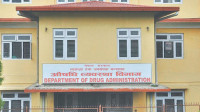
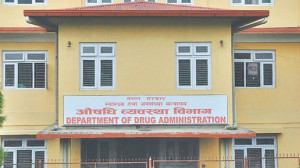
Every year, the Department of Drug Administration recalls several medicines from the market after finding them to be substandard. “This indicates that not all medicines in markets meet required quality standards,” said Dr Bhagwan Koirala, former chairman of Nepal Medical Council. “It is the right of the general public to be assured about the quality of medicines they get for free. When questions arise, it is the responsibility of the concerned authority to reassure people.”
Health officials say it is vital to properly test the medicines before distribution.
In 2025, quality checks were carried out on only 648 of the more than 24,000 types of medicines—both allopathic and ayurvedic—available in the Nepali market, manufactured by national and foreign companies. However, no medicine on the free essential list was examined for quality issues.
Of the tested medicines, dozens manufactured by national and foreign companies were found to be substandard. The drug regulatory body recalled substandard medicines, but by the time the directions for the drug recall were issued, most medicines were already sold.
Officials at the department cite issues including budget, human resources, and technology crunches for fewer tests. There are only eight technicians working in the laboratory, and not everyone can test every medicine, as they are specialised in specific areas. They complain that the lab does not even receive sufficient funding to procure reference standards, which are costly.
A reference standard is a certified pure sample of a drug used as a benchmark for testing the quality and strength of other batches of the same medicine. According to officials, each reference standard costs up to Rs200,000, and the laboratory has been given only Rs800,000 in the ongoing fiscal year.
Due to understaffing, the department cannot monitor whether all recalled drugs have been removed from the market. They said that around 20 drug inspectors are responsible for inspecting around 25,000 pharmacies operating across the country.
List of essential drugs not revised since 2016
Most doctors prescribe single-pill combination drugs to cut down on the number of pills patients have to consume. They say that combination drugs also help enhance treatment efficacy, as a single pill can target multiple ailments simultaneously. Such medicines are commonly used for chronic conditions like hypertension and diabetes.
However, there are very few combination drugs under the free essential drug list. As the lists of free essential medicines have not been revised since 2016, some medicines have already become obsolete, meaning doctors have stopped prescribing them.
Salbutamol is one such ‘essential drug’ that the government provides free of cost from state-run health facilities across the country. The medicine is used to treat respiratory problems, including asthma and chronic obstructive pulmonary disease. However, doctors prescribe inhalers and nebulisers instead of Salbutamol for patients having respiratory complications. Atenolol, another medicine on the free essential drug list, helps lower patients’ heart rate and blood pressure. Doctors, however, generally do not prescribe those medications because more effective options are available in the market.
“Doctors prescribe Amlodipine, Telmisartan and other combination medicines for high blood pressure and chest pain, which relaxes blood vessels,” said Dr Pomawati Thapa, chief of Mental Health and Non-communicable Disease Section at the Epidemiology and Disease Control Division. “But we do not have combination medicines on the drug list, so patients have to purchase such medicines from the pharmacy.”
Health ministry officials are aware that doctors have stopped prescribing some medicines on the essential list for being obsolete. Even then health facilities continue to procure them, leading to their waste.
Arjun Poudel is a health reporter for The Kathmandu Post. Before joining the Post, he worked for Sagarmatha Television, Naya Patrika, Republica and The Himalayan Times.




 19°C Kathmandu