‘Garibako Chameli’: The song Balen once sang for the poor now s(t)ings back at him
The leitmotif that Prime Minister Shah used as a rapper to call for accountability echoes as a protest anthem—from Maitighar Mandala to social media—to hold up a mirror to him. Screengrab Via YouTube
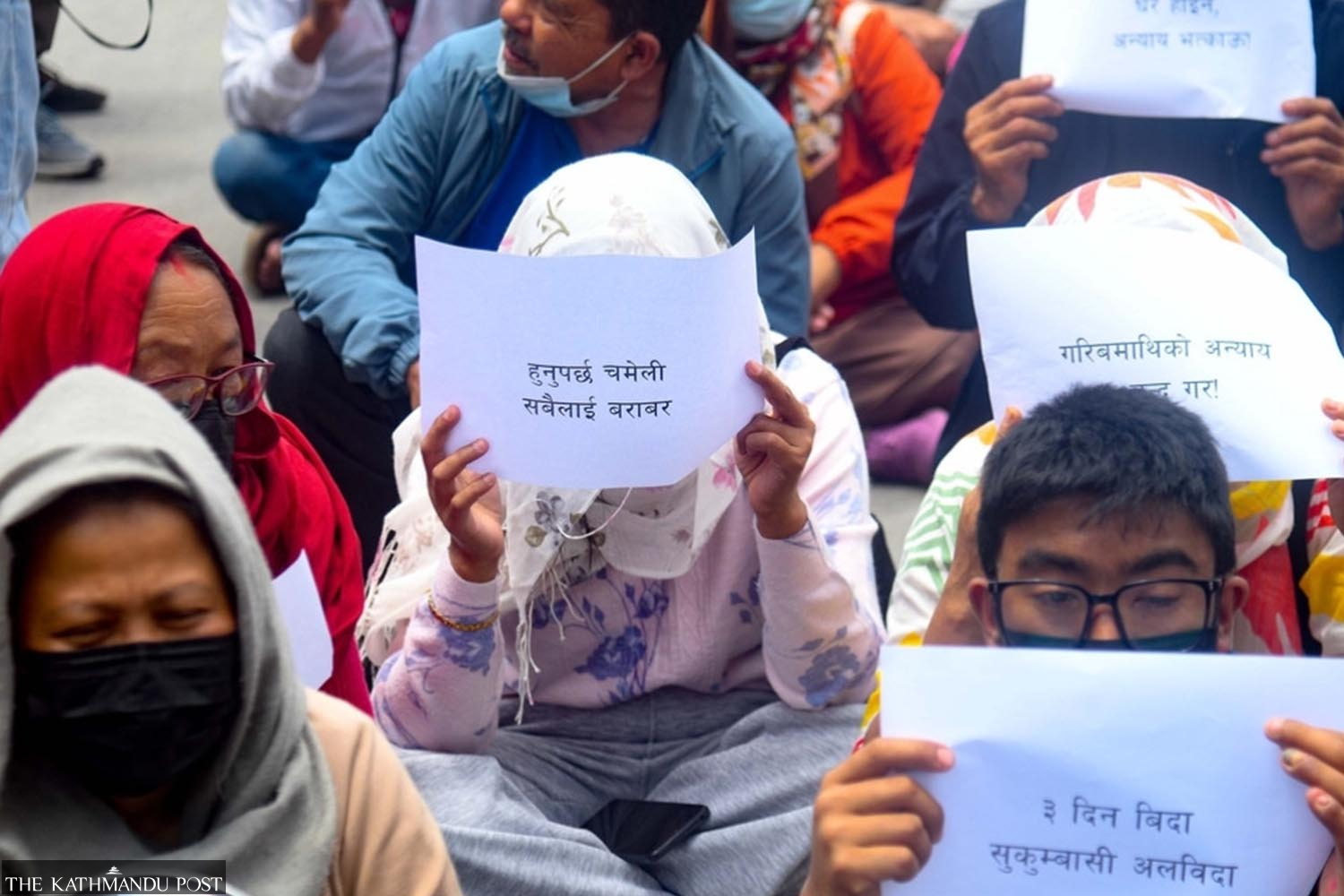
On May 2, a group of people gathered at Maitighar Mandala, Kathmandu’s de facto public protest square, to demonstrate against what they called the government’s “inhuman” treatment of landless squatters. As part of the demonstration, they recited a poem.
The refrain of the poem—“Garibako Chameli boldine koi chhaina” (There is no one to speak for the poor), borrowed from the old Nepali song ‘Chameli’—was unmistakable.
Clips of the song have lately circulated widely across social media platforms, used both as satire and protest against Prime Minister Balendra Shah, popularly known as “Balen.”
The day before, on May 1, activists staged a musical protest at the same square, singing a parody version:
“Balendralai sunmathi sunai cha, sunai cha Garibako Chameli runalai runai cha” (For Balendra, there is gold upon gold, piles of gold For the poor, there are endless tears.)
This was in reference to recently made public property details of Balen and other Cabinet ministers. Per the asset details released, Balen owns 190 tola (1 tola equals 11.66 grams) of gold.
Balen wears many hats. He is also a structural engineer and a rapper, having shot to fame from Raw Barz, a rap battle, in 2013. On January 10, 2020, Balen uploaded a new song on YouTube, titled Balidan, where he adopted the same refrain—Garibako Chameli. It is an old revolutionary song, originally featured in the 1997 Nepali movie Balidan (Sacrifice).
Balen’s reinterpretation of the song became an instant hit. Before entering politics, he frequently performed it publicly, including a televised appearance on Kantipur TV’s “It’s My Show,” which further amplified his popularity among youth.
For a rapper with a social conscience—or at least songs that suggest one—his political ascent was swift. After winning the 2022 mayoral election against candidates from established parties, Balen disrupted Nepal’s traditional political landscape, which many viewed as corrupt, unaccountable, and indifferent to the poor—the very Garib his song spoke for. By March, following elections triggered by the September Gen Z protests of the previous year, Balen had become prime minister.
Landless squatters protest at Maitighar Mandala against the eviction. Deepak KC/TKP
Early on, Balen’s government mobilised bulldozers to remove illegal structures along riverbanks, evicting landless settlers. Those opposing the move have invoked the song to remind Balen that its call for truth, justice, and empathy applies equally to those in power. The song that had once fuelled his popularity is now turning into a mirror of accountability.
On April 19, the Instagram account “Nepalese_2082” posted a reel showing two young girls crying for their father as bulldozers demolished their homes. The clip used Garibako Chameli as background music. “Houses demolished, children crying,” the caption read. “Is this the development we sought?” The reel was widely shared and garnered more than 37,000 views.
Opposition leaders have also used the song to criticise the government’s actions. On May 1, Ushakiran Timsina, a CPN-UML leader, referenced the song while criticising the government’s eviction drive. “Please convey these cries to Baluwatar,” Timsina wrote on social media, referring to postpartum mothers, children, and elderly residents evicted from the squatter settlements. “For the poor Chameli, there is no one to speak up.”
“Garibako Chameli” was originally written by the artist Raamesh and recorded in 1996. Speaking to Kantipur, Raamesh said he is aware of the recent use of the song to critique the prime minister. “It is right to use this song as a warning, to remind him [Balen] of his words,” he said. “It is appropriate to remind him that he came up singing the songs of the poor. It is a way of saying: don’t change once you reach power.”
This is not the first time the song has been used to target Balen. During his tenure as Kathmandu mayor, the song was often sung during protests against his footpath clearance campaigns, which displaced street vendors.
A loosely connected youth network, the “Chameli Gang”, emerged in support of vendors. Activists such as Yujan Rajbhandari, Rakshya Bam, Iih, and Bhawana Raut were part of this group, which later played a key role in the Gen Z protests that propelled Balen to national prominence.
Now, some participants of those very protests are expressing discontent with Balen’s governance through the same anthem. Rajbhandari said the song is being used to remind the prime minister of his promises and ideals. It is ironic that the same digital space which helped elevate Balen to power is now flooded with criticism.
Pamphlets and TikTok videos continue to circulate online, carrying variations of the refrain—“Garibako Chameli lai sun dine koi chhaina” (“There is no one to give gold to the poor”).
Over the years, the revolutionary song has received a new lease of life. Few, however, might be aware of the song’s deeper roots. Garibako Chameli originated with Ralpha, Nepal’s first original leftist cultural group, of which Raamesh was a member. The group first performed the song, initially titled “Gai ta Bandhyo,” in the early 1970s. According to Raamesh, he first encountered it in Manthali, Ramechhap, during a cultural programme in Mugitar, where two girls performed it holding sickles and tapping them rhythmically:
“Gai ta bandhyo dhungroma mohi chhaina, mohi chhaina Garibako Chameli boldine koi chhaina…” (The poor may have a cow in the shed, yet no buttermilk to drink. Chameli, there’s no one to speak for the poor.)
As squatter evictions continued, Gen Z activist Bam posted a status on Facebook, also referencing the song.
“There is no dispute that encroached land must be cleared by identifying genuine landless citizens and providing proper housing,” Bam wrote. “But the issue here is the state’s intent and approach. How does the state treat its weakest citizens? Being powerful means being more responsible and humane. Let’s hope Prime Minister Balen fulfils his promises soon. After all, hope is all that the poor have, Chameli.”
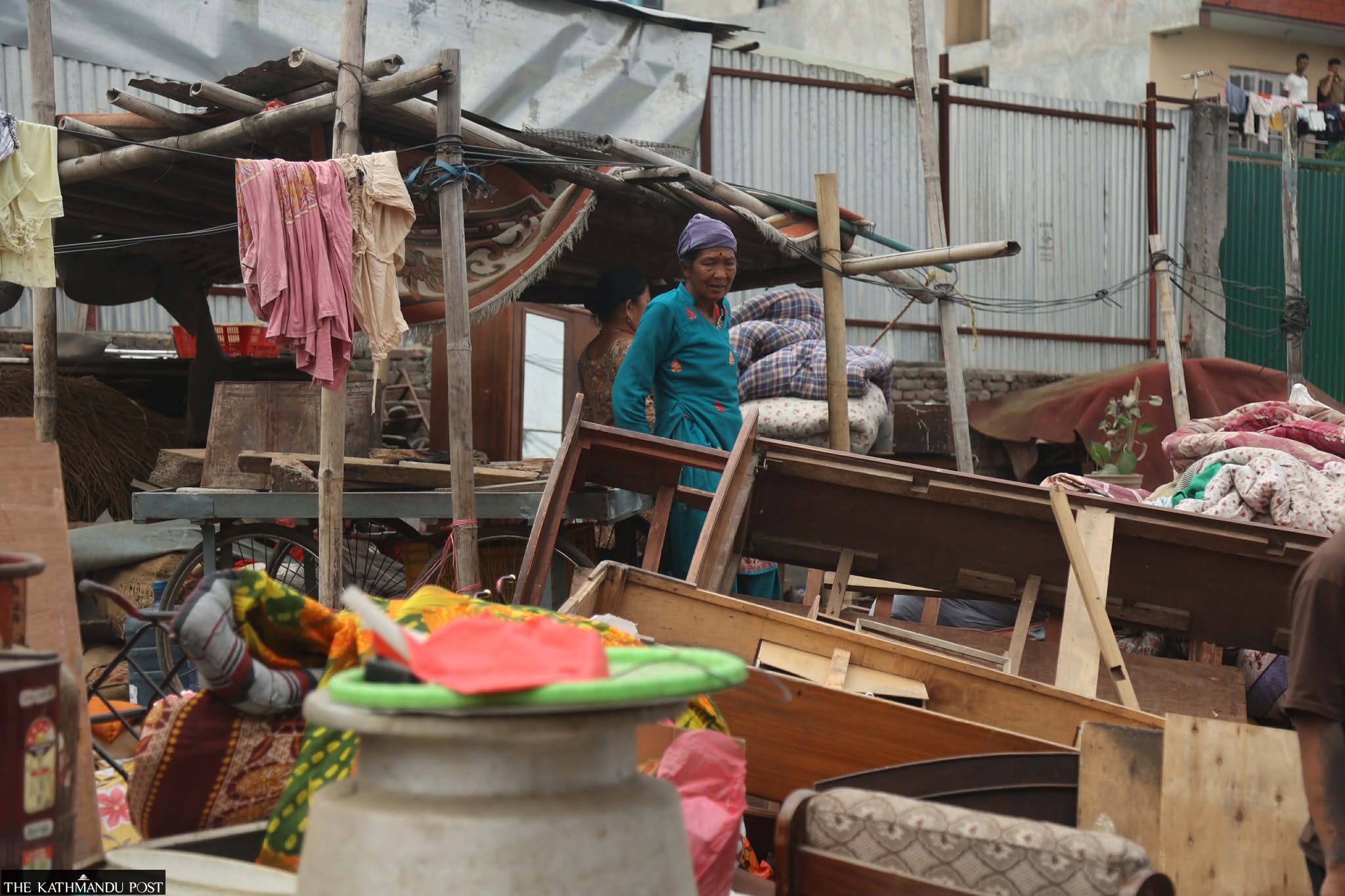
An elderly woman is pictured amid her belongings as city police, Nepal Police and the APF force squatters out from their settlement at Thapathali, Kathmandu on April 25. Post photo
Despite mounting criticism, Balen has largely remained silent, communicating about squatter evictions only once via social media.
Taking to X on May 4, he said the measures being taken were not aimed at displacing citizens, but were intended to ensure the right to housing and find a permanent solution to the problem. “It [the government] therefore urges all citizens not to fall into any kind of confusion, not to panic unnecessarily, and not to spread unverified information,” he wrote.
But not all were convinced.
Gen Z activist Miraj Dhungana during a press conference said that the government’s actions contradict the very spirit of the song Shah once performed. “Remove "Garibako Chameli" from YouTube,” Dhungana said. “It’s meaningless now.”
From Maitighar to Instagram and TikTok, the same song continues to carry that message, moving seamlessly from the streets into the digital space.
Jasmine Ojha, another activist, said music has been a potent tool for political change, in Nepal as elsewhere.
“Resistance used to be physical, about stones and bricks,” Ojha said. “We believe the medium should change with the times.”
Balen was a singer before he was mayor, Ojha noted. “He used songs to protest,” she said. “We are using his own medium to tell him that displacing people without a plan is wrong.”




 23.26°C Kathmandu