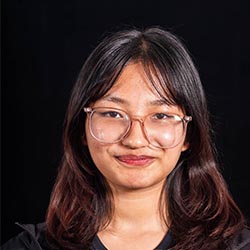
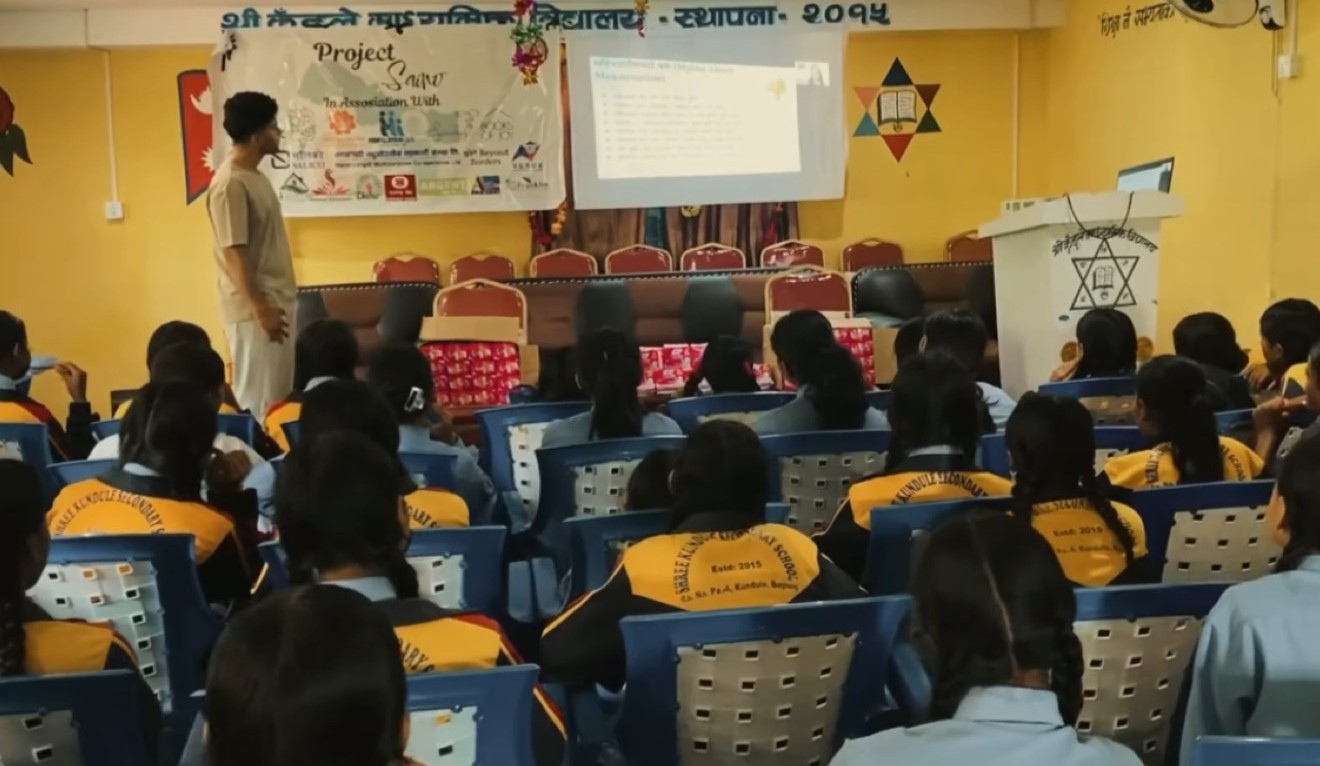
Through Chori Beyond Borders, Krishma Subedi is building a space where Nepali women can dream beyond geographic boundaries without losing their sense of home.
For many Nepali women, ambition begins with distance.
It may mean leaving home for a better school, moving to the capital for exposure, or flying abroad with the hope that a different country might hold a different future. But distance, even when chosen, carries its own weight.
There is the pressure to succeed, to adjust, to prove that leaving was worth it. There is also the loneliness of entering spaces where no one looks like you, speaks like you, or understands the small emotional negotiations of being a Nepali daughter with dreams bigger than the life expected of her.
It is from this tension that Chori Beyond Borders, an initiative founded by Krishma Subedi, begins. At first glance, the initiative appears to be about mentorship, connection and opportunity for young Nepali women. But beneath that, it is asking a more intimate question: how does a girl grow beyond borders without becoming disconnected from herself?
In practice, Chori Beyond Borders works through one-on-one virtual mentorship, connecting young Nepali women with accomplished Nepali women across borders. The initiative refers to its mentees as “Choris” and focuses on women aged 18 and above who are navigating career choices, personal uncertainty and life transitions. Through these conversations, mentors offer professional guidance and an emotional context that can be difficult to find in formal institutions.
For Subedi, the need for such a space came as a first-generation student graduating outside Nepal. She says the absence became clearer only with time. As life moved forward, she began to notice how many decisions were guided less by dreams and more by practicality, visas, stability and survival. Without realising it, she says, she had started adapting more than choosing. Life seemed to be moving her forward rather than her consciously shaping where she wanted to go.
“That’s when I understood the need for a space like Chori Beyond Borders,” she says, “to really see someone who looks like you and comes from a place like you, a space where you’re reminded of your own direction and dreams, not just your circumstances.”
The word “borders” in the initiative’s name, for Subedi, began in a literal sense. It meant connecting Nepali women across countries and building a bridge between where they are and where they want to be. But the more she spoke with mentors and mentees, the more she realised that borders were also emotional, social and internal.
They were the expectations placed on Nepali women from childhood. The casual comments that told them what they could or could not be. They were the limits created by class, exposure, language, family pressure and fear. They were also the inherited ideas of what a “chori manche” should do, how far she should go, and where she should stop.
“I think the borders we’re trying to help women cross are these invisible ones,” says Subedi, “between who they were told to be and who they can actually become.”
Subedi points to the isolation many Nepali women experience as they begin to imagine lives different from what is expected of them. Society has changed, she acknowledges. Women are now more encouraged to study, work, and achieve. But in many homes and communities, old expectations still remain alive.
Sometimes, the discouragement is not direct. It comes through subtle comments. One phrase Subedi strongly resists is, “chori manche le chori manche ko khutta tancha.” She believes such sayings do more than pass casual judgment. They shape how women see one another, leading many women to grow up believing that other women may not support them.
For her, visibility is crucial. When a woman has never seen someone from her background do what she wants to do, the path itself can feel impossible. Role models inspire, and they make possibilities visible.
Courtesy of Krishma Subedi
“A lot of the loneliness also comes from not having seen someone who has already done what you want to do,” she says.
Chori Beyond Borders tries to respond to that loneliness through mentorship, but Subedi is careful not to reduce the initiative to mentorship alone. For her, sisterhood is the stronger word.
Mentorship can feel one-directional, with someone ahead guiding someone behind. Sisterhood, she says, is more mutual. It creates belonging. It allows ambition and vulnerability to exist in the same room.
Chori Beyond Borders describes this exchange as “passing the tuki, heart to heart, chori to chori.”
In many Nepali gatherings, Subedi has noticed men naturally forming conversations around careers, technology, politics, business and ideas. Women in the same rooms may be equally accomplished, sometimes more so, but such future-focused conversations do not always feel as common among them.
Women do support each other, but Subedi wonders why that support does not always extend into open conversations about leadership, money, growth and ambition.
“That made me reflect a lot on what’s missing,” she says.
For Subedi, institutions can provide structure and opportunity. They introduce students to important thinkers, historians, and ideas. But another woman can offer something more personal: context.
Another woman can say, “I’ve been in that exact place before.” She can understand the hesitation of entering a room where no one shares your background.
That personal context became especially clear to Subedi through one early conversation with a mentee, Aastha Ghimire, an international student in the US. Aastha spoke about the pressure of moving abroad, trying to fit in, trying to succeed, and constantly feeling the need to prove that leaving home had been worth it.
That conversation changed the way Subedi understood Chori Beyond Borders.
In a country where success is often imagined as something that happens elsewhere, this idea is complicated. Chori Beyond Borders asks who she becomes there. What does she leave behind? How does she carry Nepal without letting it become either a burden or a memory?
Being away from home gives independence. A woman builds a life with her own decisions, income and courage. Yet there is still an emotional in-between space where she may not feel fully free. She is grateful for the life she has built, but deeply aware of what she has left behind.
The young Nepali woman Subedi imagines is not one person. She could be in Kuwait or Kathmandu, New York or Namche. She could be trying to choose a major in a new country, or trying to convince her family to let her study medicine instead of marrying early.
Doubt connects all these young Nepali women. Many are making decisions alone, even when their choices carry the weight of family, culture and future.
It reminds young Nepali women that their culture is not a restriction. Their roots do not have to limit their growth. A woman can expand beyond what she has known while still carrying where she comes from with pride.
The initiative’s purpose, Subedi says, is not to create extraordinary success stories. It is to tell a woman that her questions and struggles are valid. Her dreams are not too much. And someone, somewhere, has walked a similar path before her.




 26.08°C Kathmandu