With the total national budget of Rs2.12 trillion for the fiscal year 2026-27 unveiled by Finance Minister Swarnim Wagle on May 29, the Nepal government has allocated Rs10.53 billion to the Ministry of Culture, Tourism and Civil Aviation. This marks a decline from the previous fiscal year’s allocation of Rs13.28 billion to the ministry.
The budget remains ambitious, proposing several conservation and development programmes for the domain of art, culture and heritage.
However, artists, heritage conservationists and cultural activists, despite their appreciation for the progress, express dissatisfaction with the failure to propose constructive dialogues regarding their meaningful representation.
Musician Ishan Raj Onta expresses the fragility of musicians’ social and economic security under the government's support. He argues that art, including music, is an industry in itself, with its own economic ecosystem. “When an artist goes on a tour, they employ hundreds of people,” he says. “We want the government to recognise that the artist economy is also a growing field.”
Onta notes that during the COVID-19 pandemic, the art industry was among the first to shut down and last to reopen. “Due to this lack of dialogue and recognition, we do not think of how artists have been neglected at the cost of their mental health,” he adds. “It is tragic to see where artists lie in the hierarchy of society.”
With the Prime Minister Balendra Shah himself a rapper, Onta expresses hope that the new government will address artists’ concerns in the coming years, if not immediately, emphasising the participation of stakeholders in the process. “I hope we can have a conversation with the government, perhaps a direct one, regarding what can make our experience and sustenance better,” he says. “This is a government, I believe, that will listen to us.”
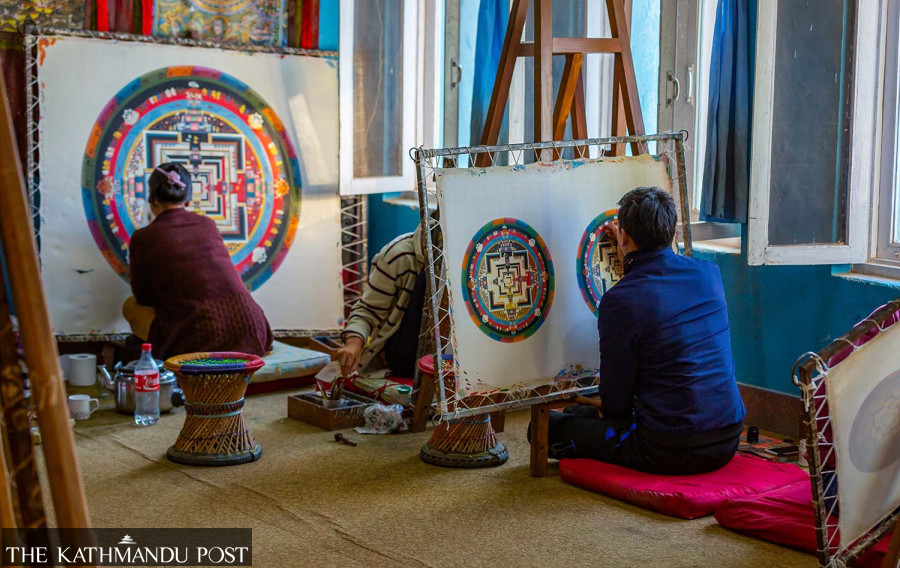
According to the budget, a special project will be implemented for the conservation of over two dozen historical Boudha Gumba in Mustang and Manang. The budget also outlines an ambition to establish a museum for indigenous nationalities in Kritipur, Kathmandu.
Writer and activist of the Tharu culture, Indu Tharu, subtly questions this initiative. “Rather than constructing a museum where the Indigenous people have to pay to watch their traditions, why doesn’t the government help preserve them inside the community itself?” she asks.
She also expresses concern about the framing of cultural preservation, arguing that it risks confining living traditions within the museum’s walls while sidelining their authenticity in everyday life.
Post file photo
Heritage conservationist Alok Siddhi Tuladhar also stresses the importance of government sensitivity in approaching such initiatives. “Museums shelter mostly the dead monuments,” he says. “New museums can definitely be established, but the government has to be careful regarding distinguishing the extinct cultures and the living ones.”
His concerns resonate with several of the budget’s broader cultural ambitions, which emphasise heritage conservation, tourism, and international recognition.
Janakpur is planned to be recognised and branded as a ‘marriage destination’. Historical places such as Tilaurakot, Devdaha, Kapilvastu and Ramgram will receive ‘comprehensive infrastructure development’ with Rs830 million allocated for the Lumbini development programme. As the budget further explains, efforts will also be made to include Tilaurakot, Janakpurdha and Gokarneshwar into the UNESCO World Heritage Site list.
While appreciating the inclusivity, Tuladhar remains sceptical, questioning whether the government adopted a sufficiently holistic approach in making such decisions.
“The government should be avoiding the comprehensive infrastructural development in archaeological heritage sites such as Tilaurakot and Kapilvastu,” he says. “There are remnants of Buddha’s palace in these areas, and only recently, archaeologists have been digging and finding ruins of history. All of that should be left totally untouched.”
He adds that rather than constructing new infrastructure on these archaeological sites, removing the existing structures should be considered. “ The government should understand that these are sensitive sites,” he says.
Regarding the motive for recognising these sites for UNESCO World Heritage status, he explains, “The criteria that define this are not fully and holistically researched by the government.”
The budget further provides a 10-year tax exemption for new cinema halls established outside metropolitan and sub-metropolitan cities, aiming for a broader and more accessible cinema culture in Nepal.
Veteran actress and dancer Mithila Sharma feels reassured by this action and says, “This benefits not just cinema but the entire landscape of economy and employment opportunities.”
With decentralisation of this national benefit, filmmakers, viewers, as well as business owners from various parts of Nepal are encouraged to participate in the film culture.
Sharma recalls how, in past years, people used to find cinema halls in more places than they do now. “If this decision manifests the constructions of more cinema halls, be it multiplex or simply small ones, it will serve as a communal tapestry as well as an upliftment for the film market,” she adds.
At last, Sharma urges everyone to utilise this opportunity responsibly and avoid any misuse or mishandling.




 20.11°C Kathmandu