



 21.87°C Kathmandu
Sun, Oct 25, 2026
Money
Check what’s on your plate: Growing sale of unhygienic food rings alarm bells
From momo packets to restaurant kitchens, officials are finding more violations than ever, but weak enforcement and stalled regulations are leaving diners at risk.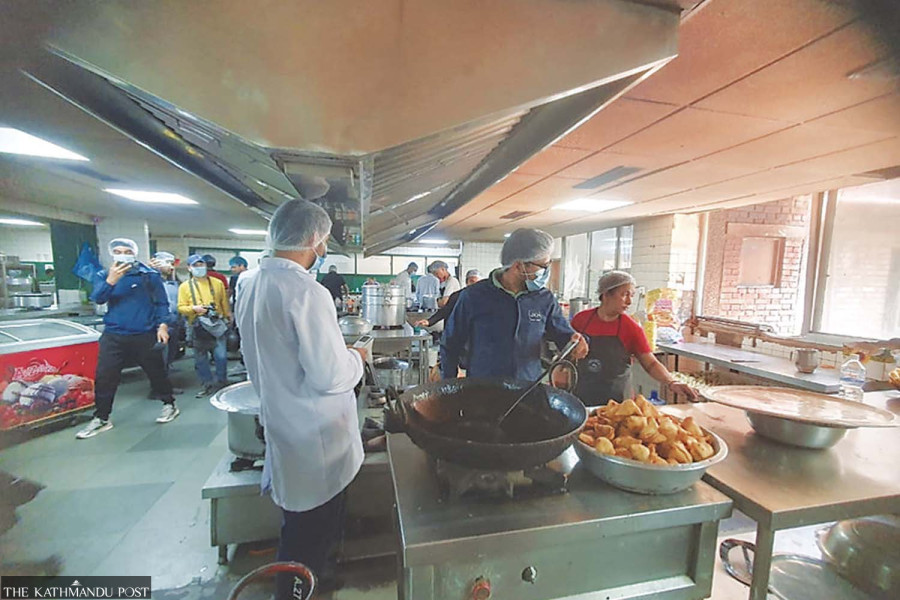
bookmark![]()
Consumer rights activists say food is often tested only after complaints surface or suspicions are raised. Post File Photo
Krishana Prasain
Published at : August 14, 2026
Updated at : August 15, 2026 12:30
Kathmandu
Shashi Thapa has fallen sick from food poisoning twice in the past four months.
Thapa, a final-year management student who also works at a private logistics company, relies on eating out for breakfast and lunch and, on most days, dinner too.
“I ate fish and naan at a local eatery near my room for dinner. That night I couldn’t sleep because of loose motion and nausea,” said Thapa, who lives in a rented room. “I had a fever the next day.”
Thapa went to the hospital the following day, where a test confirmed food poisoning.
Government officials say there are no exact figures on the number of food contamination cases because such incidents can occur at schools, colleges, offices, hotels and restaurants, and even at airports.
But they say cases of food contamination are rising alarmingly across Nepal’s cities. Many people who move to cities for work or study—and even longtime residents—depend on eating out for most of their meals. Nearly all of them report at least one, if not repeated, bout of illness from contaminated food.
For instance, Anjita Rokaya, owner of Aashal Pharmacy in Tinkune, sees two to three people coming in daily with bowel and other health-related problems.
“The patients usually say that they eat something outside,” she said. “Most of the visitors are adults and children.”
Another pharmacy reported a similar pattern.
Ecolife Pharmacy in Tinkune says 15-20 people visit daily with gut-related problems.
Among them, 10-12 cases are related to food poisoning.
“We provide them with oral rehydration and medicine to control diarrhoea and vomiting, and recommend going to hospital if the medicine does not help,” said Pradip Joshi, owner of the pharmacy.
The most common symptoms of food poisoning are diarrhoea, stomach pain and cramps, nausea, vomiting and fever.
The sale of poor-quality and unhygienic food has been rampant—from hotels and restaurants and eateries to party palaces.
Government data too tell the story.
The Department of Commerce, Supplies and Consumer Protection conducted inspections at 261 hotels and restaurants, mostly in Kathmandu, last fiscal year 2025-26, which ended in mid-July, and found 59 selling unhygienic food. These eateries were fined Rs4.2 million, but no cases were filed. This shows that more than two out of every 10 hotels and restaurants inspected were found selling substandard fare.
The remaining hotels and restaurants were instructed to maintain food safety and hygiene.
In 2024-25, the department inspected 201 hotels and restaurants, of which 44 were found selling unhygienic food.
Anil Kirati, director of the Commerce Department, said that, as per the law, the department slaps fines between Rs200,000 and Rs300,000 on the spot if eateries are found selling substandard food.
“We have received a flurry of complaints from consumers about unhygienic food at hotels and restaurants in the past few months.”
In April, the quality watchdog filed a case against the Tripureshwar-based Bagmati Sweets at the District Administration Office, Kathmandu, for serious violations of hygiene and quality standards.
Manufactured or packaged food have also been found to be unsafe.
In May, Nepal’s quality watchdog recalled a batch of Dabur Honey after laboratory tests found the product to be of low quality.
The Department of Food Technology and Quality Control recalled batch NB00477 of honey produced by Dabur Nepal.
According to the department’s laboratory test report, the Dabur honey was found to contain hydroxymethyl furfural (HMF) at 50 milligrams per kilogram, above the food standard of 40 milligrams per kilogram. A high level of HMF in honey indicates that the product has been overheated, stored improperly or is very old.
In the same month, the department recalled a batch of CO2 Nova ice cream produced by the Pokhara-based Fishtel Dairy.
A sample test conducted on Current and Lali brands of noodles produced by Yasoda Foods found the acid value of the extracted fat to be below the standard determined by the government.
Recently, the Jack Nack Krakers biscuit brand produced by Asian Biscuit and Confectionery, Duhabi, Sunsari, was also recalled from the market after its fatty acid value was found to exceed the government-prescribed standard. Biscuits from ‘batch 6’ were recalled from the market.
In February, the department recalled and destroyed Khajurico brand puff, a popular snack, after laboratory tests found industrial trans fat levels exceeding the permissible limit. Around 5,200 packets were pulled from the market and crushed and buried within the factory premises in Godavari, Lalitpur.
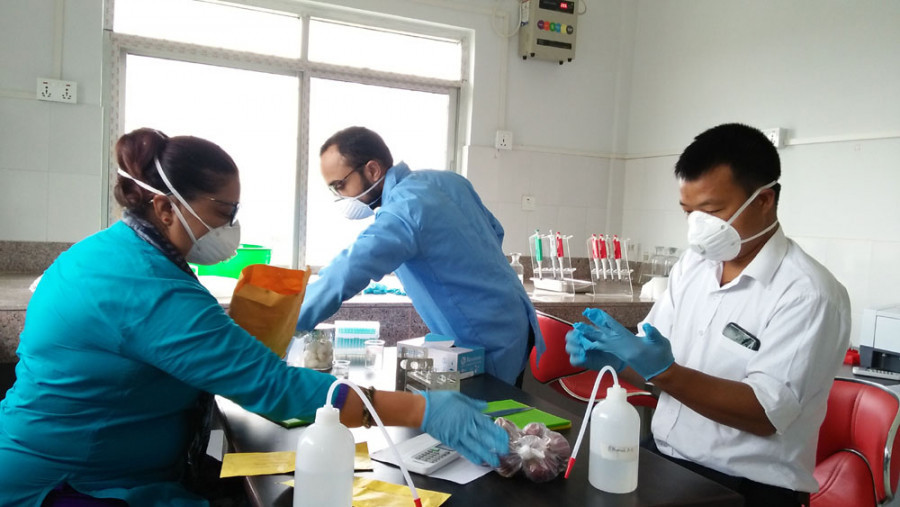
Every year, the department inspects restaurants, hotels, and manufactured and packaged food across the country. But improvements from these inspections are barely visible, even as cases continue to rise.
Government data show that inspections are increasing but are not keeping pace with the growing number of contamination cases.
In the last fiscal year, the department conducted 12,806 market inspections—on its own and jointly with other agencies—across the country. The inspections covered food and feed factories, hotels and restaurants, and highway eateries, largely in response to public complaints. That amounts to an average of 35 inspections a day, mostly concentrated in urban areas. The inspection count has grown from 11,059 in the previous fiscal year.
Officials say the nature of complaints, ranging from poor hygiene and labelling violations to outright contamination and adulteration, is worsening.
“We receive complaints through our official phone line, written letters and Hello Sarkar on a daily basis,” said Bal Kumari Sharma, spokesperson for the department, the quality watchdog.
“Most complaints involve foreign objects in food, including hair, metal, eggshells and plastic. Others mention spoiled ingredients.” Hello Sarkar is the government’s grievance-handling system that operates through phone, email and social media.
Last Monday, food safety officials in Gauridhara seized and destroyed three packets of momo and four packets of chowmein that did not have complete labels, along with two packets of artificial food colouring, at the Local Thakali Restaurant and Bar Pvt Ltd.
A day later, inspectors found a cockroach infestation in the kitchen of New Dudh Sagar restaurant at Machhapokhari, Balaju. Less than two weeks ago, Burger King and Crunchy Fried Chicken restaurant in Chandragiri was found storing food uncovered inside refrigerators, along with other hygiene lapses.
The World Health Organisation estimates that unsafe food causes around 866 million illnesses and 1.5 million deaths annually, many of which could be prevented through measures including improved water, sanitation and hygiene, food safety practices such as pasteurisation, and access to healthcare for vulnerable populations.
Exposure to biological hazards, including foodborne bacteria and viruses as well as parasitic infections, caused the majority of foodborne illnesses—approximately 860 million in 2021—while chemical exposures drove a disproportionate share of deaths.
Beyond health impacts, the study estimates that in 2021 foodborne disease led to about $310 billion in lost productivity, measured in time away from work due to illness. When the economic impact was adjusted for cost-of-living differences between countries, the estimate increased to $647 billion in lost productivity.
While these recent enforcement actions highlight the scale of the problem, Sharma, the department’s spokesperson, said the rise in complaints reflects both growing consumer awareness and continued negligence by food businesses.
Food contamination and adulteration are not new in Nepal, but a regulatory system that struggles to oversee a vast informal food economy has created a deep crisis of consumer trust.
Small eating outlets known as khaja ghar, which offer affordable meals, typically operate on thin margins and rarely meet even basic hygiene standards. Workers skip hygiene protocols and ingredients go unchecked.
Nepal does have rules meant to prevent this.
The Food Safety and Quality Control Act 2024 governs how food is made, stored, transported and sold. Under the law, food safety officers are responsible for inspections, sample collection and investigating complaints.
“The Food Safety and Quality Control Act has laid out standards for how food should and shouldn’t be handled. The implementing regulations are yet to come,” said Sharma, the department’s spokesperson.
In practice, consumers remain exposed to unsafe food on a routine basis.
Restaurant owners say most kitchens operating across the country lack basic infrastructure, including proper exhaust systems, fire extinguishers or proper drainage.
“Like with hotels, the government needs to set minimum standards for restaurants, categorise them, and divide inspection responsibility between local, provincial and central governments based on that categorisation,” said Sangharsha Bista, president of the Restaurant and Bar Association Nepal (Reban), the umbrella organisation of restaurants.
“Owners and staff also need training on maintaining hygiene.”
Bista said restaurants and local eateries are supposed to register with local governments, which are then responsible for inspections, but in practice, local-level inspections rarely happen.
Consumer rights activists say food is often tested only after complaints surface or suspicions are raised. But by that point, contaminated or adulterated food may already have been consumed or sold elsewhere.
Madhav Timilsina, president of the Consumer Rights Investigation Forum, said hotels and restaurants are covered by both the Consumer Protection Act and the Food Safety and Quality Control Act 2024. Even so, he said, violations remain widespread: adulterated food at party palaces and hotels, low-quality or cheap cooking oil, substandard meat and fish, and foreign objects turning up in food.
“Restaurant and eatery operators aren’t being held accountable because inspections are seasonal at best, and the Department of Food Technology can’t handle this alone,” Timilsina said. “With local governments failing to fulfil their duties, consumers are left eating contaminated food, and the state has failed to guarantee food safety.”
Public health experts warn that eating contaminated food carries both immediate and long-term health risks.
Sharad Raj Onta, a retired professor of Community Medicine and Public Health at the Institute of Medicine, said poor toilets and drinking-water management, workers not washing their hands or covering their hair, and improperly cleaned kitchen utensils all contribute to food contamination.
“Over the long term, contaminated food can cause hepatitis, jaundice and infections in different parts of the digestive system,” Onta said. Chemical contamination in food, he added, can also damage the kidneys, nervous system and blood.
In October 2017, Nepal’s Department of Food Technology issued a directive making it mandatory for hotels and restaurants to meet food quality, safety and hygiene standards. The directive, endorsed by the Ministry of Agriculture, classified eateries into four categories based on food quality, service and infrastructure: very good, good, medium and average.
Under the directive, hotels and restaurants are required to follow Good Manufacturing Practice, Good Hygiene Practice and Hazard Analysis Critical Control Point principles to protect consumer health.
But these principles are hardly practised.
“This is a serious matter,” Onta said. “We need a systematic and strict inspection process.”
Krishana Prasain
Krishana Prasain is a business reporter for The Kathmandu Post covering markets. Before joining The Kathmandu Post in 2018, she spent 3 years in New Business Age magazine covering business.



Most Read from Money

Why does an hour long flight to Dhangadhi cost more than a flight to New Delhi?
Nepal travel agents threaten to stop selling Thailand trips over visa rules
Malaysia rejects Nepal’s demand to open recruitment to all manpower agencies

No school, but a graduation cap for women dairy farmers
Nepal arrests four medical service providers as Malaysia recruitment row deepens
Editor's Picks




E-PAPER | October 25, 2026

×