



 22.07°C Kathmandu
Sun, Oct 25, 2026
Money
Hospital canteens found selling substandard, expired food in Kathmandu
Joint inspection flags poor hygiene, expired items and substandard cooking oil. Consumer rights activists demand stricter action and accountability from hospital authorities.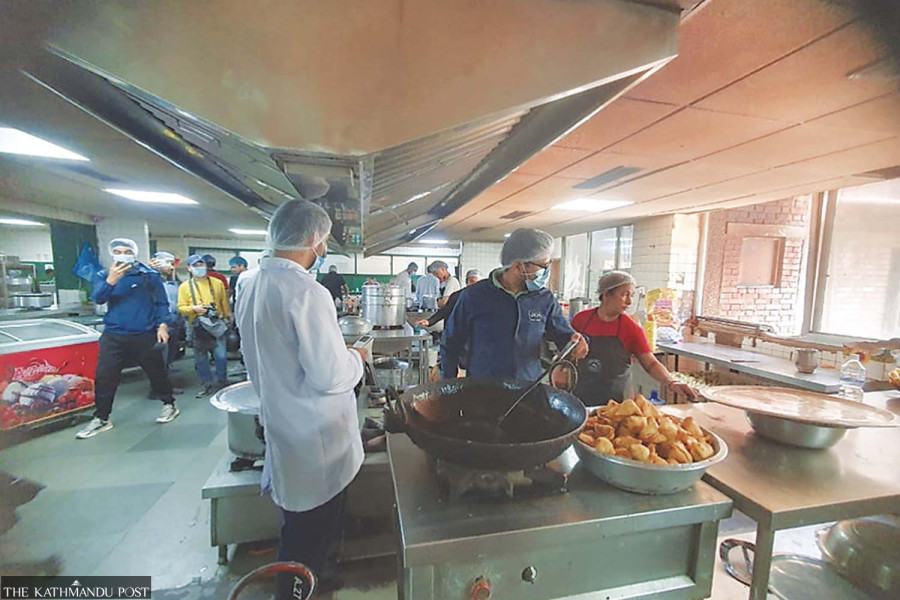
bookmark
Post Report
Published at : February 25, 2026
Updated at : February 25, 2026 07:10
Kathmandu
Canteens operating inside state-run hospitals in Kathmandu lack basic cleanliness in kitchens and workers’ hygiene, along with having food quality lapses, according to a recent inspection report.
A joint monitoring carried out last Tuesday by the Department of Food Technology and Quality Control and the Department of Commerce, Supplies and Consumer Protection revealed that cooking oil used in several hospital canteens did not meet prescribed standards. Inspectors also found poor pest control management and the use of expired spices and beverages.
Most hospital canteens in Kathmandu were found storing vegetables and other food items in a neglected and unhygienic manner. The inspection team reported that food was often left uncovered and refrigerators were not properly maintained.
The canteens found selling substandard food include Chitwan Hotel and Restaurant operated at Kanti Children’s Hospital in Maharajgunj, MB Chamena Griha at Tribhuvan University Teaching Hospital in Maharajgunj, Gujeshwori Hotel Pvt Ltd at Bir Hospital in Mahabouddha, and Sunil Canteen at the National Trauma Center in Mahankal.
According to the report, a sample collected from Chitwan Hotel and Restaurant showed total polar materials (TPM) in frying oil at 12 percent, which does not comply with the standard. TPM is considered one of the most reliable indicators of cooking oil quality. A high TPM level reflects the presence of degraded polar compounds, which affect taste, lower the smoke point and pose potential health risks, making oil replacement necessary.
The inspection also found that ready-made food items such as samosa, jerry and other sweet dishes were kept in display showcases without proper covering. The cleanliness of the kitchen was deemed unsatisfactory. Covering food is essential to protect it from contamination by dust, pests and airborne particles, and to prevent foodborne illnesses. It also helps maintain appropriate temperatures and preserves food quality in compliance with food safety standards.
The Food Technology Department directed Chitwan Hotel and Restaurant to properly cover ready-made food items and maintain appropriate storage temperatures. The management was also instructed to implement effective pest control measures.
At MB Chamena Griha, the TPM level in frying oil was found to be 14 percent, exceeding acceptable standards. Inspectors noted that the personal hygiene of workers was unsatisfactory and pest control measures were lacking. The refrigerator was found dirty, and food items were stored without proper covering.
Nine bottles of Fanta stored in a refrigerator near the counter were found to be expired. The inspection team destroyed the outdated beverages on the spot and directed the management not to sell any expired products. The canteen was also instructed to maintain refrigerator cleanliness and improve overall hygiene.
Similarly, Gujeshwori Hotel was found storing vegetables directly on the floor and in dirty crates. Broken kitchen floor tiles were also observed. Tests showed that the frying oil used there did not meet standards.
At Sunil Canteen, inspectors found that the lid of a dustbin was left open during the inspection. The canteen was also using a 50-gram packet of biryani spice that had passed its expiry date. The inspection team ordered the immediate closure of the dustbin lid and destroyed the expired spice packet.
Consumer rights activists have criticised both the canteen operators and hospital administrations, arguing that hospitals bear responsibility for monitoring the quality of food sold on their premises. They pointed out that hospitals award contracts to operate canteens through a tender process and must ensure compliance with hygiene and safety standards.
Bishnu Prasad Timilsina, general secretary of the Forum for Protection of Consumer Rights-Nepal, said hospitals should be held accountable if patients suffer health complications after consuming low-quality food.
“The hospital needs to be responsible first, as people may fall sick if they consume food prepared without maintaining cleanliness and hygiene. Patients admitted to hospitals consume food prepared in these canteens, which can further deteriorate their health condition,” he said.
Timilsina argued that if consumption of such substandard food leads to food poisoning, it should be treated as a criminal offence against consumers. In such cases, he said, the Commerce Department should initiate legal action rather than limiting itself to warnings and directives.
Consumer rights activists also said that merely instructing canteens to maintain hygiene would not bring meaningful improvement. They called on the Commerce Department to examine the operational history of the canteens and investigate whether any consumer had fallen ill after consuming contaminated or adulterated food.
“A hospital canteen is using expired spices, and the inspection team just destroyed the packet and instructed them not to repeat the mistake. This is a serious offence against human health,” Timilsina said.
Experts noted that the Commerce Department has the authority to take immediate punitive action during inspections. They said that fines of up to Rs300,000 could have been imposed in such cases but the department limited its response to instructions and warnings.
The findings have raised serious concerns about food safety standards inside public hospitals, where patients, visitors and health workers rely on canteen meals on a daily basis. Activists maintain that without strict enforcement and accountability, such lapses are likely to persist, potentially putting vulnerable patients at further risk.





Most Read from Money

Why does an hour long flight to Dhangadhi cost more than a flight to New Delhi?

Nepal travel agents threaten to stop selling Thailand trips over visa rules
Malaysia rejects Nepal’s demand to open recruitment to all manpower agencies

No school, but a graduation cap for women dairy farmers
Nepal arrests four medical service providers as Malaysia recruitment row deepens
Editor's Picks




E-PAPER | October 25, 2026

×