



 18.11°C Kathmandu
Sun, Oct 25, 2026
Money
Kathmandu frets over cooking gas, but oil corporation says supply normal
Thailand, Vietnam, India and Bangladesh roll out energy-saving measures.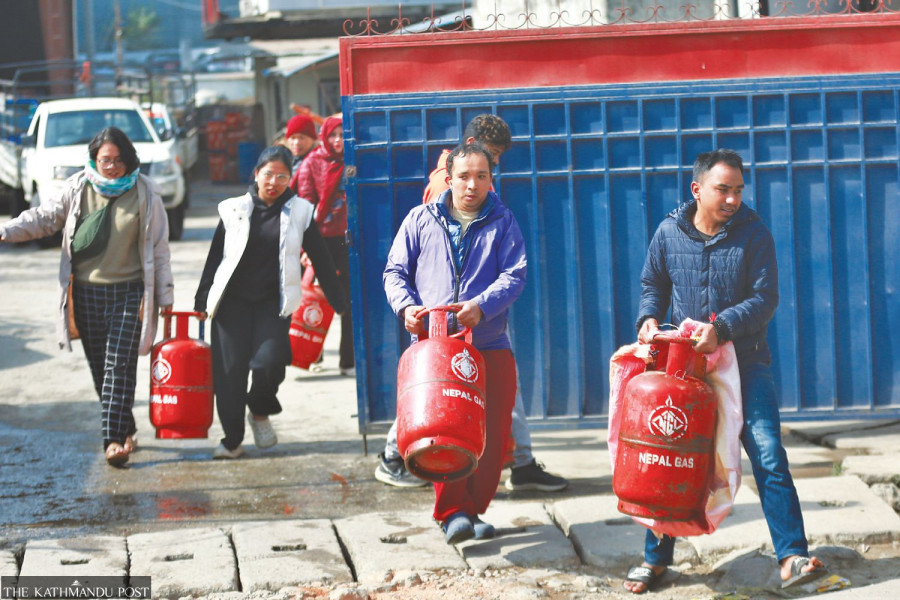
bookmark
Krishana Prasain
Published at : March 11, 2026
Updated at : March 11, 2026 06:31
Kathmandu
Across Asia, countries are scrambling to contain the economic fallout of the war in West Asia, as oil supplies face disruption and fuel prices continue to climb.
On Tuesday, Thailand and Vietnam encouraged public employees to work from home and adopt other energy saving measures. In Vietnam, the government scrapped duties on many imported petroleum products in an effort to stabilise the domestic market. Hoteliers across several states in India have reported cooking gas shortages and urged the government to ensure uninterrupted supply of fuel.
In Bangladesh, authorities introduced emergency measures including fuel rationing for vehicles, restrictions on diesel sales and the temporary closure of universities. Energy shortages are also affecting Bangladesh’s critical export industries. The country is the world’s second-largest cloth exporter after China, and many garment factories rely on diesel-powered generators during power outages.
In comparison, Nepal, which imports 100 percent of its fossil fuel, seems less bothered. The supply utility—the state-owned Nepal Oil Corporation—said its sole supplier Indian Oil Corporation has assured there is no reason to panic.
However, the public is already stressed as there are widespread fears of fuel and gas shortage following the US and Israeli attack on Iran.
Asmita Koju of Thali in northeastern Kathmandu said she has been scouting for a cooking gas cylinder for the past couple of weeks.
“It’s been two weeks since I left my empty gas cylinder at the nearby grocery store waiting for my turn,” said Koju, a homemaker with a family of six.
She has two cylinders, and one is about to run out. “I am also tense because I have three schoolgoing children.”
Like Koju, Bidur Khadgi of Gurjudhara is also worried.
Khadgi, who works at a trading house, has been following news about the West Asia conflict and has been panicking due to the unfolding situation.
Khadgi said he struggled to get a cooking gas cylinder last month, and this time all nearby stories have stopped selling it.
It’s been more than a month that cooking gas supply has been in short supply in the Kathmandu Valley, which hosts over three million people.
Nepal’s state-owned fuel monopoly, however, said that the situation is not as bad as people are making it to be.
Manoj Kumar Thakur, deputy director of Nepal Oil Corporation, said that Indian Oil Corporation (IOC) has assured NOC of adequate supply.
“We have been informed by the IOC that they will supply cooking gas to Nepal in line with the demand and will not abruptly cut off supply,” he said. “We have been in regular contact with IOC officials over the unfolding situation in West Asia, which is home to major fuel-supplying countries.”
Thakur said that the conflict in Iran created panic in India, leading consumers to hoard.
Though the Indian government has hiked the price of a cooking gas cylinder by INR60 two days ago, Nepal’s fuel supplier said that it is still undecided about jacking up the price immediately after the national election.
Currently, according to NOC claims, it has been facing a loss of Rs216 per cylinder. A 14.2-kg cylinder costs Rs1,910. The cooking gas price is reviewed every month when the IOC sends a new price list.
“In the years gone by, we had even sold the cooking gas bearing a loss of over Rs1,000 per cylinder. So, even this time, if the price increases, the corporation will adjust the price as much as it can,” said Thakur.
“As for other fuels, as of Tuesday, daily consumption of petrol stands at around 2,000 kilolitres while it is 4,500 kilolitres for diesel, and their imports are normal,” Thakur said. “However, as international market prices keep changing, we have been following the auto-pricing mechanism. Under this system, fuel prices are reviewed periodically, except for cooking gas.”
“At present, we have enough stock to meet the country’s fuel demand for around 10 days even if imports stop completely,” he added.
The corporation has collected Rs20 billion in its price stabilisation fund to cushion shocks and the corporation said it would use the fund to avoid massive hikes.
Nepal’s LPG demand currently stands at 45,000–46,000 tonnes per month, and NOC claims a similar quantity has been arriving.
Among the 6.66 million households in the country, 51 percent use firewood and 44.3 percent use LPG for cooking.
Bagmati province, which includes the Kathmandu Valley and has 1.56 million households, leads in LPG consumption, with 69.8 percent of the families using it for cooking, according to census report.
“The problem is that consumers are panicking due to news reports about impacts on supply,” said Thakur.
With rising grievances of consumers over cooking gas shortage, NOC’s Teku depot has been distributing LPG cylinders of various bottlers from 11:30 am to 4 pm.
“As consumers are not getting LPG from nearby retail shops or depots, it is important to conduct inspections at such places,” said Thakur. “If household consumption had been prioritised earlier, there would have been no supply issues. But when commercial users started hoarding cylinders in large quantities, it created problems in the regular supply chain.”
Hike in the price of petroleum products makes many things expensive in Nepal, from transport to hotels and from kitchen to readymade goods, putting the already strained economy in further stress.
The corporation said commercial users like hotels and restaurants have not complained of shortages.
Cooking gas bottlers said that the current level of imports are the same as before.
“We have been assured that India has stock of LPG for a month, including crude for another month for the Nepali market. So, there is no need to panic,” said Diwan Bahadur Chand, president of Nepal LP Gas Industry Association.
Last month, Nepal’s LPG imports were 2,000–3,000 tonnes above normal.
Daily, 90-100 LPG bullets enter Nepal, of which 40–50 are supplied to Kathmandu.
A standard large LPG bullet (transport truck) usually carries around 18-20 tonnes of LPG.
Based on a standard household cylinder containing 14.2 kg of gas, one bullet transports approximately 1,260 to 1,400 cylinders.
Shiva Prasad Ghimire, chairman of SG Group, which owns Everest Gas, Sahara Gas, Prima Gas and Sugam Gas, among others, said they have been receiving 5–10 percent more LPG consignments than usual.
“So there is no problem on the supply side.”
According to the Department of Customs, the import quantity of LPG has increased by 2.14 percent to 321,089 tonnes, worth some Rs31.85 billion in the first seven months of the current fiscal year which ended mid-February, compared to the same period in the last fiscal year.
Krishana Prasain
Krishana Prasain is a business reporter for The Kathmandu Post covering markets. Before joining The Kathmandu Post in 2018, she spent 3 years in New Business Age magazine covering business.




Most Read from Money

Why does an hour long flight to Dhangadhi cost more than a flight to New Delhi?
Nepal travel agents threaten to stop selling Thailand trips over visa rules
Malaysia rejects Nepal’s demand to open recruitment to all manpower agencies

No school, but a graduation cap for women dairy farmers
Nepal arrests four medical service providers as Malaysia recruitment row deepens
Editor's Picks




E-PAPER | October 25, 2026

×