Budget puts AI, health reform and infrastructure expansion at centre of policy push
Finance Minister Wagle announces reforms in immigration, health insurance, capital markets and public utilities while pledging expanded road, water and social welfare programmes Hemanta Shrestha/TKP
Finance Minister Swarnim Wagle on Friday announced a wide-ranging set of reforms and development programmes in the budget for fiscal year 2026-27, including a national campaign to support Nepal’s graduation from the United Nations’ least developed country category.
Presenting the budget at a joint session of Parliament, Wagle said Nepal had already met the minimum criteria required for graduation from the least developed country status. However, he said the government had decided to pursue the transition over the next two years through an intensive national economic and social transformation campaign.
The government also announced a series of drinking water and sanitation projects, including deep-boring programmes in Tarai-Madhesh and the completion of 280 drinking water projects in the region. Drinking water projects will also be launched in Damak, Dharan and Itahari, while a nationwide water testing campaign and wastewater treatment programmes will be introduced.
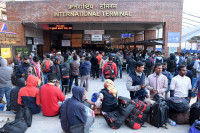
Wagle said the government would bring a new bill to reform the visa system and establish investment-friendly immigration management.
The finance minister also announced a special initiative to prepare Nepal for the artificial intelligence era.
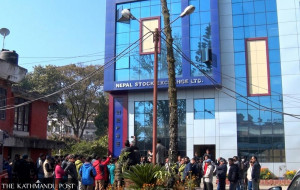
Under the new budget, the government said it would facilitate the listing of Nepali companies in foreign securities markets and move ahead with the restructuring of the Nepal Stock Exchange to make the capital market more credible.
The government also announced plans to provide grants to political parties that get the status of a national party, based on votes secured in the latest general elections. Accounts of political parties will be audited through the Office of the Auditor General.
To expand democratic participation, the government said it would prepare the legal, technical and administrative infrastructure required to ensure voting rights for Nepali citizens living abroad.
In the health sector, the finance minister announced a major restructuring of the health insurance programme, with a target of bringing 90 percent of citizens under health insurance coverage within three years.
The government also said Nepal Drugs Limited would be strengthened to produce 25 types of medicines currently distributed free of cost by the state.
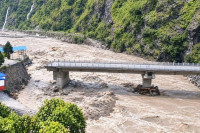
Wagle announced that 1,000 kilometres of blacktopped roads and 275 permanent bridges would be constructed in the next fiscal year.
The government has allocated Rs17.64 billion for the Kathmandu-Tarai/Madhesh Fast Track project and said bridges on national and strategic highways would be completed within three years. The finance minister said that the tunnel routes will come into operation from mid-July.
Wagle further announced that the long-delayed restructuring of Nepal Electricity Authority would move forward, with the utility to be divided into separate entities for generation, transmission, distribution and trade.
The budget also doubles the child nutrition allowance for Dalit children nationwide to Rs1,000 per month and promises additional concessions in loan disbursement for women entrepreneurs.
Wagle said the quota system in higher education programmes, including medicine, nursing and information technology, would also be reviewed by the next fiscal year.
The government further announced a nationwide clean toilet campaign across all educational institutions and said diaspora skills, capital and networks would be mobilised as part of efforts to expand Nepal’s soft power internationally.




 18.62°C Kathmandu