



 23.39°C Kathmandu

Wed, Oct 21, 2026
Money
NAIMA Mobility Expo opens today. 18 new two-wheeler, 29 four-wheeler brands on offer
Nepal’s electric vehicle market is expanding rapidly, but industry leaders say weak border infrastructure, cumbersome customs procedures and uncertain policies are holding the market back.
bookmark![]()
Workers installing wiring and lighting behind the pavilion. Dipesh Darshandhari/TKP
Bimal Khatiwada
Published at : August 11, 2026
Updated at : August 11, 2026 07:04
Kathmandu
The NAIMA Nepal Mobility Expo 2026 opens at Bhrikutimandap in Kathmandu on Tuesday, as more vehicle brands join the country’s shift towards electric mobility.
Organised by the Nepal Automobile Importers and Manufacturers Association (NAIMA), the expo will run until August 16 and feature 53 automotive stalls. It will showcase 18 new two-wheeler brands and 29 four-wheeler brands entering or expanding their presence in the Nepali market.
Electric vehicles are the main attraction, with models on display ranging from around Rs2 million to Rs35 million. The expo will also feature workshops on road safety and the management and recycling of lithium-ion batteries, according to the organisers.
Promotional offers on vehicle bookings have also been announced for the event, which comes ahead of the festive season, traditionally a peak period for vehicle sales.
Two days before the expo opened, Kantipur Media Group hosted a roundtable on Sunday, bringing together industry leaders and government representatives to examine the state of Nepal’s automobile sector, government policies and the infrastructure needed to support the country’s transition to electric mobility.
Taking part in the discussion, Ritu Singh Vaidya, president of NAIMA, said the strong response to last year’s expo had strengthened the association’s position in the automobile industry and reflected growing consumer interest in vehicles and new mobility technologies.
The number of vehicle brands participating in the expo has increased from 42 last year to 55 this year, reflecting growing confidence in the event and Nepal’s automobile market, she said.
The expansion has been particularly pronounced in electric mobility, with more than 80 EV brands now present in the Nepali market, Vaidya said.
“The private sector is driving the growth of electric mobility, but the government must create policies and infrastructure that support this transition,” she said.
Vaidya also pointed to uncertainty over the implementation of maximum retail price (MRP) requirements at customs as a concern for importers. Discussions are under way on enforcing MRP provisions at customs, but the policy has yet to be formally implemented.
She urged the government to ensure that any MRP system is practical, predictable and workable for businesses.
Importers also face significant logistical problems at Nepal’s northern border points, particularly Tatopani in Sindhupalchok and Rasuwagadhi in Rasuwa, she said.
Vehicles entering through these points have to be unloaded at warehouses, inspected and fitted with regulatory stickers before being loaded again for onward transportation. The additional handling increases transportation costs and adds to the overall cost of importing vehicles.
“The process is cumbersome and increases the cost of doing business, ultimately affecting consumers,” Vaidya said.
Poor road infrastructure and recurring landslides have further disrupted vehicle imports through Tatopani and Rasuwagadhi, which are key routes for vehicles imported from China.
The disruption at Tatopani has also affected the expo, with several brands unable to bring vehicles for display and many China-imported vehicles stranded at the border, Vaidya said.
“Tatopani is currently paralysed, and that has directly affected the expo,” she said.
The problems at the border have highlighted a wider challenge for Nepal’s automobile sector, which depends heavily on cross-border trade for vehicles, components and spare parts. Industry representatives have repeatedly called for more reliable transport links and faster customs procedures to reduce costs and improve supply-chain efficiency.
Vaidya also called for greater government involvement in expanding electric public transport, arguing that private-sector growth in electric cars and two-wheelers alone would not be enough to complete Nepal’s transition to cleaner mobility.
The government and private sector need a clear framework to jointly develop electric public transport, she said.
Taking part in the roundtable, Nirakar Shrestha, a board member of NAIMA, said this year’s expo had been designed not only to showcase vehicles but also to encourage discussion on the future of Nepal’s mobility sector.
The programme covers foreign direct investment, battery reuse and recycling, vehicle financing, insurance and youth entrepreneurship. Students and auto enthusiasts will also take part, he said.
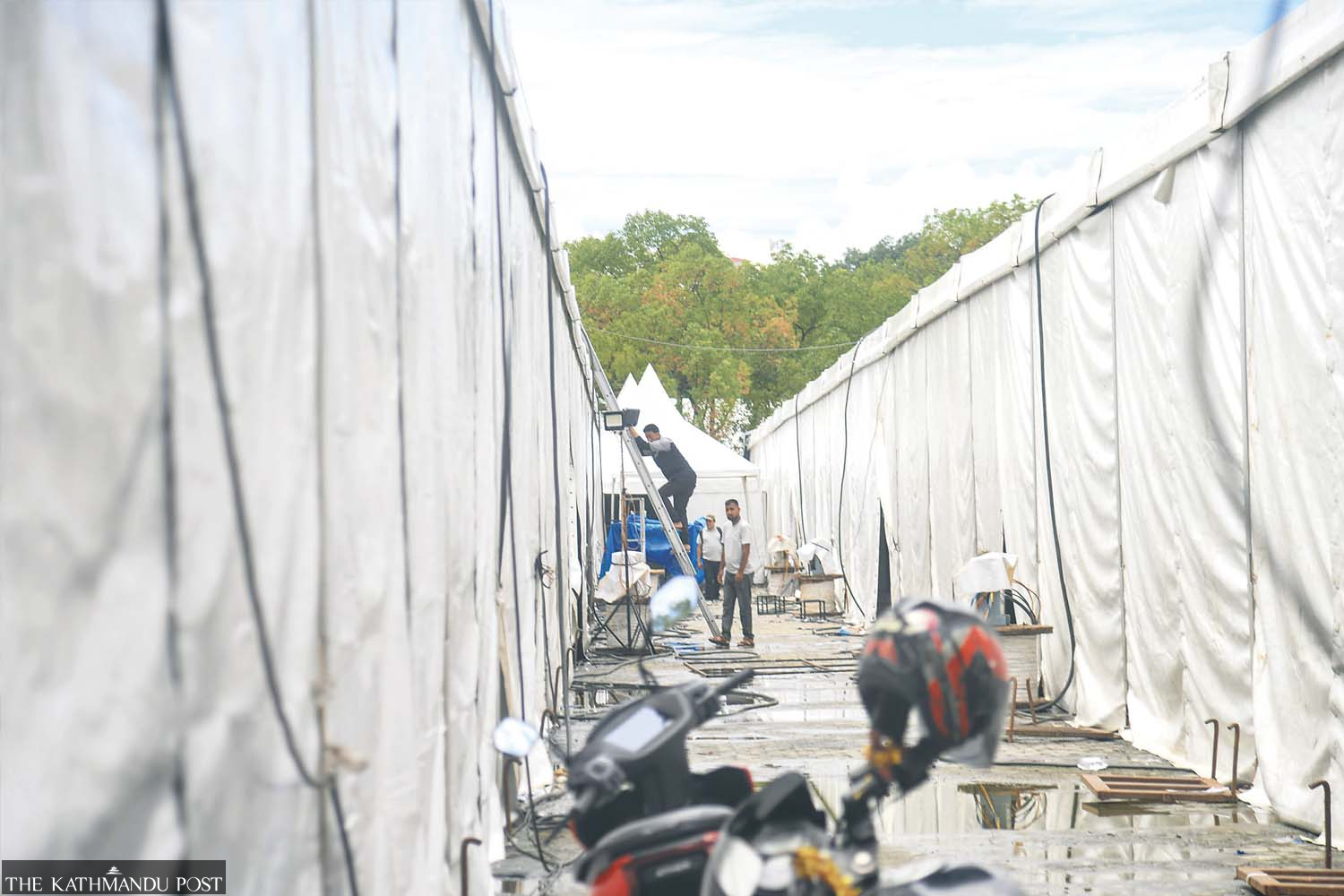
Shrestha said organisers had improved parking and ticketing arrangements for the expo, including by leasing the Nepal Police Club premises and introducing online tickets with cashback offers.
But the absence of a permanent, international-standard exhibition centre remained a major problem despite repeated government announcements, he said.
“We need an international-standard exhibition centre that can serve not just the automobile sector but all commercial sectors,” he said.
Shrestha also warned that the rapid expansion of electric vehicles was being accompanied by a growing informal spare-parts market. He estimated that the informal market was nearly twice the size of the formal market, with around 1,000 to 1,200 repair garages in the Kathmandu Valley sourcing parts through informal channels across the open border with India.
Such imports result in revenue losses for the state, expose consumers to counterfeit or substandard parts and undermine authorised dealers, he said.
Shrestha said Nepal’s automobile market remained disproportionately small compared with countries with similar or even smaller populations.
“Vehicle numbers are alarmingly disproportionate to the population,” he said, pointing to Malaysia’s much larger automobile industry despite its population of around 35 million and Bhutan’s annual sales of about 15,000 vehicles despite having fewer than 1 million people.
Better roads would be essential to expanding the automobile market and supporting domestic vehicle assembly, Shrestha said.
Motorcycle assembly plants are already operating in Nepal, while four-wheeler assembly has also begun. Two Hyundai models, the Creta and Venue, are being assembled domestically, he said.
Local assembly has reduced the price of the Hyundai Creta by around Rs600,000 compared with the fully imported version, while another model has seen a price reduction of about Rs900,000.
Shrestha said tax incentives for assembly industries should not be assessed simply in terms of revenue forgone by the government. Their wider economic benefits, including lower prices for consumers and the development of domestic industry, should also be considered, he said.
He also stressed the distinction between assembly and manufacturing. Assembly involves importing components and putting them together locally, while full-scale manufacturing requires a much broader industrial ecosystem capable of producing those components.
But for such an ecosystem to develop, the government needs to look beyond automobiles as a source of tax revenue and address the wider infrastructure and regulatory constraints facing the sector, industry representatives said.
“The government should not view automobiles simply as a source of revenue,” Shrestha said, arguing that vehicle ownership and mobility should instead be considered in the broader context of economic development.
The government says it has begun addressing some of these structural constraints through changes to transport policy and legislation.
Ramhari Pokharel, joint secretary and spokesperson at the Ministry of Physical Infrastructure and Transport, said the government had recently introduced a National Transport Policy aimed at addressing some of the structural problems facing Nepal’s transport sector.
According to government data, 6,249,732 vehicles have been registered across Nepal, including 63,280 electric vehicles. But Pokharel said more detailed analysis of vehicle registrations, usage and transport patterns was needed to formulate effective policies.
Road infrastructure remains another major challenge. Nepal has around 104,000 kilometres of roads, of which about 21,000 kilometres fall under federal jurisdiction. Yet there is no single central mechanism maintaining an integrated database of roads across federal, provincial and local governments, he said.
The absence of such a system makes it difficult to determine the condition and usability of roads across the country and plan upgrades systematically.
The government is investing in four-lane highways and tunnels, but weaknesses in contracting and construction management continue to cause delays in maintenance and repairs, Pokharel said.
On EV infrastructure, he said Nepal needed different approaches for its mountainous terrain and densely populated urban areas. The government must also assess whether electric public buses can operate nationwide solely through charging infrastructure or whether a hybrid model would be more practical.
The National Transport Policy places particular emphasis on improving public transport in the Kathmandu Valley. With technical and financial assistance from Japan, the government has completed a study of the Valley’s transport system and road infrastructure and prepared a master plan, Pokharel said.
“Road infrastructure will be developed through collaboration between the government and private sector,” he said.
The government is also working to replace outdated transport legislation. Pokharel said a new Urban and Transport Management Act was now being drafted to replace the existing Transport Management Act 1992.
He invited the private sector to contribute to the drafting process, saying reforms should reflect the realities faced by both transport operators and users.
“Our objective is to create a modern and practical transport sector,” Pokharel said.
He said Nepal’s geography and growing EV market could make the country an important case study in the adoption of electric vehicles and new transport technologies.
The government, he added, would continue consulting the automobile industry while drafting new laws, policies and regulations.
“We will build quality infrastructure in collaboration with the private sector,” Pokharel said.
Taking part in the roundtable, Sahil Shrestha, chief executive officer of Cimex Inc (BYD), said Nepal’s electric vehicle market had reached a significant stage, with around 95 percent of the electricity used to charge EVs generated from domestic hydropower.
The Nepal Electricity Authority has established 52 fast-charging stations, while the private sector has built more than 1,000 charging stations across the country, he said.
Shrestha also highlighted the economic benefits of the shift to electric mobility. Nepal’s automobile sector accounts for around 15,000 vehicle transactions annually and represents an industry worth about Rs50 billion. Compared with internal combustion engine vehicles, EVs offer lower energy and maintenance costs because they have fewer moving parts.
Battery performance, often cited as a concern among potential EV buyers, has not so far created major systemic problems, he said. Manufacturers’ warranties also cover battery replacement when required.
Shrestha argued that rising vehicle ownership should be viewed as a sign of economic activity rather than simply increased consumption. He linked vehicle demand to the government’s target of building a $100 billion economy, maintaining average annual economic growth of 7 percent and creating 1.2 million jobs.
“An increase in vehicular density should be viewed as an indicator of economic mobility and market expansion,” he said.
But outdated laws and inconsistent policies continue to constrain the industry. Although the government has issued the National Transport Policy-2026 (2083 BS), Shrestha said its provisions covering customs duties, transport logistics and vehicle management remained unclear.
He called for a review of the entire vehicle lifecycle, from import and registration to ownership transfer, to identify administrative bottlenecks and establish clearer rules.
Battery management also requires an urgent policy response, he said. Nepal could develop domestic battery recycling industries, promote the reuse of degraded batteries for stationary energy storage, or simplify the process for exporting depleted batteries to specialised recycling facilities abroad.
The biggest challenge, however, remains policy instability. “Unstable government policies consistently disrupt business plans,” Shrestha said.
Since EV imports began expanding significantly around fiscal year 2020-21, taxes on electric vehicles have been repeatedly changed, sometimes sharply, he said. In some cases, tax rates have jumped from 10 percent to 100 percent without adequate consultation.
Such uncertainty has made the annual budget a major source of speculation for the automobile industry. Manufacturers must place orders with overseas factories months in advance, often before the government announces its tax policies, leaving importers exposed to sudden changes.
Consumers also respond quickly to rumours of tax changes, Shrestha said, often bringing forward or delaying purchases depending on expectations about the budget.
He also called for a unified national database of vehicles. Different government agencies currently maintain separate datasets, making it difficult to establish the actual number and composition of vehicles operating on Nepali roads.
The National Transport Policy cites 6,249,732 registered vehicles, but the figure does not adequately distinguish between private, commercial and heavy vehicles, he said.
“Private cars and commercial vans cannot simply be placed in the same category if we want accurate data,” Shrestha said.
He proposed creating a separate classification for passenger vans with up to nine seats and maintaining detailed records by vehicle type and brand. The Department of Customs should use the same classifications in its import data, he added.
Shrestha also stressed the need to prepare Nepal’s workforce for the growth of electric mobility. The Council for Technical Education and Vocational Training (CTEVT), universities and technical institutes should incorporate EV diagnostics and repair into their curricula, he said.
With EVs accounting for around 35 percent of vehicle adoption in Europe, Nepal must begin preparing skilled technicians before the domestic market reaches a similar level of penetration.
Shrestha also called for greater flexibility in monetary policy and a higher loan-to-value ratio for EV financing to encourage adoption.
He linked the expansion of the automobile industry directly to road development and wider economic growth. More vehicles create demand for better roads, while improved roads encourage greater vehicle use and economic activity, he said.
The private sector, he added, could also help the government improve transport management through technology. GPS-based telematics and GSM-enabled tracking systems could provide real-time information on road conditions, vehicle speeds and traffic congestion.
Such data could help authorities identify bottlenecks and improve urban mobility, while clearer divisions between the government’s regulatory responsibilities and its role in infrastructure development would improve accountability.
“If electric mobility, modern public transport, private-sector innovation and effective government regulation are brought together, Nepal can build a more organised and sustainable transport system,” Shrestha said.


Most Read from Money

Nepal travel agents threaten to stop selling Thailand trips over visa rules

Why does an hour long flight to Dhangadhi cost more than a flight to New Delhi?
Malaysia rejects Nepal’s demand to open recruitment to all manpower agencies

No school, but a graduation cap for women dairy farmers
Nepal arrests four medical service providers as Malaysia recruitment row deepens
Editor's Picks




E-PAPER | October 21, 2026

×