LPG imports are up. Why are consumers still queuing for it?
A surge in demand after four months of half-filled cylinders has exposed deeper weaknesses in Nepal’s LPG supply chain, from storage and transport to cylinder management and distribution. Post photo
Nepal’s imports of liquefied petroleum gas have not fallen. Government officials and industry representatives say imports have actually increased in recent weeks.
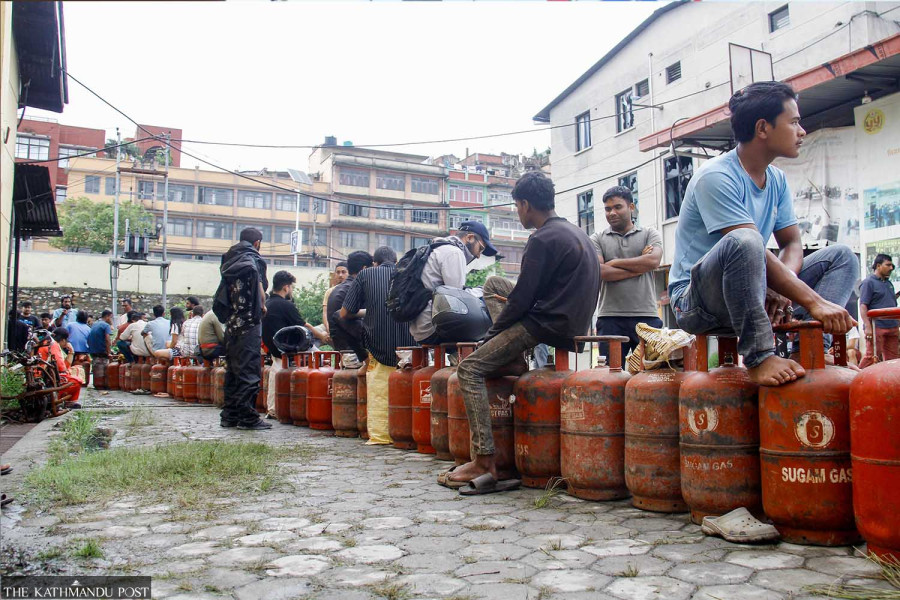
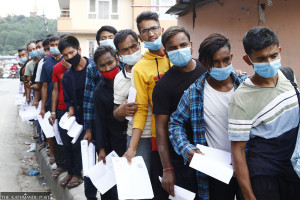
Yet cooking gas remains difficult to find in the market, with consumers queuing for hours with empty cylinders.
For about four months, Nepal sold only half-filled cylinders to ease pressure on supplies after tensions in West Asia raised concerns about possible disruptions. That reduced apparent demand.
But when full 14.2-kilogram cylinders went back on sale, pent-up demand returned almost overnight. Shortages quickly reappeared.
So where is the gas getting stuck?
The problem is not simply a lack of imports. It lies deeper in Nepal’s supply chain, including the management of cylinders, storage capacity, distribution and transport.
Here is what is happening.
When did the shortage begin, and why?
Pressure on Nepal’s LPG supply began in February as tensions escalated in West Asia.
Fearing that the war involving the United States, Israel and Iran could disrupt supplies, Nepal Oil Corporation, the state-owned fuel supplier, decided on March 13 to sell only half-filled LPG cylinders, containing 7.1 kilograms instead of the usual 14.2 kilograms.
The arrangement continued for about four months.
Selling half-filled cylinders reduced consumption and eased immediate pressure on the market. With consumers buying less gas, the supply system was able to cope despite concerns over imports.
As supply from India stabilised, the corporation resumed sales of full 14.2-kilogram cylinders on July 15.
That immediately pushed demand higher. The shortage returned.
Has Nepal been receiving less gas from India?
No.
Nepal Oil Corporation's figures do not show a sustained fall in LPG imports.
In February, when concerns over the West Asian conflict first intensified, Nepal sold 51,192 tonnes of LPG. By August 8, it had already imported 41,294 tonnes in the current Nepali month, according to Nagendra Sah, NOC managing director.
Sah says supplies are currently regular.
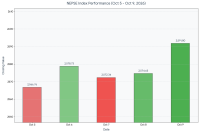
Imports during the final four Nepali months of the previous fiscal year were also substantial. Nepal imported 48,327 tonnes in mid-March to mid-April, 46,503 tonnes in mid-April to mid-May, 49,816 tonnes in mid-May to mid-June and 47,933 tonnes in mid-June to mid-July.
Gas industry representatives say imports have not fallen. Industry operator Shiva Ghimire estimates they have increased by between 15 and 25 percent recently.
The evidence therefore points away from a simple import shortage.
The bigger problem is what happens to the gas after it enters Nepal.
If there is enough gas, why are consumers still queuing?
The return to full-cylinder sales created a sudden surge in demand.
For four months, households had been buying only half the usual quantity. Once full cylinders became available again, that suppressed demand came back at once.
According to Sah, complaints were limited while half-filled cylinders were being sold. The situation changed when full cylinders returned to the market.
Large numbers of empty cylinders also came back into circulation, putting additional pressure on the distribution system.
But the problem goes beyond the sudden increase in demand.
Nepal does not even have a definitive figure for the number of LPG cylinders in circulation.
A 2021 certification exercise by Nepal Oil Corporation put the number at about 14.4 million. Industry representatives and distributors, however, estimate that around 17.5 million cylinders are now in the market.
There is also no clear policy governing how many cylinders households, hotels and restaurants should be allowed to hold.
Nor is there an effective system for determining how much gas is needed in each area and allocating supplies accordingly.
That means gas can enter the country in sufficient quantities without reaching consumers at the right time or in the right place.
Where has the system failed?
The current crisis exposes weaknesses at four different levels.
First, cylinder management.
Authorities do not have a reliable count of the cylinders circulating in the market. New cylinders continue to be added, but regulation and monitoring have not kept pace.
Second, distribution.
The reopening of full-cylinder sales caused demand to rise sharply. But supplies were not redistributed quickly enough according to regional demand.
Consumers who have only one cylinder have been particularly vulnerable. When that cylinder runs out, they have no immediate backup and are forced to join queues.
Third, storage.
Nepal consumes roughly 45,000 to 50,000 tonnes of LPG a month.
But industry representatives say the country’s LPG storage capacity, including bulk storage and cylinders at plants, is only around 10,500 tonnes.
Officials at the Ministry of Industry say Nepal needs at least 25,000 tonnes of storage capacity.
The gap leaves the country exposed to even short disruptions in imports or transportation.
Fourth, transportation.
Nepal remains heavily dependent on Indian LPG bullet tankers to bring LPG into the country.
When Indian LPG plants undergo maintenance or transportation is disrupted, Nepal can feel the effects almost immediately.
The current crisis therefore cannot be explained simply by how much gas Nepal imports.
It is a supply-chain problem.
What would fix the problem in the long term?
Making gas available in the market immediately may ease the current queues, but it will not prevent the same problem from returning.
At least four measures are needed.
Build large-scale storage facilities: Stakeholders say Nepal needs infrastructure capable of storing at least 25,000 tonnes of LPG.
Such reserves would allow the country to keep the market supplied for several days even if imports from India were temporarily disrupted.
Build an LPG pipeline: Nepal has long considered reducing its dependence on tanker trucks by building a gas pipeline from Motihari in India to Nepal.
A proposed route from Motihari through the Pathlaiya-Sarlahi area would be about 130 kilometres long.
Indian Oil Corporation has already carried out a route survey and submitted a report, but the project has not moved ahead.
Regulate cylinders: The government needs a clear system determining how many cylinders the market requires, how many cylinders individual consumers should be allowed to hold and how many new cylinders LPG companies can introduce.
Without such controls, the number of cylinders can continue to rise without corresponding improvements in distribution.
Overhaul distribution: Nepal needs a permanent system that allocates LPG according to actual regional demand.
At present, the system appears largely reactive: supplies are redirected only after shortages emerge.
The contradiction at the heart of Nepal's LPG crisis
The government’s message is that there is enough gas.
Industry representatives say imports have increased.
Consumers, meanwhile, are standing in queues because they cannot find a cylinder.
Those three statements can all be true.
The immediate problem is not necessarily the amount of LPG entering Nepal. It is the country’s ability to move, store and distribute that gas efficiently once it arrives.
The shortage has exposed weaknesses in cylinder management, distribution networks, storage capacity and transport infrastructure.
Until those structural problems are addressed, Nepal can continue to have enough gas on paper while consumers struggle to find it in practice.




 17°C Kathmandu