



 23.63°C Kathmandu
Tue, Oct 20, 2026
Money
Prime Minister Shah posts ‘say cheese,’ DDC smiles, some frown
Prime Minister’s social media endorsement sends sales soaring, reviving interest in a traditional Himalayan product and offering fresh hope to Nepal’s struggling dairy sector.
bookmark![]()
DDC produces around 55 to 60 tonnes of yak cheese annually and earns nearly Rs100 million from the product. Its production takes place mainly between April and October. Angad Dhakal/TKP ![]()
Cheese-making in Nepal’s Himalayas dates back centuries, largely as a method of preserving milk in cold high-altitude areas
Krishana Prasain
Published at : May 18, 2026
Updated at : May 18, 2026 17:57
Kathmandu
“Say Cheese.”
Prime Minister Balendra Shah posted a photo on social media Saturday afternoon, showing himself with a plate of cheese cubes and a packet of yak cheese.
“DDC ko Cheese,” read the next line.
Within 24 hours, the post went viral, drawing more than 463,000 likes, 46,000 comments and over 4,000 shares across X and Facebook. Reactions were mixed. Some hailed Shah’s post as an initiative to promote a domestic brand, while others criticised the quality of DDC products.
But the DDC–the state-owned Dairy Development Corporation–smiled the broadest after Shah’s “Say Cheese.”
Officials at the DDC said demand for yak cheese jumped by more than 30 percent on Sunday as supermarkets and consumers rushed to buy the product after the prime minister’s endorsement.
“Its demand has soared, making it difficult for us to handle,” said Sanjeev Jha, marketing chief at the corporation. “We are receiving calls from supermarkets asking for additional supplies.”
Big Mart requested higher quantities of yak cheese on Sunday itself, while Bhatbhateni, one of the largest retail sellers of DDC products, also saw increased customer interest, according to officials.
The sudden craze reflects the influence Shah—popularly known as Balen — continues to wield among young Nepalis and social media users, having become the country’s youngest prime minister in modern history at 35.
For years, yak cheese remained a niche product, consumed mostly by tourists and mountain communities. Urban centres had limited buyers and despite its long history and export potential, it never gained mainstream popularity among Nepali consumers.
Yak cheese is made from the milk of Himalayan yaks, the long-haired cattle found in Nepal’s high mountain regions. Known for its rich and nutty flavour, it is considered an important source of protein in Himalayan communities and a key source of income for mountain farmers.
Cheese-making in Nepal’s Himalayas dates back centuries, largely as a method of preserving milk in cold high-altitude areas.
Modern commercial production began in the 1950s. Nepal’s first yak cheese plant was established in 1955 at Kyangjin Gompa in Langtang Valley with Swiss technical support.
Earlier, in 1952, the UN’s Food and Agriculture Organisation had sent Swiss dairy expert Werner Schulthess to Nepal to help develop the industry.
Today, yak cheese is produced in nine centres across Nepal, including six in Rasuwa and others in Dolakha, Solukhumbu and Ramechhap. Most of the production is supplied to Kathmandu.
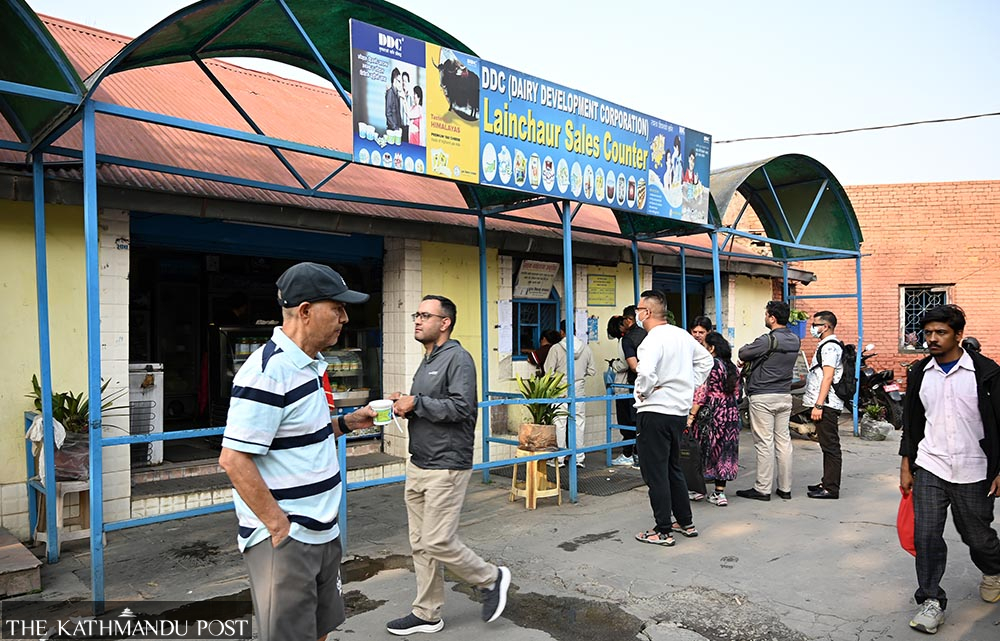
DDC produces around 55 to 60 tonnes of yak cheese annually and earns nearly Rs100 million from the product. Its production takes place mainly between April and October.
The cheese received an organic certification five years ago, adding to its appeal in international markets.
At present, a 100-gram vacuum-packed yak cheese packet costs Rs200, while 200 grams costs Rs395 and 500 grams costs Rs960. The product costs around Rs1,880 per kilogram in Kathmandu.
According to DDC, the product is among its most profitable dairy items.
The renewed attention comes at a crucial moment for the state-owned dairy company.
In 2024, DDC warned that Nepal’s dairy industry was facing its worst recession in years as demand for milk, butter, powdered milk and ghee sharply declined. Warehouses were piled with unsold products, and shrinking consumer spending had weakened the market.
“With this social media promotion, the company has received a new hope,” said an official at the corporation.
The company pays more than Rs500 million annually to yak farmers for milk collection during the production season. Farmers are often paid in advance.
Lila Ram Khadka, owner of Jiri Lekali Hat Ghar in Shankhamul, Kathmandu, which supplies DDC’s yak cheese from Jiri, said that most Nepali people buy yak cheese as a gift for friends and relatives abroad.
“We have been selling 20-30 kg of yak cheese monthly,” he said.
The demand, however, has remained the same since milk prices increased significantly, restricting people, mostly in low-income brackets, from consuming milk and other dairy products like cheese.
Producing yak cheese, however, is a lengthy and delicate process. Raw milk undergoes testing for acidity, fat content and adulteration before being filtered, heated and cooled. The cheese is then aged naturally for between 45 and 120 days before becoming ready for consumption.
DDC officials say the cheese contains no preservatives or artificial shelf-life enhancers, which also limits export opportunities.
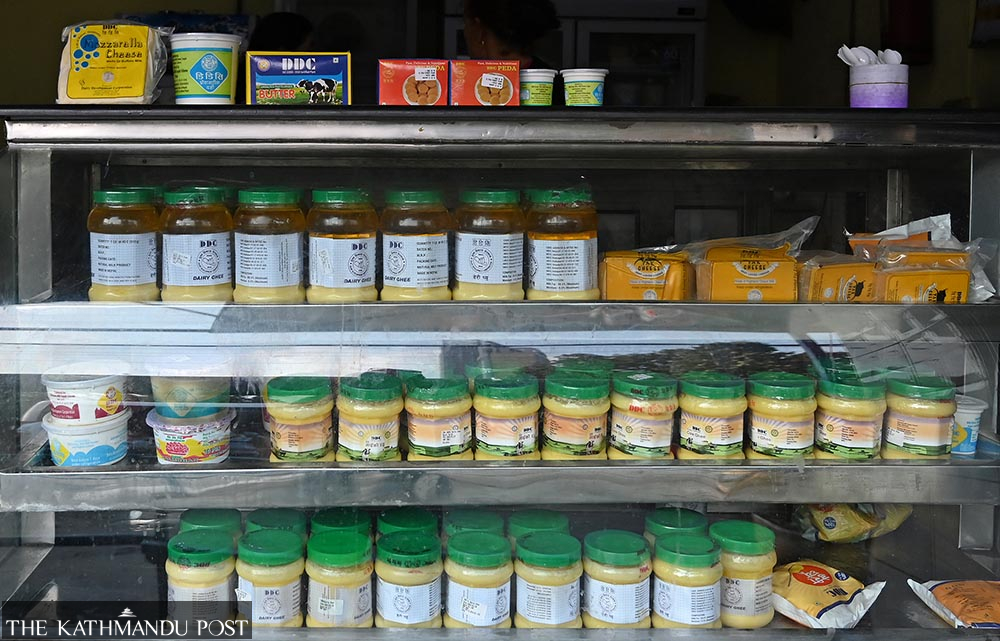
Nepal exports only small quantities of cheese despite growing international interest. According to the Department of Customs, 50 tonnes of cheese worth Rs19.01 million have been exported in the first nine months of the current fiscal year, mainly to the United States and India.
“There is demand, but we lack technological advancement and proper preservation systems for larger export markets,” Jha said. “Technical intervention is necessary if we want to expand globally.”
The industry also faces mounting challenges at home.
The number of yak farmers has been declining due to poor infrastructure, lack of veterinary services, pasture shortages and taxes imposed on grazing inside national park areas.
Production has also been affected by outbreaks of lumpy skin disease among yaks.
Even so, Nepal’s cheese market has been gradually expanding.
Prahlad Dahal, president of the Nepal Dairy Association, said Nepal currently produces around 28 varieties of cheese through nearly 50 dairy factories.
“Cheese consumption has been increasing by around 10 percent annually, especially due to fast-food trends like pizza and desserts such as cheesecake,” Dahal said.
He added that Nepal still imports around 40 percent of its cheese demand, mainly for use in large hotels and restaurants, while domestic producers fulfil the remaining 60 percent.
Recently, DDC partnered with the UN’s Food and Agriculture Organisation under the “Mountain Partnership” programme to promote yak cheese internationally. The initiative would allow DDC to use the globally recognised “Mountain Partnership” logo on its packaging after certification.
For now, it is not an international campaign. But a single social media photo from the prime minister has given Nepal’s mountain cheese its biggest marketing boost in years.
Sabina Basnet, 26, a bachelor's level student at NCC College, used to eat cheese occasionally. But since Saturday, after the prime minister’s post went viral, she could not stay away from having one.
"I went to a grocery store on Monday afternoon. I saw cheese in the store. It reminded me of a PM viral post about eating cheese. So, I thought of buying a small pack."
Although yak cheese is profitable, DDC has long struggled financially. Whether Shah posted the photo to promote DDC, as a political tactic, or simply out of personal social media habit is unclear. His party, the Rastriya Swatantra Party, has signalled interest in promoting government enterprises in its manifesto.
The post also comes amid criticism of Shah’s disregard for parliamentary procedures – he walked out of a session last week while the President was presenting policies and programmes, and later chose not to respond to lawmakers’ questions.
For DDC, the “Say Cheese” post may have worked – but not everyone was amused. Some frowned rather than flashed a smile.
Birat Gautam criticised the PM's silence over everything. "Open your mouth while eating,” he commented sarcastically on Balen’s post.
Smriti Timalsina also wrote, "Balen Shah, even shame itself must be feeling ashamed. Not attending your own policy and programme, walking out of while the President was still speaking, ignoring repeated calls for the entire opposition to be present in parliament and then posting a photo like this on Facebook? Doesn't this feel like mocking Nepalis? Doesn't this look like playing house instead of serious leadership?”
Bishwas Panthi, an X user, commented on the post saying, “Great promotion, Prime Minister, but what concrete steps is the administration taking to ensure dairy farmers never face months of delayed payment again?”
Krishana Prasain
Krishana Prasain is a business reporter for The Kathmandu Post covering markets. Before joining The Kathmandu Post in 2018, she spent 3 years in New Business Age magazine covering business.

Most Read from Money
Nepal travel agents threaten to stop selling Thailand trips over visa rules

Why does an hour long flight to Dhangadhi cost more than a flight to New Delhi?
Malaysia rejects Nepal’s demand to open recruitment to all manpower agencies

No school, but a graduation cap for women dairy farmers
Nepal arrests four medical service providers as Malaysia recruitment row deepens
Editor's Picks




E-PAPER | October 20, 2026

×