



 14.81°C Kathmandu
Sat, Oct 24, 2026
Money
EV duties to be based on value rather than motor capacity
Other tax reforms include higher excise on sin goods, digital VAT incentives, and major relief measures for businesses and middle-class taxpayers.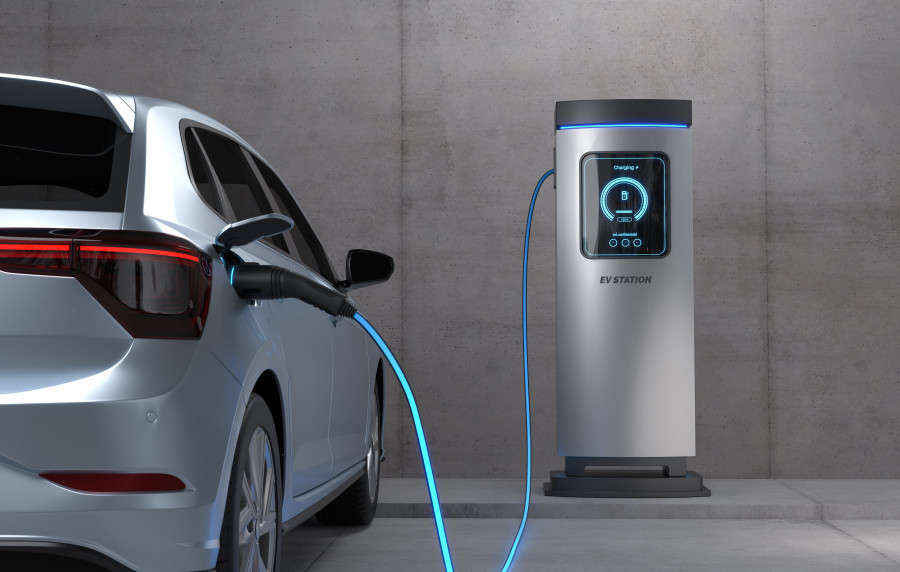
bookmark![]()
Krishana Prasain
Published at : May 30, 2026
Updated at : May 30, 2026 07:29
Kathmandu
The government, through the budget for the upcoming fiscal year 2026-27, has introduced a provision to impose customs duty on electric vehicles (EVs) based on their value instead of the existing system tied to motor power.
Presenting the budget for the upcoming fiscal year 2026-27 to the joint session of Parliament on Friday, Finance Minister Swarnim Wagle announced a Clean Infrastructure Investment charge at the import point aimed at supporting domestic production of such vehicles, construction of charging stations, and management of batteries.
The government, through the budget, also plans to promote the export of Nepali-brand alcoholic beverages by encouraging quality spirit production and maturation activities.
“From the upcoming fiscal year, I have made a provision to register microbreweries as liquor industries and bring them within the scope of excise duty,” said Wagle.
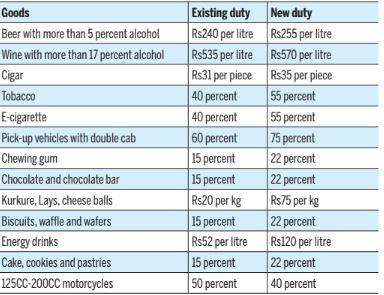
The government has increased the excise duty on cigarettes by around 10 percent and also raised excise duties applicable to liquor and beer.
The customs duty on gold has been increased to 20 percent from 10 percent. However, the 2 percent luxury tax on gold introduced in the current fiscal year’s budget has been removed.
“We will implement a system in which consumers making purchases through digital payment methods receive a 10 percent discount on value added tax at the very time the invoice is issued. We will automate the Value Added Tax refund system,” said Wagle.
The government also announced that it will form a high-level recommendation committee to study and submit suggestions on the relevance of a multi-rate system in value added tax.
“We have adopted a policy of making tax compliance not a punishment, but a partner in development. To resolve long-standing tax disputes created due to legal ambiguities and taxpayers’ lack of awareness, and to create a business-friendly environment, I have introduced a special scheme related to tax exemptions and facilities,” he said.
In order to resolve tax disputes that have reached courts or judicial bodies from either the government’s or taxpayers’ side and are under consideration, if the determined tax amount along with 1 percent interest is paid within the specified deadline, the case may be withdrawn and fees, penalties, additional charges, late fees, or interest shall be waived, the government said.
The budget for the new fiscal year also carries out a broad review of tax rates aimed at providing relief to enterprises and businesses, expanding the middle class, and making the overall economy more dynamic.
To reduce the tax burden, the finance minister has raised the income tax exemption threshold to Rs1 million for individuals. The budget has also reduced the maximum personal income tax rate by 10 percentage points.
Under the new tax structure, individual income up to Rs1 million will be taxed at 1 percent. Income between Rs1 million and Rs1.5 million will be taxed at 10 percent on the additional Rs500,000, while income between Rs1.5 million and Rs2.5 million will be taxed at 20 percent on the additional Rs1 million. Likewise, income exceeding Rs4 million will be taxed at 29 percent on the excess amount.
The budget for the upcoming fiscal year has reduced customs duty rates on 273 types of industrial raw materials to ensure that duties on raw materials remain at least one level lower than those on finished goods.
“I have limited the existing eleven-tier customs duty structure to seven tiers. I have abolished the excise duty currently imposed on 360 goods. I have consolidated scattered taxes collected at customs points, such as the infrastructure development tax and road repairs and improvement fee, into a unified Green Tax,” said Wagle.
A provision has been made to grant full income tax exemption for the first ten years to agriculture processing centres and a waiver on VAT for machines used in cold storage, packaging, and testing labs.
To develop a paperless, faceless, and contactless revenue administration system, the budget has announced that services such as tax filing, payment, and refunds will be delivered automatically.
While transporting goods from one place to another, local governments will no longer be allowed to impose multiple taxes such as export tax and scrap-related taxes at more than one local level.
Krishana Prasain
Krishana Prasain is a business reporter for The Kathmandu Post covering markets. Before joining The Kathmandu Post in 2018, she spent 3 years in New Business Age magazine covering business.




Most Read from Money

Why does an hour long flight to Dhangadhi cost more than a flight to New Delhi?
Nepal travel agents threaten to stop selling Thailand trips over visa rules
Malaysia rejects Nepal’s demand to open recruitment to all manpower agencies

No school, but a graduation cap for women dairy farmers
Nepal arrests four medical service providers as Malaysia recruitment row deepens
Editor's Picks




E-PAPER | October 24, 2026

×