



 14.82°C Kathmandu

Thu, Oct 22, 2026
Money
Lawmakers seek government control of hotel room rates. Hoteliers call it regressive
Proposed amendments to the Integrated Tourism Bill have drawn sharp criticism from hoteliers, who say room rates should be determined by demand and supply. Proposals also seek to tighten rules on star ratings and promote green and heritage tourism.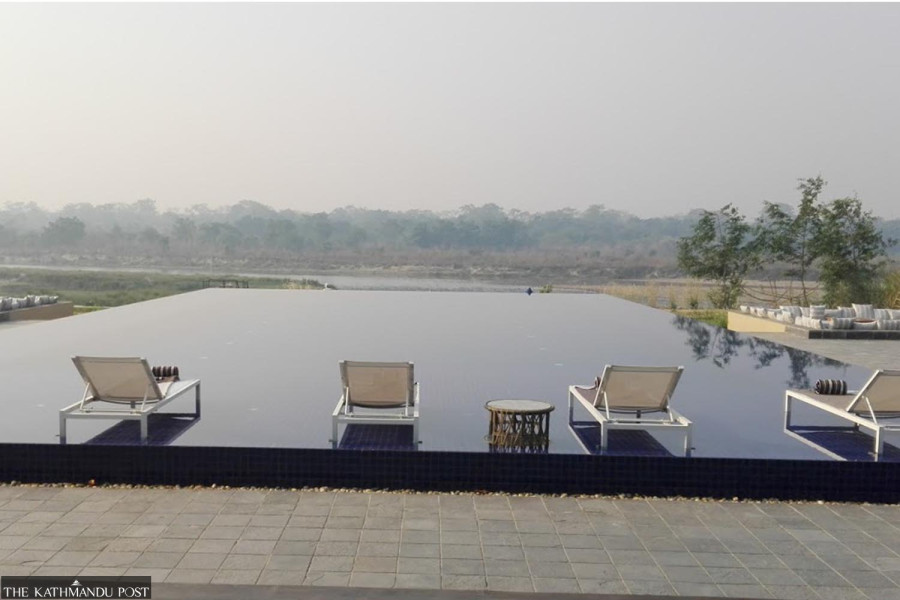
bookmark
Sangam Prasain
Published at : July 22, 2026
Updated at : July 22, 2026 19:25
Kathmandu
Lawmakers have proposed allowing the government to regulate the room rates charged by star and other classified hotels under amendments to Nepal’s proposed Integrated Tourism Bill. Hoteliers have criticised the proposal saying it would distort the market and that room rates should be left to market.
The bill is currently undergoing clause-by-clause scrutiny at a parliamentary committee after 58 lawmakers registered 263 amendments before its final debate and vote in parliament.
Lawmakers Shishir Khadka and Nitima Bhandari Karki have proposed a new provision barring any individual or institution from charging rates above those prescribed by the government.
Under the proposal, star hotels and all classified hotels would be required to charge only within a government-approved pricing structure based on their official classification and service quality.
The proposal comes as Nepal’s hotel industry struggles with excess capacity and intense price competition. The country now has more than 1,600 hotels offering around 64,000 room nights, including 222 star-rated properties. While hotel supply has expanded rapidly, tourist arrivals have failed to keep pace, leading to widespread undercutting.
According to government data, foreign tourists stayed in Nepal for a record average of 16.34 days in 2025. However, their average daily spending dropped to $33.09, the second-lowest level on record and well below the regional average of $100 to $150. Industry insiders partly attribute the decline to aggressive discounting by hotels.
Hoteliers, however, argue that government intervention in pricing would be counterproductive.
“Hotel rates are determined by the services they provide, not simply by their star classification,” said Sahadev Dhamala, managing director of Kathmandu Eco Hotel and a newly appointed board member of the Nepal Tourism Board.
He said many boutique hotels and small resorts charge higher rates than some five-star hotels because of their unique products and services.
“Room rates automatically adjust to travel trends, the local economy and different market segments such as corporate and leisure travellers,” Dhamala said. “Capping rates would be counterproductive.”
Industry leaders say hotels worldwide use dynamic pricing, adjusting room rates in real time in response to demand, supply, competitors’ prices and seasonal trends.
Binayak Shah, president of the Hotel Association Nepal, described the proposal as a regressive step.
“Hotels operate entirely on the principles of demand and supply,” Shah said. “The private sector has invested billions of rupees in hospitality. Instead of capping room rates, the government should focus on bringing more tourists to Nepal.”
The proposal follows a similar experiment in Sri Lanka, which imposed minimum room rates for Colombo city five-star hotels at $100 in October 2023. The policy was challenged in court by sections of the tourism industry, which argued it had been introduced without adequate consultation and discouraged convention and business travellers by making hotel stays more expensive than competing regional destinations. In May 2024, Sri Lanka’s Court of Appeal suspended the mandatory pricing system, and restored market-based pricing.
The amendments also seek to tighten regulations governing the use of star classifications.
Lawmakers have proposed prohibiting any hotel from advertising, promoting or marketing itself as a “star hotel” unless it fully meets government-prescribed standards. Hotels falsely claiming star status would face legal action.
Current regulations classify hotels primarily by room capacity and service standards. Within Kathmandu Valley, a five-star deluxe hotel must have at least 150 rooms, while a standard five-star hotel requires 100 rooms. Outside the Valley, the minimum requirements are 100 and 80 rooms respectively, along with standards covering room size, facilities and service quality.
Several lawmakers have also proposed expanding the bill’s focus beyond hotel regulation.
Lawmaker Ganga Laxmi Awal has proposed making traditional Newari architecture mandatory for hotels and homestays located in designated heritage areas instead of modern concrete designs.
Another amendment, proposed by lawmaker Sumnima Udas, seeks to promote sustainable, green and climate-resilient tourism. It calls for tourism infrastructure to prioritise environmental conservation, carbon emission reduction, waste management and renewable energy use, while encouraging climate adaptation measures in Himalayan and other environmentally sensitive areas. It also proposes incentives for tourism enterprises to obtain green certification.
The bill also includes provisions to ensure tourism benefits reach local communities by promoting community-based tourism, homestays and the use of local products. It further proposes training, awareness programmes and preferential support to help communities historically excluded from tourism because of ethnic, gender or social discrimination participate in the sector. The bill also encourages businesses to employ local workers and source locally produced goods and services.
Sangam Prasain
Sangam Prasain is Business Editor at The Kathmandu Post, covering tourism, agriculture, mountaineering, aviation, infrastructure and other economic affairs. He joined The Kathmandu Post in October 2009.



Most Read from Money

Nepal travel agents threaten to stop selling Thailand trips over visa rules

Why does an hour long flight to Dhangadhi cost more than a flight to New Delhi?

Malaysia rejects Nepal’s demand to open recruitment to all manpower agencies

No school, but a graduation cap for women dairy farmers
Nepal arrests four medical service providers as Malaysia recruitment row deepens
Editor's Picks




E-PAPER | October 22, 2026

×