Nepal records Rs18.76 billion electricity trade surplus in fiscal 2025-26
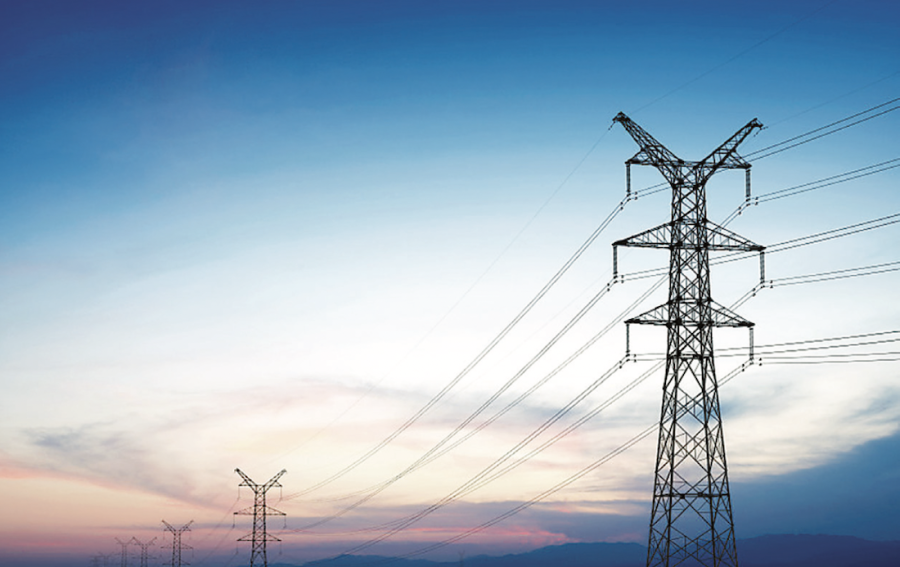
Nepal’s power exports jumped as hydropower generation outpaced domestic demand during the monsoon, helping the country record an Rs18.76 billion surplus in electricity trade. Shutterstock
Nepal sold electricity worth Rs29.32 billion to India and Bangladesh in the last fiscal year, marking another year in which the country earned more from power exports than it spent on imports.
Nepal became a net electricity exporter from the fiscal year 2024-25 as it began exporting surplus power generated during the monsoon season, when domestic consumption remains lower than production. According to the Nepal Electricity Authority, the country exported electricity worth Rs29.32 billion to India and Bangladesh in fiscal 2025-26, up from Rs17.45 billion in the previous fiscal year.
While Nepal has emerged as a power exporter during the wet season, it continues to import electricity during the dry months when river flows decline and hydropower output falls. However, imports have been steadily declining as exports increase.
Nepal imported electricity worth Rs10.55 billion in fiscal 2025-26, compared with Rs12.92 billion in fiscal 2024-25 and Rs16.83 billion in fiscal 2023-24.
The authority recorded a net surplus of Rs18.76 billion from electricity trade in fiscal 2025-26, compared with a surplus of Rs4.53 billion in the previous fiscal year.
The authority has been selling electricity in India’s power market through competitive bidding on the Indian Energy Exchange’s day-ahead and real-time markets. It has also been supplying power to Indian state-owned company NTPC Vidyut Vyapar Nigam (NVVN) under a medium-term power sale agreement. NVVN supplies the electricity purchased from Nepal to Haryana state.
Nepal’s electricity exports rise during the monsoon when increased water flow in rivers and streams boosts hydropower generation. But during winter, when water levels fall and production drops, Nepal imports electricity from India to meet domestic demand.
Electricity trade with India is conducted in Indian rupees, while exports to Bangladesh are settled in US dollars. Nepal started exporting power to Bangladesh in 2024 after a tripartite agreement among the Nepal Electricity Authority, Bangladesh Power Development Board (BPDB) and India’s NVVN onSeptember 23, 2024.
Under the agreement, Nepal exports 40 megawatts of electricity to Bangladesh every year from June 15 to November 15. Nepal made its first electricity shipment to Bangladesh on November 15, 2024, supplying power for 12 hours and earning Rs265.5 million in revenue. In fiscal 2025-26, Nepal sold electricity worth Rs1.06 billion to Bangladesh.
Nepal currently sells electricity to Bangladesh at 6.40 US cents per unit. Although Nepal and Bangladesh have agreed to increase exports by another 20 megawatts at the same rate, India has not granted approval, citing limited transmission capacity.
India first allowed Nepal to export 39 megawatts of electricity to its market in October 2021. Since then, Nepal has received approval to export up to 1,200 megawatts of electricity to India and Bangladesh.
“Electricity exports have been rising every year compared with imports. We have already become a net exporter,” said Dirghayu Kumar Shrestha, acting managing director of the Nepal Electricity Authority. “At present, we are exporting around 1,000 megawatts on average.”
Nepal currently imports and exports electricity through the 400 kV Dhalkebar-Muzaffarpur cross-border transmission line, which has a transfer capacity of 1,000 megawatts, as well as several 132 kV transmission lines linking the two countries.
Nepal and India have agreed to increase the transmission capacity of the Dhalkebar-Muzaffarpur line and the under-construction 400 kV Dhalkebar-Sitamarhi line. Under the agreement, electricity import capacity will rise to 1,400 megawatts while export capacity will increase to 1,650 megawatts.
The two countries have also agreed to allow the under-construction Butwal-Gorakhpur cross-border transmission line to initially import up to 130 megawatts of electricity into Nepal and export up to 200 megawatts to India. The Nepali section of the transmission line is expected to be completed by August, while the associated substation is scheduled for completion by December 2027. Until the substation is operational, the line will be used within the agreed import and export limits.
Overall, Nepal and India have expanded cross-border transmission infrastructure to provide an electricity import capacity of 1,530 megawatts and export capacity of 1,850 megawatts. In addition to the high-voltage lines, several 132 kV transmission links continue to facilitate two-way electricity trade between the neighbouring countries.
As Nepal continues building additional cross-border transmission infrastructure with India, former NEA managing director Hitendra Shakya said securing greater market access should now take priority over expanding physical infrastructure.
“Transmission capacity and domestic generation are no longer the main constraints. We already have surplus electricity,” Shakya said. “The bigger challenge is that India approves electricity imports on a project-by-project basis. Nepal should focus on obtaining approval for more hydropower projects to access the Indian market.”
He said Nepal could avoid wasting surplus electricity during the next monsoon if it secures Indian approval to export an additional 1,000 megawatts.




 23.81°C Kathmandu