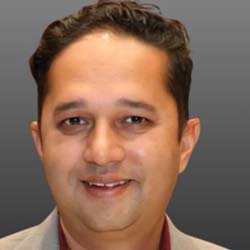
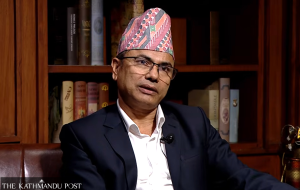
The chair of the world’s largest hotel company makes the case for luxury hospitality as a development tool—and lays out what governments, including Nepal’s, need to deliver. David Marriott, Chairman, Board of Marriott International Post Photo: Dipesh Darshandhari
As Marriott International approaches its centennial milestone next year, the global hospitality titan finds itself in a position of rare institutional strength. At the heart of this enduring legacy is a deceptively simple ‘people-first’ philosophy—the conviction that taking exceptional care of associates directly ensures that guests receive world-class service and keep coming back. Now, the global hospitality giant, which operates over 9,900 properties across more than 146 countries and territories, is partnering with the CG Hospitality Global to open two of its premier brands–The Ritz-Carlton and Westin Hotels & Resorts–in Nepal.
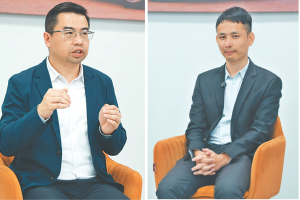
Kantipur Daily’s Editor-in-Chief Gokarna Awasthi and The Post’s Biken K Dawadi sat down for an exclusive interview with the Chairman of the Board of Marriott International, David Marriott, to discuss the bridges of the brand’s historic American roots with its contemporary, high-stakes ambitions in South Asia. Marking his first visit to Nepal, Marriott maps out an expansion plan designed to meet a surging global demand for luxury experiential travel while fostering a robust local ecosystem. From navigating early 20th-century restaurant pivots to collaborating with modern governments on crucial regional infrastructure, visa accessibility, and reversing the tides of brain drain, he outlines a future where hospitality acts as a powerful vehicle for economic elevation, regional mobility, and global unity. Excerpts.
Let us begin by discussing the heritage of the Marriott family and its corporate culture.
We are currently preparing to celebrate our hundredth anniversary next year. In the United States, it is very rare for a publicly traded company to reach the hundred-year milestone. I believe that the reason we find ourselves in a position of strength after our first hundred years is our culture and our core values. My grandparents founded our business in 1927 with a nine-seat root beer stand. They grew up in Utah, and my grandfather was raised on a farm. He was forced to drop out of school when he was twelve years old to work on that farm. However, he knew he needed an education. He eventually approached a person he knew who was a professor at Weber State College at the time, and convinced that professor to give him an opportunity to attend university.
That is a testament to his determination. How did that early opportunity for education influence his future business ventures?
My grandfather always felt incredibly grateful for that opportunity because he felt that without that education and without that chance, he would not have had the opportunity to open his own business. So, my grandfather went on to the University of Utah and finished his four-year college degree, which is where he met my grandmother. His dream was to open a root beer stand in Washington, D.C., because he knew it was hot and humid there, and he felt root beer would sell well. They had a small loan, and they drove their Model T Ford two thousand miles across the country to open their little root beer stand on May 20, 1927. They founded their business on the idea that if you take good care of your associates, they will take good care of the customer, and the customer will come back.
That philosophy seems to be the foundation of everything you do. How did they move from a single stand to a broader hospitality business?
That statement is really what started our core values and our culture. My grandparents made sure that they took care of their associates. They hired a doctor to put on the payroll in the early 1930s—well before healthcare was widely available—to support their associates. They always looked for innovations and ways to evolve their business to remain relevant to the customers. After they opened, root beer sold exceptionally well through the summer. However, at the end of the summer, the weather cooled, root beer sales declined, and they had to reinvent their business. They had to change. Consequently, they put hot food on the menu and renamed their restaurant the ‘Hot Shops’.
This adaptability appears central to the Marriott brand. How do these core values translate to your impressions of the Nepali market today?
We truly believe it is our core values of putting people first, pursuing excellence, embracing change, acting with integrity and serving our world that have really helped differentiate us in the hospitality space. This has helped us be successful for the first hundred years and will help us beyond this point. When I come to an amazing market like Nepal—and this is my first time here—I find people who are engaged in service. They serve in the same way my grandparents did early on in the business, and in the way they taught us all to continue to serve and take care of the customer. I see a great culture of service here. People are thrilled to support those visiting Kathmandu and ensure they have a great experience. This is an incredibly dynamic, exciting city.
You mentioned the vibrancy of the city. Does that energy extend beyond the urban centre to the natural wonders of the country?
There is a lot of energy in this city. You can feel it. I think there is energy that goes from the city to the mountains. People come here to see the mountains and explore what is truly one of the wonders of this world.
That leads directly to my next question regarding your expansion. Why is Marriott choosing to increase its presence in Nepal at this specific time?
We are always looking for opportunities to expand. I think there are wonderful opportunities in Nepal to create growth for our associates, to provide them with careers, and for our customers to experience new locations and fabulous destinations. It is also an opportunity for hotel owners to continue to grow their business and partner with us across Nepal. Nepal is a destination that is being increasingly discovered by people around the globe. You can see that in the demand for hotel rooms, and we are here to help fulfil that demand. It is exciting, and we feel like this market is ready for luxury and continued growth. It is a market that has an incredible trajectory and an incredible future.
Considering the significant global reputation of your brand, how do you intend to bring that prestige into the local market?
Anytime we open a new hotel and provide jobs for people within a market, it gives the entire market a lift. It gives the people living in that market the opportunity to have a healthy lifestyle, allowing them to provide for their families and their children. Likewise, we give customers and travellers coming into Nepal great places to stay and wonderful experiences to enjoy the city and this beautiful market. From the hotel market and from tourism comes great collaboration and great unity between the market and a company like ours.
It sounds as though you view tourism as a vehicle for global connection.
As an organisation, we are about providing people with opportunities to see the world. I think the more people travel and see the world, the more it makes the world a safer and better place. If everybody travelled, we would have more peace in this world than we have today because people would understand how important it is to experience different cultures and find the value in them. I think it is the differences in this world that make it a beautiful place and bring people together. Travel gives us a great platform to create greater unity.
Looking at the region, India has hundreds of Marriott properties, so what must Nepal do to attract more of your brand’s attention?
That is why we are here today: To sign two new hotels for Nepal and one for India. We see a tremendous growth opportunity in this market and in Nepal. We are just scratching the surface with the five hotels we have today, and we feel we can see much more growth. You must remember that Marriott always acts strategically by first entering gateway cities. Looking back at our journey with India, we very quickly opened hotels in Goa and Mumbai. Once the brand became popular, we started to expand outward. I expect the same here.
Beyond building hotels, what other priorities are you focusing on within the region?
Two other things I would highlight: One of our biggest focuses has been developing local talent and transferring locals to hotels around the world. We are creating global professionals. There is so much talent here. Nepali people work in our hotels outside, and eventually, they will want to come back. We have seen the same in India. We sent thousands and thousands of associates out of Marriott hotels in India to work in other parts of the world, and now there are hundreds coming back home. Some genuinely want to come back, and some have family reasons, but the opportunity is there.
You also mentioned a third component to your strategy. Could you explain the role of your loyalty programme in this growth?
The third piece is Marriott Bonvoy, our loyalty programme. Globally, we have over 280 million members. In the Asia Pacific alone, we have about 75 million members based here, with India itself having about 11 million. They love to travel and experience our hotels in new destinations. When we open hotels in new locations, we see our Bonvoy customers travel to experience them. When you talk about bringing luxury, you have to look at Asia Pacific, where 60 percent of the world’s population lives. Another 700 million people are going to join the middle class by 2030 in this part of the world, and millions of high-net-worth individuals are being created. The demand for travel—and luxury travel specifically—is growing faster. That is where we see the opportunity to do exactly what we do best.
Why did you decide to partner specifically with CG Hospitality for your expansion in Nepal?
We look for partners all over the world, and CG Corporation is an incredible partner of ours and has been for many years. We are continuing to grow with them by leaps and bounds, and we cannot think of a better partner to grow with in Nepal. We look for partners that share our values and align with our principles of putting people first, embracing change, pursuing excellence, serving our world, and acting with integrity. They align with those values, and we are thrilled to be able to grow with them in Nepal and India. It is a wonderful partnership, and we will have chances to grow throughout the world together.
There is a large Nepali workforce in the hospitality sector in the Middle East and elsewhere. What message would you like to send to them?
Nepali workers are everywhere. Even today, when I go through the Qantas first-class lounge in Sydney, the person who greets me is often an Aussie-Nepali individual. They are even featured in Qantas’ in-flight campaigns. We have many Nepali colleagues working in the US and other markets. We are trying to create an ecosystem where people are empowered to grow beyond borders. If there is an exceptional associate here who has the aspiration to work elsewhere in the world, we will give them that opportunity.
How does your expansion in Nepal specifically benefit these workers abroad?
As you start to grow and open a Ritz-Carlton or a Westin here, there will be Nepali people out there who will say, “I want to go home. Now, I have a reason to go.” They may have been a Ritz-Carlton associate for a long time and now want to go back home to work there. We see this movement all the time. It is exciting because it creates opportunities for our people.
Nepal is currently working to attract more Foreign Direct Investment. What suggestions do you have for the government and local businesses to improve this?
I think it is about continuing to market yourself as a destination and helping awareness grow regarding the accessibility of the mountains and the incredible market that Kathmandu is.
In many parts of the world, including South Asia and ASEAN countries, we work very closely with governments to convince them of the power of tourism. Globally, close to 10 percent of GDP contribution comes from tourism, and more than 13 percent of people employed are in the tourism business. The power of tourism is immense. We have worked with the governments regarding ease of access. We talk about what is needed to make the visa process easier and how to improve airlift and accessibility. Once you put infrastructure in place, it eases travel from one place to another. With more carriers and more destinations, the country becomes more accessible.
Can you provide a specific example of where this strategy has been successful?
Look at the growth in countries like Vietnam, which has gone from sub-10 million inbound travellers to 21.5 million. We are doing similar work with the Indian government as infrastructure develops. People have the money; the younger generation, particularly Gen Z, wants experiential travel. They want to get out and experience destinations. The more we make it easier for them, the easier it is for us to create beautiful hotels or destinations where they can experience new things.
Any final thoughts for the people and businesses of Nepal?
The good news for our industry, for Nepal, and for travel is that this is where people want to spend their money. People want experiences, and they want to experience the majestic mountains you have in Nepal that are unmatched anywhere in the world. Those are the memories that people want to carry with them for the rest of their lives. As more markets become accessible, you will see more and more people travelling to this great destination to experience the incredible mountains that you have in Nepal.




 19.72°C Kathmandu