Judicial Council to bar lawyers from direct appointment as Supreme Court justices
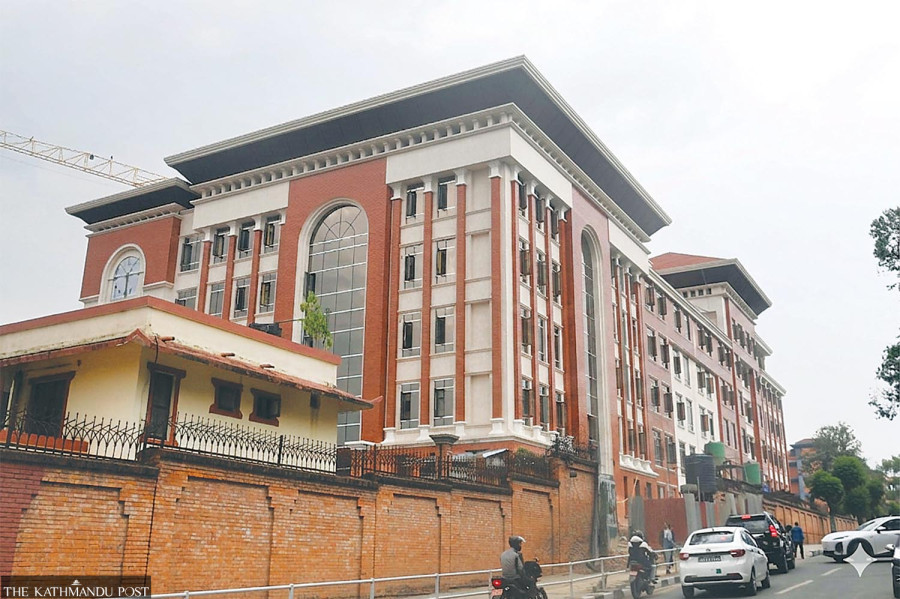
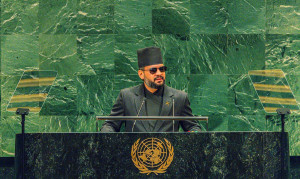
With four apex court vacancies and 25,000 pending cases, the council is under pressure to fill the top court’s bench while rethinking its appointment practice. The appointment of justices has long been debated, drawing public and legal scrutiny. Post file photo
The Judicial Council is preparing to prioritise career judges from the district and high courts for upcoming Supreme Court appointments, potentially ending the long-standing practice of appointing private legal practitioners directly to the top court.
According to sources within the council, preparations are underway to ensure that no lawyers in private practice are directly appointed to the Supreme Court in the upcoming round of appointments. The council is discussing whether to institutionalise a system in which judges with experience at the district and high courts are given preference for selection to the country’s highest court.
The appointment of Supreme Court justices has long been debated, drawing scrutiny from the public and the legal community. The Report on the Eradication of Malpractices and Anomalies in the Judiciary, 2021, prepared by then Supreme Court justice Hari Krishna Karki, identified deep-rooted problems in the judicial appointment process.
The report found that subjective, opaque and politically influenced considerations had often overshadowed the objective criteria set by the Constitution. It recommended that appointments be based on a comprehensive assessment of constitutionally qualified candidates, including their seniority, practical experience, knowledge of law and the constitution, efficiency, integrity, impartiality, professional and moral conduct, and contribution to the field of law and justice.
The report also pointed to nepotism, favouritism, political patronage and political quota-sharing among major parties, as factors influencing judicial appointments. In some cases, it found that individuals lacking the minimum qualifications required under the constitution and sufficient judicial experience had been recommended for appointment.
It is against this backdrop that the council has begun discussing a change in its approach to apex court appointments.
“To ensure that the persistent questions and allegations of political manoeuvring and partisan influence do not surface this time around, we are actively discussing the implementation of an appointment style that is distinctly different and more transparent than past practices,” a current member of the council said, speaking on condition of anonymity because of the sensitivity of the deliberations.
The council member recalled an appointment made about seven years ago, when a large group of private legal practitioners were appointed directly as permanent justices of the Supreme Court.
After the appointments, a senior judicial colleague asked one of the newly appointed justices, who had come directly from the Bar, how he was finding the job.
“I am learning,” the justice replied, having spent barely a month on the top court bench, according to the council member.
“The Supreme Court is not a place to learn,” the senior justice responded.
The anecdote has resurfaced in the council’s current discussions over whether judges should first gain experience in the lower courts before reaching the apex court.
The debate has also been fuelled by questions raised over the performance of some justices appointed directly from private practice, including concerns about their efficiency, judicial temperament and overall performance.
There is currently no justice on the Supreme Court who has followed an uninterrupted career path from the district courts through the high courts to the apex court. The bench comprises justices appointed directly from private practice as well as those elevated from high courts.
The council believes the Supreme Court’s role as the country’s final court of appeal and a court of record, whose precedents bind lower courts, makes extensive judicial experience particularly important.
The council is chaired by Chief Justice Manoj Kumar Sharma. Its members are Sapana Pradhan Malla, the senior-most justice of the Supreme Court; Minister for Law, Justice, and Parliamentary Affairs Sobita Gautam; Mahesh Kumar Nepal, appointed on the recommendation of the prime minister; and Damodar Khadka, appointed on the recommendation of the Nepal Bar Association.
Asked about the forthcoming appointments, Chief Justice Sharma confirmed that preparations were under way but said the council had not reached any final decision on the candidates or their professional backgrounds.
He said the recommendations would be based on constitutional qualifications, experience and professional efficiency.
The proposed shift has already caused concern within the legal fraternity, particularly the Nepal Bar Association, which has long argued that appointments should include both experienced career judges and qualified lawyers from private practice.
Bijaya Prasad Mishra, president of the Nepal Bar Association (NBA), said the organisation had formally urged the council to maintain such a balance.
“We have explicitly told the Judicial Council and its chair to appoint judges of high integrity from both the ranks of career judges and the NBA,” Mishra said. “The NBA remains hopeful that this balanced approach will be followed. However, if this established practice is disregarded and the NBA is deliberately excluded, we will be forced to take a firm position against it.”
The constitution sets out several routes to appointment to the Supreme Court. Article 129 provides for up to 20 justices in addition to the Chief Justice. A person is eligible if they have served as a chief judge or judge of a high court for at least five years, or practised continuously as a senior advocate or advocate for at least 15 years.
The constitution also allows the appointment of someone who has worked continuously in the field of justice or law for at least 15 years and has gained a reputation as a distinguished jurist, or someone who has served in a gazetted first-class or higher post in the Judicial Service for at least 12 years.
The constitutional framework therefore does not exclude lawyers in private practice from the Supreme Court. The council, however, is considering giving priority to career judges for the current round of appointments.
The move comes as a shortage of judges has put growing pressure on the top court. Of the constitutionally prescribed 21 positions, including the Chief Justice, only 17 judges are currently active in regular hearings. Justice Til Prasad Shrestha has been away from the bench for an extended period while receiving cancer treatment in India, and a formal letter notifying him of his impending retirement has already been sent.
The remaining judges are dealing with about 25,000 pending cases, or roughly 1,470 cases per judge. Four positions at the apex court are currently vacant, a situation that has been exacerbated by the council’s practice of delaying appointments and leaving positions unfilled.
Chief Justice Sharma has acknowledged the problem. During his parliamentary confirmation hearing on May 19, he pledged to establish a system under which judicial appointments would be completed before vacancies occurred.
More than a month after his endorsement by the parliamentary hearing committee and appointment as Chief Justice, however, the formal process for appointing new judges had yet to begin.
Asked about the delay, Sharma said appointments at all levels of the judiciary would begin soon.
“The appointment of judges will take place soon. The council and I are making the necessary preparations,” he said. “The appointments will begin with the Supreme Court.”
The Judicial Council Act, 2016, sets out specific deadlines for appointments. Section 4 requires the council to recommend a Supreme Court justice at least one month before a position falls vacant because of mandatory retirement. If a vacancy occurs for another reason, the recommendation must be made within one month of the position becoming vacant.
Council has routinely failed to follow these deadlines. A council member, however, said there is now a push to comply with the statutory timeframe, beginning with the current appointments.
Nine High Court judges are currently being considered for the four vacant positions at the Supreme Court. The council is preparing a list of potential candidates that includes five current chief judges and other senior high court judges.
Those being considered include high court chief judges Rajan Prasad Bhattarai, Lal Bahadur Kunwar, Ratna Bahadur Bagchand, Hari Prasad Bhandari, and Rajeshwar Tiwari.
High court judges Dinesh Prasad Yadav, Krishna Lal Bhattarai, Yamuna Bhattarai, Tek Narayan Kunwar and Chandra Bahadur Saru are also being discussed. Yadav and Kunwar are serving as acting chief judges of the Dipayal and Janakpur High Courts, respectively, while Bhattarai is serving at the High Court, Dhankuta.
Appointments to the Supreme Court would, however, create further vacancies in the lower courts. The high courts currently have seven vacancies, including two chief judge positions and five judge positions. If four high court judges are elevated to the Supreme Court, the number of vacancies in the high courts would rise to 11.
The Constitution also sets eligibility criteria for high court chief judges. Candidates must have served as a district judge for at least five years or practised continuously as a senior advocate or advocate for at least 10 years. Those who have continuously worked in teaching, research or the practice of law and justice for at least 10 years are also eligible.
For district judge appointments, the Constitution requires a broader assessment of candidates. This includes their caseload, the extent to which their decisions have been upheld, quashed or reversed by higher courts, as well as seniority, academic qualifications and professional performance.
Candidates from outside the judicial service are to be assessed on the continuity of their professional practice, integrity, professional conduct and contributions to law and justice.
The debate over the current Supreme Court appointments therefore extends beyond the four vacancies. It could determine whether the council moves towards a more structured career-judge system, in which judges gain experience through the lower courts before reaching the apex court, or retains the existing practice of appointing lawyers directly from private practice.




 26.19°C Kathmandu