Proposed media law sets penalties from apologies to press pass suspension
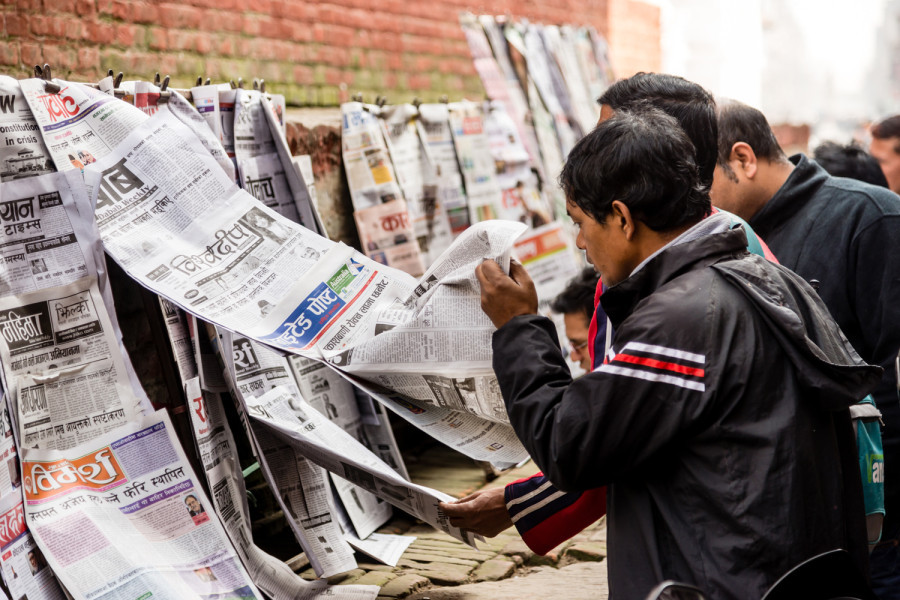
Simple journalistic errors would draw corrections or apologies, but severe violations could lead to suspension of press passes and state benefits.Shutterstock
The government has proposed a legal framework classifying violations of code of conduct by media and journalists into three distinct tiers, introducing penalties that range from mandatory apologies to the suspension of press credentials.
The Ministry of Information and Communication has made public the draft bill titled ‘Bill to Amend and Integrate Laws Relating to the Media Council’ for public feedback. Under the proposed legislation, media infringements are systematically categorised according to their severity, moving from routine journalistic errors to critical breaches of ethics.
According to Section 20 (3) of the draft, minor mistakes in names, designations, dates, or numerical statistics, alongside typographical errors and the inadvertent blending of opinions within news stories, are classified as ‘journalistic errors.’
The second tier, termed ‘professional negligence,’ covers broader ethical lapses. This includes failing to adhere to basic fact-checking procedures, denying accused parties a fair opportunity to respond, relying on unverified sources, or distorting news headlines and accompanying photographs.
The third tier, classified as ‘severe violations,’ addresses actions that cause profound societal or legal harm. These include disclosing the identity of child victims or survivors of sexual violence, inciting communal or religious hatred, committing character assassination, committing contempt of court, or compromising national security.
Section 24(6) of the proposed draft details proportional penalties for each category. For simple journalistic errors, the council can issue directives for corrections or mandate an apology. For professional negligence, the authority can demand formal explanations, order public retractions, and publicly record offender details on an official log. For severe violations, the draft empowers the council to recommend the suspension of state benefits and government advertising, alongside recommending press credential suspensions for up to one year.
Furthermore, Section 26 opens legal avenues for monetary compensation. Individuals whose dignity, reputation, or property suffers damage due to published news content can file compensation suits in district courts. Section 27 ensures that affected parties can appeal council decisions to the High Court within 35 days, providing judicial oversight over administrative actions. This seeks to ensure that the council's decisions are not treated as final, but rather guarantees a path to appeal against them in court.
Senior media representatives argue that the draft fails to respect key stakeholders. “Federation of Nepali Journalists is an established institution and its role must not be devalued,” said Nitu Pandit, the FNJ vice president. “The bill must embody the spirit of consultation and coordination with the federation in formulation of the code of conduct.”
Efforts to reform media regulation in the country have been fraught with political controversy over the years. In 2019, the government introduced a Media Council Bill that included draconian provisions, such as fines ranging from Rs25,000 to Rs1,000,000 for ethical breaches and mandatory qualification examinations for journalists. Following widespread protests, controversial elements were removed during parliamentary deliberations in the National Assembly.
A subsequent draft brought forward in 2024 replaced direct fines with reprimands, mandatory apologies, credential suspensions, and recommendations to freeze government benefits. However, that bill became void on September 12, 2025 when Prime Minister Sushila Karki dissolved the House of Representatives.
Risks of state control persist
Although the latest draft envisions the Media Council as an autonomous regulatory body, critics contend that its proposed structural composition preserves executive control.
The draft specifies a three-member executive council, including a chairperson and two members. A recommendation committee led by the Speaker of the House of Representatives will oversee appointments, working alongside the communications minister and a government-nominated media expert with at least 15 years of experience.
Critics emphasise that retaining executive ministry participation in the selection committee keeps the regulatory authority under political influence. Furthermore, the Director General of the Department of Information and Broadcasting is designated as an ex-officio member.
Looking at the structure, there appears to be an attempt to make it more inclusive and broad-based by incorporating various stakeholders from the media sector. But media rights advocates argue that this administrative design risks turning the body into an arm of state surveillance. Shiva Gaunle, former president of the FNJ, criticised the draft for threatening editorial freedom under the pretext of regulatory autonomy.
“If this draft bill becomes law in its present form, the Media Council will be neither capable nor autonomous,” said Gaunle. “In a three-member council, one member is a government officer, and the government can remove the remaining two officials at any time under the pretext of ‘lack of efficiency’.”
Gaunle added that without significant legislative amendments, the executive branch could use the appointment structure to target critical media outlets. “Therefore, instead of an autonomous and capable Media Council, this will end up becoming a government organ monitoring the press,” said Gaunle. “If the parliament does not pay adequate attention, there remains a serious risk that the government will exert influence over critical media through the appointment process.”
Previous attempts at media regulation faced similar criticism. In the 2019 draft, stakeholder outrage forced the removal of a proposal to place the secretary of the Information and Communication Ministry at the head of the selection committee. While the current draft alters this by positioning the Speaker of the House as committee coordinator, executive leverage remains through communications ministry-nominated experts and ex-officio seats.
The current bill introduces a new 15-member Directive Committee, a structure absent from earlier drafts. This larger body is designed to include the FNJ President, university professors, human rights experts, IT specialists, media representatives, and audience delegates.
However, because the ministry retains the power to nominate seven media representatives to this board, stakeholders fear continued state overreach. Kundan Aryal, Head of the Department of Mass Communication and Journalism at Tribhuvan University, urged lawmakers to keep executive operations lean and transparent.
“Its working body should be small; making it this large is unnecessary,” said Aryal “The main difficulty seen in the council lies in appointments, which is why appointments must be transparent and ensure the selection of suitable individuals.”
FNJ Vice President Pandit concurred that further structural safeguards are necessary to guarantee regulatory independence. “The Media Council should be made a more autonomous and independent body. It must be given powers including the authority to frame its own bylaws.”




 21.66°C Kathmandu