Q&A: The state resorted to physical violence to silence us
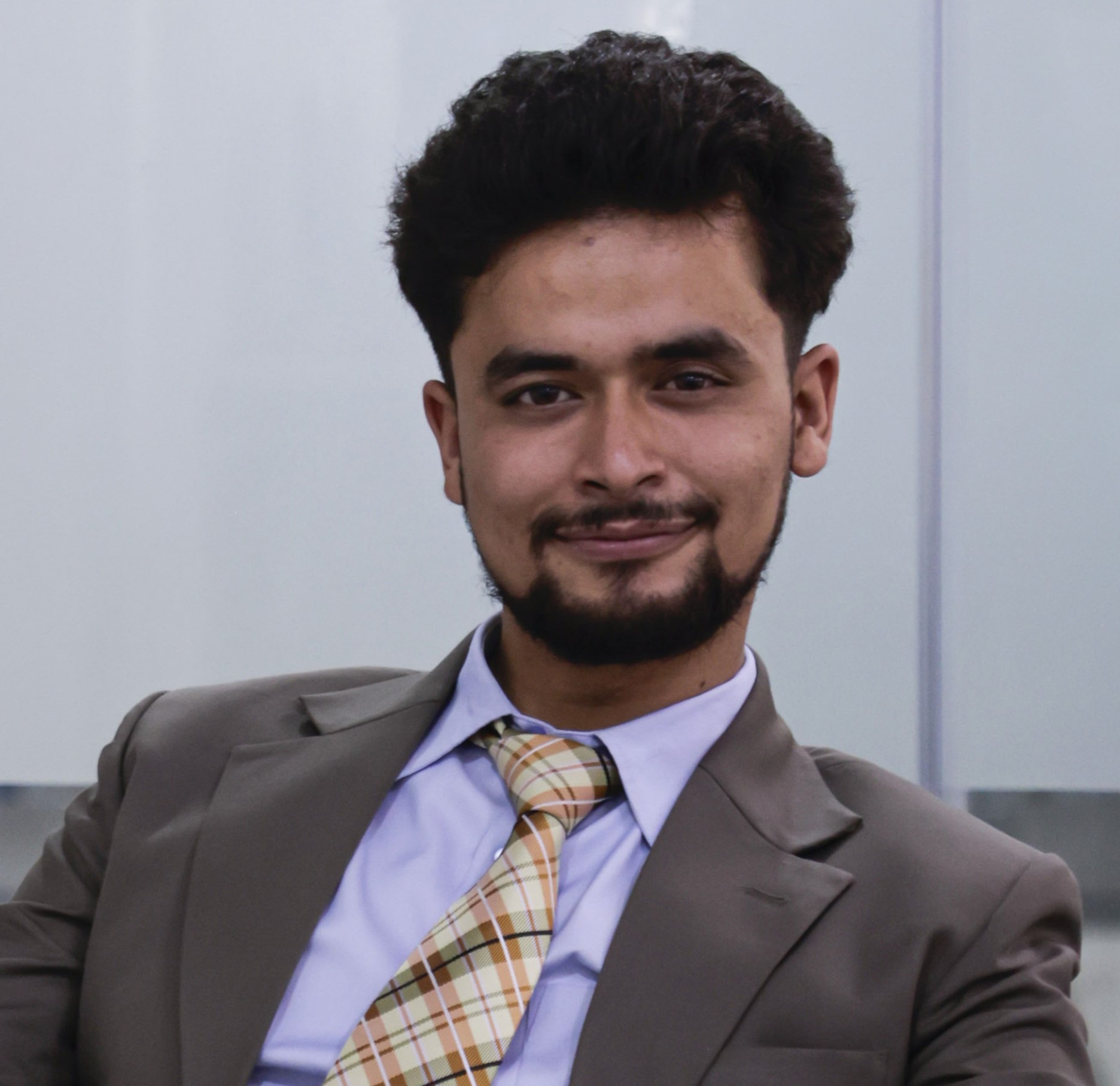
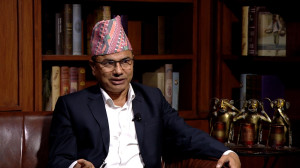
Majid Ansari details the events surrounding his violent arrest, the systemic failures within the security apparatus, and his refusal to be silenced by state-sponsored intimidation. Post Photo: BIken K Dawadi
Majid Ansari is a law student and legal activist who has been actively advocating for the constitutional rights of evicted squatter settlers. His advocacy led to the registration of a Supreme Court writ petition 082-WO-1237 challenging the government’s management of displaced families. On July 11, following heavy inundation at a holding centre in Kirtipur, Ansari and his fellow activists visited the site to observe the relocation of the settlers, only to face immediate resistance from state authorities.
The situation rapidly escalated when Ansari questioned the presence of unofficial actors commanding police personnel. He was subsequently subjected to a brutal physical assault by a group of police officers, leading to temporary unconsciousness and severe facial trauma. Following a chaotic detention process, extrajudicial surveillance at the hospital, and a wave of online hostility, Ansari remains steadfast in his pursuit of accountability. In his first interview since the incident, Ansari sat down with The Post’s Biken K Dawadi, detailing the events surrounding his violent arrest, the systemic failures within the security apparatus, and his refusal to be silenced by state-sponsored intimidation.
Why did you visit the holding centre for evicted squatter settlers in Kirtipur on July 11?
Heavy rainfall on the previous night caused inundation of the holding centre, displacing the evicted squatter families. News media had been broadcasting alarming updates regarding the crisis. My peers Monika Niraula, Sarishma Thapa, Riyab Baniya, and I visited the centre to observe the relocation of the evicted settlers as we felt a moral obligation to witness the situation firsthand. We arrived at the holding centre at around 4:30 PM to see how state authorities were managing the vulnerable citizens.
What initial obstacles did you encounter when you tried to gain access to the holding facility?
The police personnel stationed at the entrance blocked our path immediately and refused to grant us entry. We attempted to communicate politely with the officers, explaining our identity as law students who merely wished to observe. Our requests were met with complete defiance. While we were standing outside the gates, Sarishma noticed a fellow Gen Z activist, Ojaswi Thapa, inside the facility. He was giving commands to the police officers, and the security personnel were obeying his instructions. Sarishma immediately objected to his unclear administrative role. She asked the police officers about his legal capacity and demanded to know why he was permitted inside to command state forces while others were barred from entry.
How did the police officers react?
The police officers refused to provide a transparent answer. Instead, they told us that if we required such specific information, we must file a formal application with the information officer at the Office of the Prime Minister and Council of Ministers. It seemed like an attempt to evade accountability through bureaucratic stalling. I stated that an exhaustive formal process was completely unnecessary for such a query. I argued that if Ojaswi possessed a legitimate identity card which proved his official capacity, he should simply display it. I questioned the presence of unofficial actors inside a restricted state facility. This legal argument made the police officers visibly angry. Their demeanour transformed from indifference into hostility.
What specific actions were taking place concerning the squatter families?
To prevent further escalation, we dropped the dispute. We exited the main gate and walked towards the public pavement. From that vantage point, we observed that the displaced families were actively moving their meagre belongings under the supervision of the authorities. There were two passenger buses and a small cargo truck parked in a state of readiness. One bus had already been filled with people and was departing the scene. The other one remained stationary. The driver of the second bus was asking the police officers repeatedly whether their destination was Bode or Kharipati. The entire operation was marred by confusion. The police officers lacked consensus and clarity regarding the final destination. Some officers told the driver they were going to Bode, while others insisted they were heading to Kharipati. The displaced families looked visibly panicked because they had no official information regarding where their children and their belongings were being transported. Seeing their deep distress, we approached the police once again. We requested that they provide information to the families to alleviate their terror. The police dismissed our concerns and ordered us to stop playing politics, get away from the scene, and go back to our studies.
What happened next?
Following this exchange, Sarishma and I decided to board the second bus. We advised the families to remain peaceful and resilient while fighting for their constitutional rights. Suddenly, a policeman wearing a medical mask boarded the bus and addressed us with contempt. He stated mockingly that we did not look educated. He asked why we were lecturing others and told us to go study instead.
Could you describe the interaction you had with Ojaswi Thapa just before the violence erupted?
Approximately five minutes before the physical violence commenced, Ojaswi called me aside. I had become acquainted with him previously during various social movements and public campaigns. He looked at me directly and asked whether I maintained my trust in him. I responded by highlighting the uncertainty surrounding the squatter families. I requested him to use his influence to ensure their proper, timely management and to treat them with basic human dignity. He did not offer a detailed reply. Instead, he walked a short distance towards a group of police officers. I observed him leaning in close to whisper something directly to a police official.
What happened immediately after that whispered conversation?
Within a few minutes of that whispered conversation, the police forces formed an aggressive cordon around us, cutting off all exits. I saw several police officers roughing up Sarishma, treating her with disrespect. My immediate instinct was to shield her from their aggression. I did not raise my hands against any officer, nor did I engage in any form of physical retaliation. I resisted purely through verbal protest. Video evidence captured by onlookers clearly demonstrates that I kept one of my hands buried inside my pant pocket during the initial encounter. Suddenly, an officer shoved me violently from behind. I had seen them making suspicious hand gestures earlier, but I had not realised their violent intent.
How did the situation escalate into a physical assault?
When the officer shoved me from behind, I spun around and demanded to know who had committed that act. At that exact moment, Sarishma wrapped her arms around my torso to protect me. But the police forces had already decided to unleash physical violence. A group of twelve to fifteen police officers descended upon me simultaneously. They swarmed us from every angle, rendering us entirely helpless. The same masked policeman who had insulted our education on the bus lunged forward aggressively. He began punching me with his fists and striking my body with his boots. Four to five officers started pulling my hair from both the front and the back.
Can you detail the extent of this physical violence?
The assault was brutal, swift and systematic. The officers concentrated their blows on my face. They rained heavy punches onto my jaw and my temple. They kicked me repeatedly with their combat boots. The intensity of the physical trauma was overwhelming. Due to the excessive beating, I experienced a temporary loss of consciousness. My body went entirely numb, and the pain briefly stopped registering in my brain. Both of my eyes sustained contusions and structural trauma, which remain visible in subsequent photographs. At around 5:45 pm, they dragged me by the hair and shoved me forcefully into the back of a police vehicle.
What was your experience once you arrived at the Kirtipur Police Circle?
The physical and psychological abuse did not end when the vehicle arrived at the Police Circle. Inside the building, the officers continued to beat me, delivering open-handed slaps and heavy punches to my injured face. They mocked my academic background. They laughed at my injuries and stated tauntingly that they would teach me the true meaning of the law inside the station. They told me they would show me how the Constitution operates in the real world. I attempted to use my mobile phone to contact my family and legal representatives. A police officer stepped forward immediately and threatened me. He stated explicitly that the more phone calls I attempted to make, the more criminal charges they would fabricate against me.
How did you handle the demand to confiscate your phone?
Following the verbal threat, the officer ordered his subordinates to confiscate my mobile phone. I refused to hand over my property. I stated that I would gladly surrender the device, but only after they followed proper legal procedures—a search and seizure memo documenting the confiscation. This insistence made him furious. He lunged forward aggressively as if to strike me down. My friend Monika bravely stepped between us to shield me. She pulled out her own phone to record his violent behaviour. The officers swarmed her, snatching her device and confiscating it without any paperwork. Then, the officer in charge shouted orders to his men to drag us away into the cells.
So you entered the detention cells without a warrant?
I refused to move. I told them that I would not step inside their detention cells unless they presented an arrest warrant. Detaining a citizen without a warrant is a blatant violation of constitutional guarantees. The officer commanded his subordinates to beat us further. I looked him in the eye and told him to issue the arrest warrant first. By this time, I felt as though I was going to collapse. Sarishma informed me that blood was oozing profusely from my face.
Did you receive any medical attention?
Seeing that my face was covered in blood, the police might have realised the risk of custody complications. They held me for another thirty minutes to continue their verbal intimidation, mocking my legal knowledge. They finally transferred me to Kirtipur Hospital for a medical evaluation. The hostility followed me into the medical facility. I was experiencing dizziness and tried to sit on a small stool in the examination area. The medical officer on duty ordered me to stand up immediately. He stated flatly that individuals brought in under police cases have absolutely no right to sit down.
In what way did the hospital administration handle your request for essential medical diagnostics?
I requested the medical officer to document my physical state accurately in my medical history file. He flatly refused to record my statement, claiming it was impossible to write details of the police assault. I was experiencing an agonising headache and feared a brain injury. I begged him for a skull X-ray, stating that I would pay the fees myself. After the hospital staff refused to perform the diagnostic procedure without permission from the detaining guards, I turned to the police officers and pleaded for my life. They granted permission, and I paid for the X-ray.
The X-ray did not show bone fractures, but the pain remained unbearable. The medical staff informed me that my head trauma required an immediate CT scan. Kirtipur Hospital lacked the necessary machinery, and I had to be referred to a specialised hospital. When I asked the guarding personnel what steps we should take, they remained silent. Moments later, their stance shifted entirely. They told me that I was completely free to go wherever and that I was officially released from their custody. They told me to find another hospital on my own. I refused to accept this abandonment.
Since they had arrested me violently and brought me to the hospital in a bloodied state, I would not step outside into the night without a security escort. I managed to use a phone to contact my friends. Advocate Ojaswee Bhattarai and several other supporters arrived at the hospital shortly afterwards. She confronted the police, stating that they could not abandon a severely injured detainee. The police finally relented and allowed an ambulance to transfer me to the Tribhuvan University Teaching Hospital (TUTH).
What challenges did you face upon your admission to TUTH?
My friends Sabina Dhakal, Prabhat Labh, and Advocate Akash Mahato accompanied me inside the ambulance. A police officer followed us to the hospital gates but disappeared upon arrival. I was admitted to the emergency ward for three hours before being moved to a cabin at around 11 PM. The doctors confirmed extensive contusions, a heavily swollen jaw, and loose teeth caused by boot strikes. The state did not provide any financial or logistical support. The entire cost of my treatment, amounting to Rs45,000, was covered entirely by me and my friends. I later discovered that while my peers had been released through legal procedures, the state was maintaining a bizarre, unconfirmed hold over me.
Could you explain this ‘hold’?
In the afternoon of the following day, police personnel returned to my cabin. The individual who walked in was the same senior officer who had ordered my confinement at Kirtipur Hospital. He identified himself as an Assistant Sub-Inspector. I confronted him regarding the brutality of his men. He ignored my grievances completely. I then demanded clarification regarding my legal status. I asked him plainly whether I was a prisoner and whether I was under active police control. He looked at me and stated explicitly that I was indeed their prisoner and that I remained under their control. There are multiple witnesses who can confirm this statement.
Did you demand legal paperwork for the hospital detention?
I immediately demanded the corresponding legal paperwork. If I were a prisoner, I would be handed the official arrest and detention documentation. He stated flatly that they were not permitted to give me any paperwork. He told me that I would have to present myself at the police station to sign release documents. I protested against this extrajudicial requirement. I demanded that they either present me before a court of law or hand me over to the National Human Rights Commission.
Did the police officer leave you alone after that?
No, the psychological intimidation intensified that evening. At around 6:20 PM, two plainclothes police officers arrived at the hospital ward. They stationed themselves outside my cabin door and conducted strict surveillance throughout the night. At around 6 AM on Monday, they entered the cabin while I was sleeping and forcibly woke me up to begin a hostile interrogation. My caretakers tried to object, but the officers pushed past them. They demanded to know what specific medications I was taking, who had visited me, and the details of my health. They then stated that a police van was on its way to extract me.
Did the police interfere with your right to legal counsel?
I immediately called my defence lawyer to the hospital cabin. When he arrived, the plainclothes officers treated him with verbal hostility. They refused to allow us to hold a private, confidential legal consultation. They claimed they had strict ‘orders from above’ to remain inside and monitor every single word spoken between me and my lawyer. This was a blatant violation of constitutional guarantees. The confrontation lasted until the hospital doctors and administration intervened. The medical staff told the police that they were jeopardising my health and ordered them to leave the ward immediately. The police finally retreated but continued their surveillance.
Will you be facing legal charges from the police?
I have received reliable information that the police are planning to file charges of ‘indecent behaviour’ against me. This specific charge is an arbitrary tool used by the state to muzzle civilian dissent and suppress freedom of expression. Under this charge, the police do not need to present the accused before a court to secure a detention extension. They simply require permission from the Chief District Officer, who routinely approves such extensions without judicial oversight. A citizen can be held in police custody for weeks before their case ever reaches a court. The pre-trial detention itself serves as an immediate, unappealable punishment.
How does your experience reflect the wider systemic issues within the security apparatus?
The entire security apparatus is in desperate need of comprehensive reform. There is no viable legal recourse for citizens when police press arbitrary charges. This systemic unchecked power extends from political detentions to daily traffic enforcement. When the traffic or municipal police issue arbitrary fines or seize property, citizens have no independent tribunal for appeal. This complete lack of legal recourse can have fatal consequences. We saw this clearly in the tragic self-immolation of Ganesh Nepali. The city police wheel-locked his motorcycle and imposed an arbitrary fine. He had zero legal channels to appeal their decision. My brutal beating is a product of this exact same unchecked state violence.
How do you view the wave of online hostility and Islamophobia that followed your arrest?
The reaction across major social media platforms has been deeply alarming. The comment sections under the news portals are flooded with vile, Islamophobic slurs. This is not an organic reaction from the general public. This is a highly coordinated digital campaign executed by a state-sponsored cyber army. Conversely, my personal profiles are filled with genuine messages of solidarity from real citizens.
Do you think that there was government complicity in your mistreatment?
The complicity and awareness of this violence extend directly to the highest political offices in the country. Following my illegal arrest and hospitalisation, my friend Bhawana Raut published a detailed post on social media condemning the police brutality. The Minister for Home Affairs, Sudan Gurung, reacted to that specific post using a ‘Haha’ emoji. This reaction is a piece of evidence. It suggests that the head of security is fully aware of the extrajudicial violence being carried out by his subordinates. Instead of initiating an investigation, he chose to publicly mock the physical trauma.
How has this ordeal affected your family and community?
I am the only member of my entire family who has ever had the privilege of receiving a higher education. They placed all their hopes and pride in my academic journey. The news of my assault and detention left them devastated. To make matters worse, several of my friends in Morang organised a peaceful protest to demand my release. The police cracked down on them, detaining them overnight. They were only released after being forced to sign a written commitment promising never to hold protests again. The regime is actively suppressing dissent nationwide.
What are your demands from the state?
I refuse to be silenced by their boots, their threats, or their cyber armies. Today it is me, but tomorrow this authoritarian regime will target another citizen. They are systematic in their censorship. I am officially demanding a full, independent investigation into the actions of the Kirtipur police. The officers involved in assaulting me must face criminal prosecution. I demand a formal guarantee of my personal security, individual freedom, and protection from extrajudicial detention.
Do you believe that the Supreme Court writ petition you filed is the primary catalyst for this violence?
Yes, I am absolutely certain of it. My legal activism on behalf of the evicted squatter settlers is the reason why I was singled out for this brutal treatment. The Supreme Court writ petition, registered under code 082-WO-1237, directly challenges the state’s illegal management of evicted squatter settlers. By filing this lawsuit, we forced the government to answer for its systemic failures. Authoritarian regimes are inherently terrified of the law. They are terrified of citizens who understand their constitutional rights and refuse to be intimidated. They realised they could not defeat our legal arguments in a courtroom, so they resorted to physical violence to break our bodies and silence our voices. But they have failed completely.




 12.67°C Kathmandu