Rakshya Bam on whether the Blaen government is genuinely fulfilling the democratic mandate or veering dangerously off course
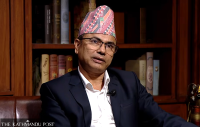
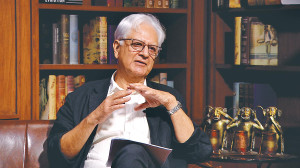
Social Activist Rakshya Bam discusses the state of the nation, dissecting the government’s response to recent communal clashes in Tarai-Madhesh, the systemic shortcomings in police riot control, and a perceived absence of empathy in urban governance.Rakshya Bam, social activist Deepak KC/TKP
As Nepal approaches the first anniversary of the historic Gen Z protests, the political landscape remains fraught with tension, high expectations and mounting frustration. Born from the momentum of a movement that demanded sweeping reform, good governance and accountability, the current administration under Prime Minister Balendra Shah finds itself under intense scrutiny.
The Post’s Biken K Dawadi sat down with prominent social activist from the Gen Z age group, Rakshya Bam, in her first interview since the March elections, to discuss the state of the nation, dissecting the government’s response to recent communal clashes in Tarai-Madhesh, the systemic shortcomings in police riot control, and a perceived absence of empathy in urban governance. From concerns over digital authoritarianism and shrinking spaces for civic dissent to deep-seated structural neglect in marginalised regions like Sudurpashchim, the discussion cuts to the heart of contemporary Nepali politics. As critics weigh the rhetoric of ‘clean intentions’ against administrative reality, the conversation explores whether the state is genuinely fulfilling the democratic mandate carved out by its citizens or if, as some fear, this government is veering dangerously off course.
To begin with current affairs, how do you evaluate the government’s response to the communal clashes in Madhesh, which critics have described as both inadequate and delayed?
In regard to the incidents in Madhesh, we were all waiting for an address from the Prime Minister. Once that address finally came, it did provide a sense of relief, even for those of us sitting here in the capital. Hearing the news that Prime Minister Balendra Shah, as the guardian of the nation, was finally addressing the situation was something we were anticipating. However, while we felt that relief, my thoughts immediately went to those living in the heart of the clashes and the riots. I couldn’t help but wonder what they were experiencing and feeling in that moment. I firmly believe that a state’s primary priority must always be its citizens. Had the PM addressed the Sunsari incident on the first or second day, perhaps fewer bullets would have been fired, and fewer lives would have been lost. Whether an address comes five days or ten days later, it is still an address, but the priority should have been on minimising damage and resolving the crisis effectively.
Do you believe the government, which came to power with a significant mandate following the Gen Z protests, truly required five days to formulate a ‘national security strategy’ before the Home Minister visited the field?
What occurred in Sunsari was more than just an isolated problem. It was a full-blown crisis. In such situations, you don’t just solve the issue; you have to deal with it through immediate engagement. There was a desperate need for representatives to be on the ground, speaking with every community. If the presence of the Prime Minister or the Home Minister on the field could save even a single life, then why wouldn’t they go immediately? The Home Minister did eventually go, but only after five days. He mentioned in interviews with The Post and Kantipur that they were in Kathmandu for those five days developing a ‘national strategy’. But what exactly is this ‘national strategy’? He didn’t elaborate. If a strategy to simply go and talk to these groups takes five days to create, then I find that hard to believe. Such things should be clear within a single day. While we are relieved the riots stopped, there are many areas where the government’s approach needs great improvement for the future.
Given that the police response in Madhesh appeared to involve indiscriminate and disproportionate force, similar to what was seen during the Gen Z protests of September, do you feel the state has failed to learn any lessons regarding the protection of general lives?
I see this as a systemic failure rather than just the fault of individual officers. When we look back at the Gen Z movement, we saw the position the police were put in and the resulting distance and atmosphere of fear that developed between the youth and the security forces. I blame the system and those leading the institutions for this because the system isn’t providing the police with the necessary resources or clear criteria for riot control. In the Sunsari riots, all the public knows is that bullets were fired. We don’t know the actual process or criteria the police were supposed to follow. The state needs to invest in the police and ensure they understand their primary role is to save lives, not take them. There is a massive difference between a trained professional using a weapon and an untrained person. The state must invest in proper training and equipment.
Regarding the portrayal of these clashes as inter-religious conflict, what steps do you believe are necessary to foster genuine communal harmony in the Tarai-Madhesh region?
While we should wait for the official reports before reaching definitive conclusions about who was behind the unrest, it is clear from the outside that religious tensions, particularly between Hindu and Muslim communities, are being stirred. Our society has a long history of living together in harmony. There is a saying that when you sleep on the same pillow, you might occasionally kick each other, and perhaps that is what is happening now. But we must never forget the essence: We are all human beings. No religion teaches us to hate one another. In fact, the more diverse the religions, the more there is to learn from one another. I am reminded of something Javed Akhtar once quoted: “If I am only ‘I’, then what is ‘I’? If you are only ‘you’, then what is ‘you’?” This is the core philosophy of secularism—respecting all religions. It is not about insulting others or imposing your beliefs, but about finding a balance between ‘yourness’ and ‘my-ness’.
Let’s change track. How do you interpret the way in which some Rastriya Swatantra Party (RSP) MPs have started speaking out quite strongly against the very government they are part of?
This is a standard parliamentary process. An MP has every right to voice their concerns to the Prime Minister, the House, or the Speaker. We are often accused of wanting to topple this government or wishing for its failure, but that is completely untrue. If this government fails, we—those of us who campaigned for change—will be the ones who face the most criticism. This government was formed on the momentum of our movement, with a mandate for change, good governance and reform. For the sake of public sentiment and the votes cast, this government must succeed. Our questions are not meant to harm the government. They are meant to make it successful, accountable and responsible. I believe the PM needs to be more wary of the people immediately surrounding him—his ‘team’—rather than our questions. The fact that even his own party’s MPs are protesting suggests there is a problem with his pattern of working.
When the PM claims he has ‘good intentions’ but admits he may not always follow the established processes, how do you evaluate such a narrative?
The narrative of ‘good intentions’ is something we hear a lot, even in his social media updates, but having clean intentions is not enough on its own. This must be demonstrated through actions. We have to ask: What are your intentions regarding the Constitution? What are your intentions regarding your attendance in the House? What about your intentions toward state institutions, the police, inclusivity and democracy itself? You cannot claim clean intentions while disregarding the process. What the public ultimately needs is a functioning system. If we don’t build a system now, what happens if the next PM doesn’t have ‘clean intentions’? You can distract the public with talk of intentions for a while, but it isn’t sustainable. We need results.
Is it appropriate for a PM to communicate vital national updates and responses to parliamentary questions primarily through Facebook posts?
It isn’t appropriate at all. We don’t always know what the Prime Minister is doing because the PMO’s information flow to the citizens is often ineffective. We have to ask if the information being provided is accessible to everyone. For instance, how does the government communicate with citizens who are visually impaired or those who are deaf? To truly connect with the people, there needs to be direct engagement, perhaps a weekly address where the public is informed about the government’s work. The PM holds the highest political power; he should be making the public feel his presence as a guardian. Remaining silent and only posting on social media is not a healthy sign for a democracy.
Since transparency was a foundation of the Gen Z movement, do you believe the first elected government following those protests is failing to meet those standards?
I wouldn’t say there is no transparency at all, but there is a disconnect in how it is practised. Transparency should be about empowering the citizens. The main question is: Who is the government facing? For example, a local government might post its reports on a website and claim transparency. But if those reports are filled with such dense legal jargon that an ordinary citizen cannot understand them, then how is that truly transparent? It’s more like ‘semi-transparency’. While we can’t say transparency is entirely absent just because the PM doesn’t address the public directly, in a democracy, direct dialogue with the people is essential.
As a prominent face of dissent outside of Parliament, how do you respond to the increasingly aggressive and negative reactions you face in digital spaces?
There is a concerted effort to shrink the space for dissent, but we shouldn’t allow it to happen. When we used to pose questions to previous governments, the response was never this irrational or irrelevant. Now, there is so much negativity, and chaos is spread to attack anyone who speaks up. However, it doesn’t matter to me if someone sitting in a room in Lalitpur writes a negative comment about me. What matters is my conviction. For younger activists, I would say you must anticipate that the path will be difficult. In Nepal today, activists are often viewed through a negative lens, despite the good work they have achieved. You must hold onto your convictions and, if faced with digital harassment, remember there are legal avenues like the Cyber Bureau.
Given the government’s handling of squatter settlements and the use of force without prior management, do you feel there is a fundamental lack of empathy in their governance?
There is zero empathy and no compassion. The way bulldozers were used in squatter settlements was unjustifiable, not just for today but for the future of Nepal’s history. Perhaps it would be different if the PM admitted it was a mistake, but displacing people without any prior management plan is a violation of their constitutional rights. This goes back to the ‘clean intentions’ issue—the PM might say his intentions are clean, but if he ignores the constitutional right of every citizen to live with dignity, then his intentions are irrelevant. Watching children, pregnant women, and the elderly crying while the settlements were destroyed was a spectacle of indignity. The government failed to maintain the dignity of its citizens and ignored the proper process.
How do you respond to the common argument that the public should ‘let the government work’ before offering criticism, considering this government is still in its early months?
It surprises me when people say ‘let them work’. Have we tied up the government’s hands? Is the government so fragile that our words prevent them from doing their jobs? We aren’t stopping them; we are asking for accountability. We are saying they are responsible for their actions and must provide answers. Questioning should be allowed from Day One. There is a massive amount of hope placed in this government, and both the public and the government are afraid that this hope will turn into disappointment. We don’t want that to happen, but currently, it feels like the government is on the wrong track. We ask questions precisely to keep them on the right path.
In light of the Gen Z movement’s stance against nepotism, how do you view the government’s current appointments and its approach to meritocracy?
The government claims the people they surround themselves with are the most capable, and we are expected to believe that. However, in a country as diverse as ours, meritocracy alone isn’t enough. We have marginalised communities and regions where people have significantly less access to power. Representation must reflect our geography and our diverse communities. The state isn’t a private company. It’s a public institution funded by taxpayers like us. In exchange for my taxes, I expect basic services. For example, in the entire Sudurpashchim province, there isn’t a single nephrologist. If we need our kidneys checked, we have to wait for a camp or a visiting doctor once a month. People are losing their lives because they can’t get an ICU bed in a district hospital. When I see the lack of representation for Sudurpashchim in state institutions, I feel like we should just amend the Constitution to officially label Sudurpashchim as ‘Second-Class Nepal’. At least then we wouldn’t have any expectations. It’s heartbreaking to see how much the state can neglect a region in terms of health, education and basic infrastructure.
As we approach the first anniversary of the Gen Z protests, how would you evaluate the progress made compared to your expectations when you first took to the streets?
The political cycle of a country moves in its own way. When I went to the streets on September 8 and 9, I couldn’t have imagined the situation that would follow. We went with the simple hope for a bright future for the country. Since then, an interim government held elections, and the Constitution and democracy are back on track with an elected PM. That is a reason to be happy. While the government has made numerous mistakes, I think it is still a bit too early to judge them completely. We want corruption to be eradicated, but that won’t happen overnight. We want good governance, though the definition of that varies—for some, it’s better roads and no traffic; for others, it’s the rule of law. Our society is currently in a state of disorder, and we must head towards good governance. I hope this government moves in that direction, but we must be very careful right now.
If you had to give a rating or a sense of where we are currently in terms of the government’s performance, what would it be?
It’s difficult to say if things have improved or declined because the government has given us so many headaches over the last four months. We can’t openly say they are doing a great job, yet side-by-side, the country is functioning. Administrative work is happening, and the government is managing the country’s responsibilities, which is significant in itself. However, where the government is failing is in its actual presence for the people—like providing healthcare where there is none.




 18.07°C Kathmandu