



 19.46°C Kathmandu

Wed, Sep 23, 2026
Money
Modi asked Indians to curb overseas travel. Nepal seeks to draw them across the border
As part of a new public diplomacy strategy, Nepal is planning phased visits by Indian social media influencers to showcase its tourism offerings.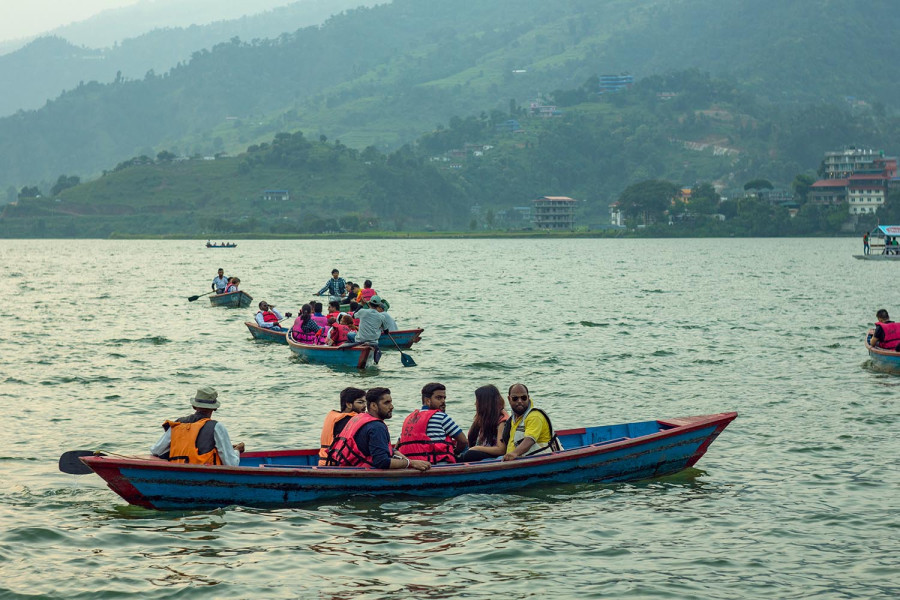
bookmark
Anil Giri
Published at : May 24, 2026
Updated at : May 24, 2026 06:06
Kathmandu
Nepal’s Embassy in New Delhi has invited Indian vloggers, YouTubers, podcasters and digital content creators for a familiarisation trip to Nepal aiming to promote the country’s tourism sector.
The initiative is a public and cultural diplomacy campaign designed to counter misleading narratives about travel to Nepal in sections of the Indian media.
On May 20, the Nepali Embassy in New Delhi issued a notice on social media platform X inviting applications from Indian social media influencers by May 30 for a familiarisation trip to Nepal.
A week before the deadline, the embassy has already received an overwhelming response from mainstream Indian media and Indian social media influencers.
Five-star hotels and airlines in Kathmandu have shown interest in supporting the bid by offering packages to selected Indian social media influencers.
“We have received over 200 applications in just three days, and the numbers are growing,” Surendra Thapa, the chargé d’affaires at the Nepali Embassy in New Delhi, told the Post. “We expect over 1,000 applications by May 30.”
He said that Indian social media users and influencers are publicising the embassy’s notice across various social media platforms, including Facebook and Reels, and Instagram.
This is the first time the Nepali government has invited Indian social media influencers to visit Nepal for tourism promotion. The embassy will pick five influencers among the applicants. They will be taken to different parts of Kathmandu, Pokhara and Chitwan by the Nepal Tourism Board, where they will experience the country’s diverse tourism offerings.
The selection would be done based on content relevance, quality of previous work, audience reach and engagement, creativity, storytelling ability, professional reputation, and the ability to communicate effectively with Indian audiences in English, Hindi, or regional Indian languages, according to the embassy.
Nepal expects publicity from social media influencers, vloggers, and YouTubers with millions of followers of its rich natural beauty, cultural heritage, spiritual sites, hospitality, and the ease of travel, even to remote areas. The visit is expected to generate engaging digital content and encourage Indian travellers to visit Nepal for leisure, pilgrimage, culture, adventure, wellness, and family travel, the notice further said.
In the past, on a few occasions, the government of Nepal organised familiarisation trips for Indian journalists from the mainstream media. The programme was paused years ago.
Those visits typically involved meetings with Nepali political leaders and officials, and the resulting coverage was largely focused on social and political issues in the Indian mainstream media.
While the embassy had been planning such visits, reports aired by the Indian television channel Zee News and stories published by other media outlets claimed that Nepal had introduced revised travel regulations for Indian tourists, making valid identity documents mandatory for entry and limiting tourist stays to 30 days.
“Authorities [Nepali] state that the new measures are aimed at improving border management and strengthening tourist monitoring across the country. The decision is expected to affect frequent travellers, pilgrims, and tourists visiting Nepal from different parts of India,” said news still available in Reality Sikkim, a social media channel.
That particular news started spreading like wildfire and immediately rang alarm bells in New Delhi and Kathmandu. Zee News subsequently took down that story after a request from Nepali officials.
Since many social media influencers have expressed interest in visiting Nepal, the embassy plans to maintain a roster and send them to Nepal gradually and regularly in several batches.
“The Nepal government’s measure to tighten its borders and impose a tax on citizens purchasing goods over Rs100 led many Indians to believe the rumours about tightened travel restrictions spread by the Indian media,” said a foreign ministry official.
Officials at Nepal’s embassy said they saw an opportunity to promote Nepal following Indian Prime Minister Narendra Modi’s appeal on May 11, in which he urged citizens to postpone discretionary overseas holidays and weddings to curb foreign currency outflows.
“We decided to cash in on this opportunity because Indian citizens do not need US dollars to travel to Nepal, there is no visa requirement, and they can conveniently use their own currency as well as digital payment systems,” said Thapa.
Indian travellers to Nepal do not require foreign exchange in US dollars and can use Indian rupees. Under bilateral arrangements, UPI-based payments are also available in Nepal, allowing transactions up to IRS 25,000. No visa is required for Indian citizens visiting Nepal.
Not only Nepal, but many countries including Thailand, the United Arab Emirates, Saudi Arabia, Japan, Uganda, and Turkey, have started inviting social media influencers to visit and promote tourism. This is usually called a “FAM trip” (familiarisation trip) or influencer marketing campaign, where travel creators get free or sponsored travel in exchange for content.
Even before Nepal began formally inviting influencers on an expenses-covered familiarisation programme, several Indian social media creators had already been promoting Nepali tourist destinations.
For instance, Indian civil servant (IAS) officer Sonal Goel, who has over 528,000 followers on X, recently visited Namche Bazaar and Khumjung village in the Everest region and also tagged the Nepali Embassy in her posts.
“This kind of direct and indirect publicity from influencers in India is already helping boost visibility and encouraging Indian citizens to visit Nepal. We have been receiving strong positive attention,” said Thapa.
Anil Giri
Anil Giri is a Chief Sub Editor covering diplomacy, international relations and national politics for The Kathmandu Post. Giri has been working as a journalist for more than two decades, contributing to numerous national and international media outlets.


Most Read from Money

A flood of bad news leaves Nepal’s tourist hubs eerily quiet
How crypto found a ‘legal’ route into Nepal’s relief efforts
Nepalis cut back on food as ‘hyperinflation’ and shortages bite
Germany provides €8 million in assistance to Nepal after Bhotekoshi floods
Why was Nepal’s stock market shut on Monday
Editor's Picks

What triggered the Rasuwa flood? Scientists piece together a complex chain of events

The floods keep coming. Nepal keeps starting over

In a settlement destroyed by the Bhotekoshi flood, a disabled couple offer strangers the little they have

Nepal working on detailed assessment as Bhotekoshi flood reconstruction could cost up to $5 billion

Rabindra Dhant gave Nepal a reason to smile. Now his camp wants real action behind the praise
E-PAPER | September 23, 2026

×