Nepal trims India fertiliser import plan to 50,000 tonnes as global prices ease
Decision comes as prices fall and procurement strategy is revised, but farmers continue to face pressure during peak paddy planting period.Shutterstock
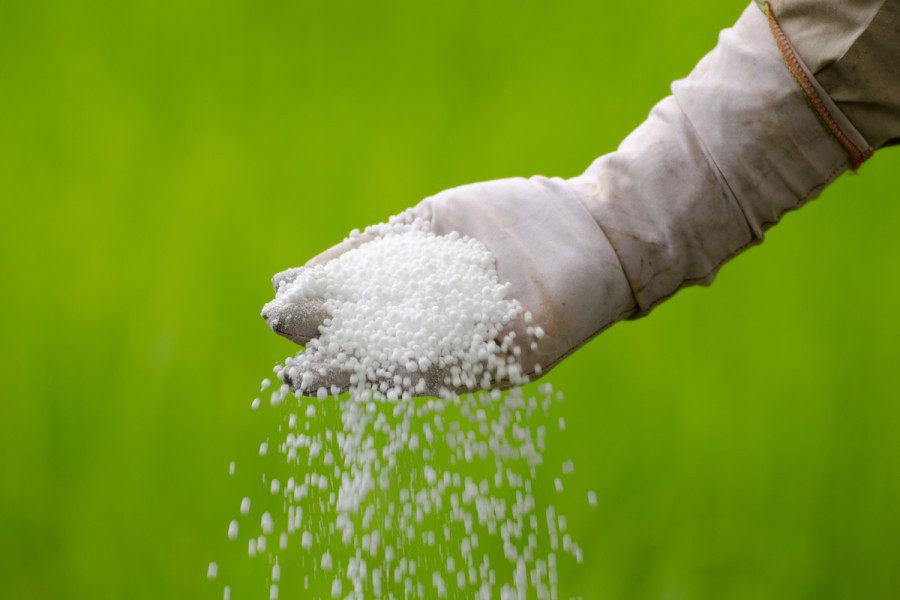
Nepal has opened a letter of credit to import up to 50,000 tonnes of chemical fertilisers from India under a government-to-government arrangement, scaling back an earlier plan as global fertiliser prices begin to soften.
The imports are considered crucial to easing shortages during the ongoing monsoon paddy transplantation season, one of the most important periods in Nepal’s agricultural calendar.
On May 4, the Cabinet granted in-principle approval to the Agriculture Inputs Company (AIC) to procure 80,000 tonnes of chemical fertilisers from India after global supply disruptions and price spikes triggered by tensions in West Asia threatened supply.
The one-time procurement package included 60,000 tonnes of urea and 20,000 tonnes of Di-Ammonium Phosphate (DAP). Nepal had initially requested 150,000 tonnes from India.
“Though the Cabinet approved 80,000 tonnes, we have decided to import only 50,000 tonnes of chemical fertiliser,” said Ram Krishna Shrestha, joint secretary at the Ministry of Agriculture and Livestock Development and chair of the Agriculture Inputs Company.
According to Shrestha, two factors prompted the government to reduce the volume. “The first is the availability of financial resources, and the second is that prices have started declining in the global market,” he said.
“We are also hopeful that some suppliers who suspended imports earlier may resume shipments as prices come down.”
The decline in international prices has provided some relief to both the government and farmers, who have struggled to secure adequate fertiliser supplies amid market volatility.
According to Shrestha, Nepal accepted the price quotation submitted by India’s state-owned Rashtriya Chemicals and Fertilisers Limited after finding it within the cost estimates prepared by the Agriculture Inputs Company.
The total consignment is expected to cost around Rs7 billion.
“We have already received the required funds from the Ministry of Finance and plan to transfer the payment to the supplier soon,” he said.
While pricing issues have largely been settled, delivery remains a major concern.
Officials say the standard procurement process could take as long as 120 days. Given the urgency of the farming season, Nepal has requested India to expedite shipments.
“That remains our biggest concern,” Shrestha said. “During the Nepal-India Joint Steering Committee meeting last week, we requested the Indian side to fast-track delivery. We are hopeful that the fertiliser will arrive by mid-August. The Indian side has acknowledged our request.”
Paddy is cultivated on around 1.4 million hectares across Nepal and remains one of the country’s most important crops, supporting rural incomes and contributing significantly to economic growth.
Economists estimate that a 10 percent change in paddy production can alter Nepal’s economic growth by nearly 0.4 percentage points, making timely fertiliser availability critical.
Despite supply challenges, agriculture officials say the country is unlikely to face a severe fertiliser crisis this season.
According to the Agriculture Ministry, Nepal currently holds around 142,000 tonnes of fertiliser in stock. However, demand during the paddy transplantation period is estimated at about 250,000 tonnes.
“The government may not be able to fully meet demand, but there should not be an acute shortage,” Shrestha said.
The fertiliser challenge comes at a time when global agencies are warning of growing risks to agricultural production due to climate and geopolitical factors.
A recent analysis by the Food and Agriculture Organisation (FAO) of the United Nations identified a heightened risk of agricultural drought linked to El Niño conditions across major food-producing regions, including South and Southeast Asia.
Drawing on 41 years of satellite imagery through its Agricultural Stress Index System, the FAO found that strong El Niño events have historically caused severe droughts in many of the world’s key farming regions. The organisation warned that below-average monsoon rainfall could threaten crop production and food security in vulnerable countries.
The report indicates elevated drought risks across South Asia, Southeast Asia, Southern Africa, the Sahel and parts of Central America and the Caribbean.
At the same time, disruptions to shipping routes through the Strait of Hormuz, the narrow chokepoint linking the Persian Gulf with the Gulf of Oman, have pushed up energy and fertiliser costs globally, adding pressure to farming economies preparing for the planting season.
While urea prices have recently begun to ease, DAP prices remain elevated.
According to the World Bank’s latest commodity market outlook, urea prices climbed above $850 per tonne in April, representing an 80 percent increase since February and the highest level since April 2022.
Supply pressures intensified after Iran halted ammonia production and Qatar suspended output of urea, ammonia and sulphur following damage to key facilities as war between Iran and the US-Israeli coalition that started on February 28 drags on. India also reduced urea and ammonia production because of lower liquefied natural gas supplies.
Concerns over potential export restrictions from China further tightened supplies and weakened fertiliser affordability worldwide.
DAP prices also increased by more than 10 percent in April after remaining relatively stable earlier in the year. Rising sulphur costs and tighter supplies contributed to the increase, while China’s export restrictions added further upward pressure.
The World Bank projects DAP prices will rise by nearly 6 percent in 2026 before declining by about 10 percent in 2027 as new production capacity enters the market.
However, risks remain significant. Any prolonged closure of the Strait of Hormuz or renewed export restrictions by major suppliers could disrupt global fertiliser trade and trigger fresh price increases.
In Nepal, subsidised urea is sold through government-designated cooperatives at Rs18 per kg, while DAP is available at Rs46 per kg. These prices reflect subsidies of approximately 92 percent for urea and 80 percent for DAP, compared with market rates of around Rs160 and Rs162 per kg, respectively.
Government officials estimate that fully subsidising fertiliser at prevailing international prices would cost nearly Rs80 billion annually.
Nepal’s recurring fertiliser shortages stem from a combination of factors, including inadequate buffer stocks, weak distribution networks, policy shortcomings and exposure to volatile international markets.
These structural problems continue to affect tens of thousands of farmers already grappling with climate-related risks such as droughts, floods and unpredictable weather patterns.
Sangam Prasain is Business Editor at The Kathmandu Post, covering tourism, agriculture, mountaineering, aviation, infrastructure and other economic affairs. He joined The Kathmandu Post in October 2009.




 25.75°C Kathmandu