Eight years on, Nirmala case still without answers
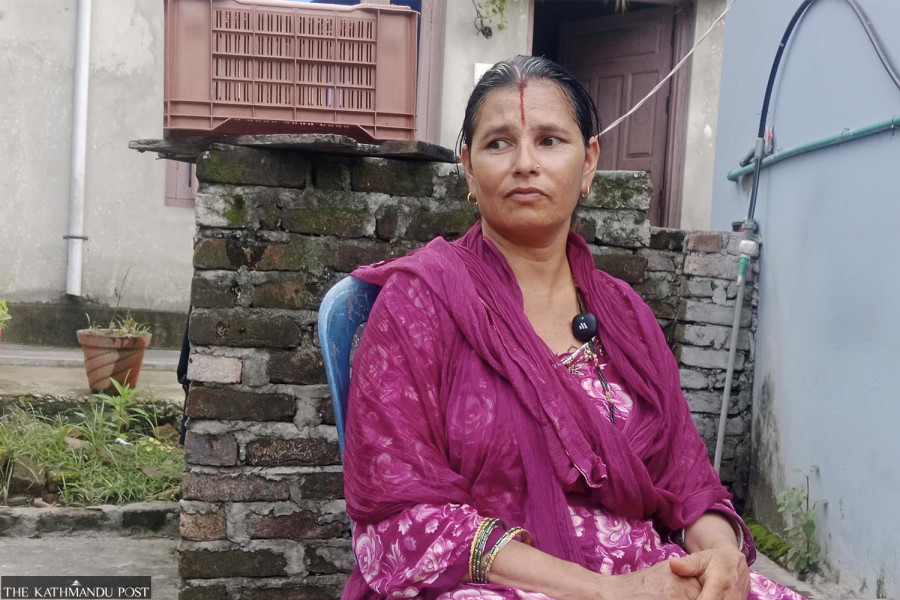
Despite multiple inquiries, over 1,000 interviews and extensive DNA testing, investigators have yet to identify the killer, leaving the victim’s family still waiting for justice.Durga Devi Pant, Nirmala’s mother, pictured recently. Bhawani Bhatta/ TKP
Every year as the anniversary of Nirmala Pant’s rape and subsequent murder approaches, old videos of the case resurface on social media, reigniting public debate over one of country’s most controversial unsolved criminal investigations. For Durga Devi Pant, the victim’s mother, the renewed attention brings neither hope nor comfort—only painful memories of a justice system that has failed her family for eight years.
Journalists and social media influencers regularly visit Durga’s home in July, asking the same questions: Does she still believe justice will be served? Does she think the murderer will ever be brought under book? She says she no longer has answers.
“We have waited for eight years, but the real culprit has not been found,” Durga Devi told Kantipur recently. “We only want the person who committed this crime to be identified and punished. Seeing old videos repeatedly shared on Facebook and in the news only deepens our pain. Please stop showing those old clips.”
She said she had learned through news reports and social media that Nepal Police had recently formed another investigation committee, but no official had contacted her or shared any information about its work. “They do not need to come to our house,” she said. “Just find the criminal and send that person to prison.”
Now, she prefers not to discuss the case with visitors, saying every conversation forces her to relive the tragedy. Each year, as 10th of Nepali month of Shrawan (July 26 this year) nears, she hears the same questions while the investigation appears no closer to a conclusion.
Thirteen-year-old Nirmala Pant, a resident of Bhimdatta Municipality-2 in Kanchanpur, disappeared on July 26, 2018, after leaving home to study at a friend’s house. Her body was discovered the following day in a sugarcane field in Bhimdatta-18. Police investigation later confirmed that she had been raped before murdered.
The case sparked nationwide outrage and prolonged protests demanding justice. Public anger intensified after police arrested and presented local resident Dilip Singh Bista as the prime suspect 25 days after the crime. The investigation soon came under intense scrutiny amid allegations of fabricated evidence and procedural failures.
During protests against the police investigation, Shani Khuna of Bhimdatta-18 was killed in police firing, while several protesters and police personnel were injured. Bista was later released after investigators failed to substantiate the allegations against him.
Subsequent investigations by multiple agencies found serious flaws in the original inquiry. A high-level committee formed by the Home Ministry, alongside separate investigations by the National Human Rights Commission and a committee led by then Additional Inspector General Dhiru Basnyat, concluded that police had mishandled the case.
The findings led to the suspension of eight police officers, including then Kanchanpur police chief Superintendent of Police Dilliraj Bista. They later faced charges of destroying evidence and torturing suspects during the investigation but were ultimately acquitted by the court.
The Nirmala case has since become one of Nepal’s most extensively investigated criminal cases. More than 100 DNA samples have been tested, while over 1,000 people have been questioned during multiple rounds of investigation, according to police. Despite the enormous expenditure of time and resources, investigators have yet to identify the perpetrator.
Hope briefly resurfaced in March this year after Nepal Police headquarters formed a new 15-member investigation committee led by Senior Superintendent of Police Krishna Pangeni, who serves at the Human Trafficking Investigation Bureau. The team has been working on the case since its formation, reviewing evidence collected over the past eight years.
However, Pangeni declined to discuss the latest progress. “We are not in a position to comment on the investigation at this stage,” he said.
The status of the investigation remains the most frequently raised issue whenever the District Police Office in Kanchanpur holds public interactions or press conferences. At the district police’s annual review briefing on Wednesday, journalists again pressed officials for updates.
Kanchanpur Police Chief SP Netramani Giri said solving the Pant murder remains a top priority for both district police and Nepal Police headquarters. “This case has received the highest priority from the state, and our organisation also considers it extremely important,” said Giri. “Although it may appear from outside that nothing is happening, that is not the reality.”
He said a specialised team from the Central Investigation Bureau has also been working on the case, reviewing previous investigation files alongside fresh evidence and intelligence. “Our district team has not remained idle either,” said Giri. “We are continuously examining whether new leads emerge and whether we can reach a conclusion. It is not true that nothing has happened. Work is ongoing at both the central and district levels.”




 15.67°C Kathmandu