Nepali workers returning from India face overcharging at the border
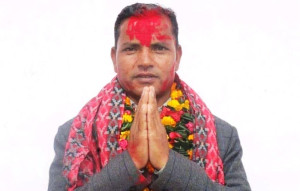
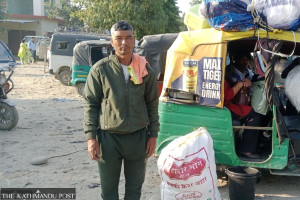
Workers returning home for Dashain say inflated fares and repeated checks persist, but few complain about the extra costs. Kali Bahadur Sahakari from Kalikot heads home with friends from Almora in India’s Uttarakhand state. Bhawani Bhatta/TKP
For 52-year-old Kali Bahadur Sahakari, travelling to India for work has been a way of life for nearly four decades. He first went to Kalapahad in India’s Uttarakhand state at the age of 12 and still travels to the Garhwal and Almora regions for daily-wage work.
Much has changed over the years, he says, but two problems remain stubbornly familiar: harassment in the name of security checks at the border and being overcharged for transport.
Returning home for Dashain this year, Sahakari paid 250 Indian rupees to travel from Banbasa, a border town in India, to the Gaddachauki crossing in Nepal. The usual fare is around 50 rupees, with a small extra charge for luggage.
“This is never going to change. They always find some excuse to take more money,” he said. “The checks at every turn are never going to end either.”
Sahakari said checks on both sides of the border make the journey difficult. On the Indian side, workers carrying heavy loads have to queue for inspections and pass their belongings through X-ray machines, often waiting a long time with their luggage on their backs.
He still earns 500 to 600 rupees a day doing manual labour. Four decades ago, when his daily wage was just 10 to 20 rupees, he faced similar difficulties travelling to and from India. The wages have increased, but the problems along the route have barely changed, he said.
A resident of Pachaljharana Rural Municipality in Kalikot district, Sahakari heads to India each year after planting crops at home and returns in time for the harvest. This time, he came back from Almora to celebrate Dashain with his family.
His work in Almora includes breaking stones and carrying soil and bricks. His earnings must cover his own food and accommodation as well as his family’s expenses back home.
“The cost of travel and almost everything else has gone up, but our wages have increased very little,” he said. “It is difficult to cover our living expenses and support our families on what we earn.”
He plans to return to India after Tihar, once he has brought in the harvest and sown wheat.
Bishal BK, another migrant worker from Kalikot, said the extra transport charges eat into the savings workers set aside for festivals.
“Whenever we return home, we are charged more. Sometimes they blame it on our luggage; other times, they say it is for the checks,” he said. “The money we save from manual labour for the festivals gets spent on the journey itself.”
BK paid 200 rupees for the trip from Banbasa to Gaddachauki this time, even though the fare with luggage would normally be around 100 rupees.
The overcharging does not stop at the border. In Nepal, the usual fare from Gaddachauki to Mahendranagar is 50 Nepali rupees, but returning workers are now often charged 100 rupees, with luggage cited as the reason.
Despite the extra costs, workers rarely file complaints. Eager to get home and doubtful that they will receive timely redress, many simply pay and continue their journey.
The passenger assistance desk at Gaddachauki said it had received no complaints this year about overcharging or other travel-related problems. Workers do not even come forward to register their grievances, the desk said.




 19.11°C Kathmandu