Three-quarters of newborn care facilities in Nepal lack critical medicines
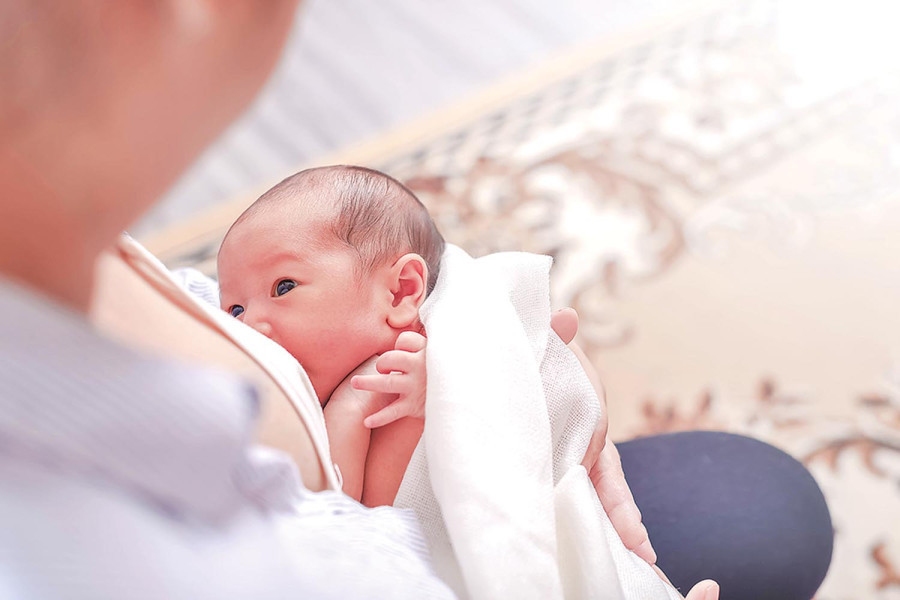
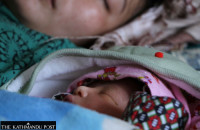
Assessment by the health ministry shows newborn units rely heavily on contract staff, while infection control, hygiene and quality monitoring remain weak. Shutterstock
Nearly 75 percent of health facilities providing special newborn care services even lack medicines required for serious complications, according to a latest assessment by the Ministry of Health and Food Safety.
The report titled “‘Functionality Assessment of Special Newborn Care Units for Improving Quality of Services for Care of Small and Sick Newborns at Health Facility in Nepal”, prepared by the ministry, shows that multiple medicines, including phenobarbitone, required for seizure control in newborns, were available only in a quarter of health facilities—state-run hospitals, medical colleges, as well as private ones.
Similarly, dobutamine, a medicine used in intensive care units, was available only in 42 percent of the health facilities. First-line antibiotics such as ampicillin were available in 88 percent of facilities and Gentamicin available in 81 percent of health facilities.
The study, supported by the UN Population Fund, was carried out in 85 special newborn care units operating in 85 hospitals across the country.
“The study examined the quality of services being provided and identified service gaps,” said Dr Madan Kumar Upadhyaya, director at the Family Welfare Division under the Department of Health Services. “A lot of things need to be improved to reduce the ongoing death rate of newborns.”
The report also shows that only 57.6 percent of health facilities had at least one doctor dedicated to newborn care, while advanced equipment required to treat babies with breathing difficulties was available in one-fifth of the health facilities.
More than one-third of the health facilities did not have a single kangaroo mother care chair, and nearly two-thirds had no kangaroo mother care beds. Health experts say that kangaroo mother care is one of the most effective and low-cost interventions for premature and low-birth-weight babies, and the lack of such services in health facilities designated for special newborn care raises concern about the quality of care for small and sick newborns.
The report also shows alarming gaps in infrastructure, as only 15 out of 85 health facilities surveyed had a designated triage or receiving room for newborn assessment. Lack of such facilities could delay the stabilisation and treatment of critically ill infants, according to doctors.
The study found poor quality assurance mechanisms in the hospitals where the study was carried out. Though less than one in four health facilities had carried out quality improvement activities linked to maternal and perinatal death reviews, more than 80 percent of such facilities claimed that they had quality improvement teams. Only a third of the health facilities reported that they received supervisory visits in the previous six months.
Likewise, the communication gap with families of the ailing newborn was alarming—only about a quarter of health facilities routinely informed mothers or caregivers about the ailments and treatment progress, the report stated.
Human resource shortages, including a lack of trained staff, and the fact that contract staff outnumbered permanent health workers, reflect growing dependency on temporary workers to run newborn care services, the report says. Among other shortcomings pointed out in the report are the lack of soap and running water, and the absence of standard infection prevention and control guidelines.
Among the observed consultations, nurses attended to nearly 70 percent of sick newborns, while paediatricians conducted 22 percent, and medical officers conducted eight percent of consultations.
The report shows that only 54 percent of health facilities had both soap and running water available for handwashing.
Child health experts say periodic assessments need to be carried out to understand service quality and address shortcomings to prevent ongoing deaths of mothers and newborns. However, such studies are rarely carried out. Officials say extensive studies are carried out only when aid agencies agree to finance and provide technical assistance.
“We must prevent avoidable deaths of newborns caused by hypothermia, infection, low birth weight, premature birth, and abnormal birth asphyxia, among others,” said Upadhyay, director of the Family Welfare Division. “We have three tiers of government—local, provincial and federal. We will coordinate and make plans for avoiding ongoing newborn deaths.”
Nepal has reduced the neonatal mortality rate by almost 60 percent since 2000. According to the World Health Organisation, neonatal mortality now stands at 16.6 per 1,000 live births, and the stillbirth rate has decreased to 13.5 per 1,000 births. The health target under the UN’s Sustainable Development Goals is to reduce neonatal deaths to 12 for every 1,000 births.
The SDGs, a follow-up on the Millennium Development Goals (MDGs), aim to end poverty and hunger and all forms of inequality in the world by 2030, and Nepal has committed to meeting the goals.
The study, carried out this year, has not yet been made public, but the Post has seen a copy of the report.
Arjun Poudel is a health reporter for The Kathmandu Post. Before joining the Post, he worked for Sagarmatha Television, Naya Patrika, Republica and The Himalayan Times.




 14.69°C Kathmandu