



 14.81°C Kathmandu

Sat, Oct 24, 2026
Money
Nepal moves to tax local staff of UN agencies, diplomatic missions
New arrangement targets local staff, consultants and temporary employees who do not possess diplomatic status.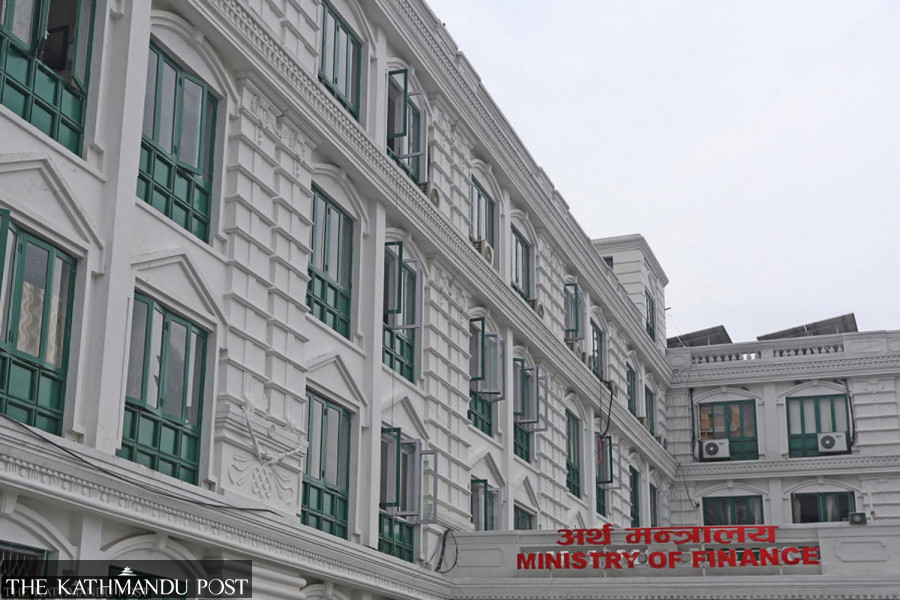
bookmark
Yagya Banjade
Published at : June 12, 2026
Updated at : June 12, 2026 06:21
Kathmandu
The government has introduced a new tax provision through the Finance Bill that brings certain employees working for United Nations agencies, international organisations and foreign diplomatic missions in Nepal within the country’s income tax net.
The measure applies to Nepali nationals and foreign residents employed locally by UN offices, international institutions and diplomatic missions operating in Nepal. However, officials say the change does not affect diplomats and other personnel who enjoy tax exemptions under the Vienna Convention on Diplomatic Relations.
According to the Inland Revenue Department, the new arrangement specifically targets locally recruited staff, consultants and temporary employees who do not possess diplomatic status. Such employees will now be required to pay income tax in accordance with Nepal’s Income Tax Act.
“The provision in Section 47 of the Finance Bill 2026 concerns income tax, interest and fee exemptions related to Nepalis or resident individuals working for the United Nations, international organisations or diplomatic missions,” said Ramesh Aryal, acting director general of the Inland Revenue Department.
“Permanent employees with diplomatic status generally receive income tax exemptions under the Vienna Convention. But locally recruited staff do not enjoy diplomatic privileges and therefore are not entitled to such exemptions,” he said.
The Vienna Convention, adopted in Vienna in 1961, is a key international treaty governing diplomatic relations between states. It defines the rights, duties and privileges of diplomats and diplomatic missions. Under the convention, ambassadors and diplomatic personnel accredited by host countries are exempt from certain taxes.
As a result, foreign ambassadors and diplomatic staff working in Nepal do not pay local income tax, just as Nepali diplomats serving abroad receive similar exemptions in host countries.
Tax officials say confusion over these privileges has persisted for years. According to Aryal, many locally hired employees working for international organisations and diplomatic missions have argued that they should receive the same benefits as diplomats and therefore have not paid income tax.
He said the problem was compounded by the fact that such organisations are not legally obliged under Nepal’s tax laws to deduct income tax at source and submit it on behalf of employees. Consequently, many eligible taxpayers remained outside the tax system.
“To address this issue, the government has introduced a provision encouraging such employees to voluntarily declare their income and settle their tax liabilities,” said Aryal.
The government has also offered a limited-time concession. Employees covered by the provision can clear their tax obligations for the past three fiscal years by paying the applicable income tax along with an additional one percent charge. The facility is available until mid-December 2026.
Under the Income Tax Act, individuals who have earned taxable income but failed to pay tax must obtain a Permanent Account Number (PAN) and submit income details covering fiscal years from 2022-23 to 2025-26. They must pay the due tax along with the additional one percent amount before the deadline.
In return, interest charges and penalties will be waived. The Finance Bill further states that taxpayers using this facility will not be required to submit income details or pay taxes, fees or interest relating to periods before fiscal year 2022-23.
Yagya Banjade
Banjade covers government finance, banking, capital markets, and the economy for Kantipur Daily.





Most Read from Money

Why does an hour long flight to Dhangadhi cost more than a flight to New Delhi?

Nepal travel agents threaten to stop selling Thailand trips over visa rules
Malaysia rejects Nepal’s demand to open recruitment to all manpower agencies

No school, but a graduation cap for women dairy farmers
Nepal arrests four medical service providers as Malaysia recruitment row deepens
Editor's Picks




E-PAPER | October 24, 2026

×