Provinces prioritise development spending in budgets for next fiscal year
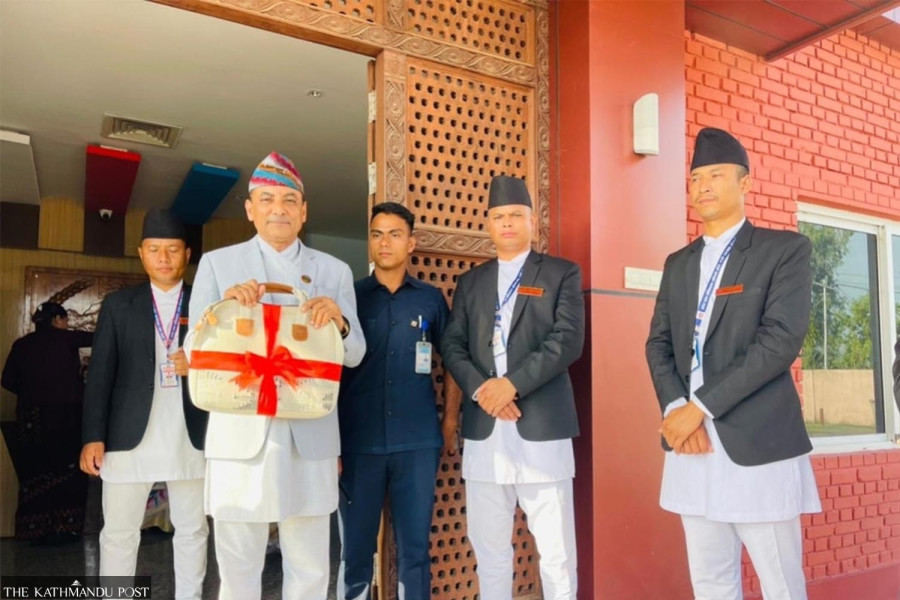
All seven provincial governments unveil budgets for 2026-27, allocating the bulk of expenditure to infrastructure, healthcare, agriculture and other capital projects while keeping recurrent spending in check. Post photo
Provincial governments on Monday unveiled their budgets for the fiscal year 2026-27, with most allocating a large chunk of spending to capital projects in a bid to boost development, improve infrastructure and stimulate economic activity.
The provinces prioritised roads, healthcare, agriculture, tourism and public service delivery while attempting to contain recurrent expenditure.
Bagmati Province announced the largest budget among the provinces, unveiling a fiscal plan worth Rs66.93 billion. Minister for Economic Affairs and Planning Prabhat Tamang allocated Rs22.96 billion, or 34.31 percent of the total budget, for recurrent expenditure and Rs43.97 billion, or 65.69 percent, for capital expenditure.
The province plans to finance the budget through Rs30.15 billion in tax revenue, Rs7.73 billion from other revenue sources, Rs15.31 billion in federal transfers, Rs12.76 billion from accumulated surpluses and miscellaneous receipts, and Rs960 million from loan principal repayments.
Madhesh Province presented a budget of Rs41.13 billion, nearly Rs5 billion lower than the current fiscal year's allocation of Rs46.58 billion. Finance Minister Yubaraj Bhattarai earmarked Rs14.66 billion, or 35.54 percent, for recurrent expenditure and Rs26.47 billion, or 64.36 percent, for capital expenditure.
To finance the budget, the province expects Rs11.22 billion from internal revenue and miscellaneous receipts, Rs12.83 billion through federal revenue sharing, Rs9.49 billion in federal grants and Rs6.08 billion from the current fiscal year's cash balance. The province also plans to borrow Rs1.50 billion internally.
Koshi Province introduced a budget of Rs40.44 billion. Minister for Economic Affairs and Planning Bidur Kumar Lingthep allocated Rs13.97 billion for recurrent expenditure and Rs20.75 billion for capital expenditure, while setting aside Rs150 million for financial equalisation grants.
The province said the budget would focus on infrastructure development, agricultural modernisation, tourism promotion, employment generation and improvements in education and healthcare services. It also pledged to curb administrative expenses while continuing investment in roads, drinking water projects, irrigation schemes and schools.
Lumbini Province announced a budget of Rs37.38 billion. Minister for Economic Affairs and Planning Dhanendra Karki allocated Rs11.11 billion for recurrent expenditure and Rs22.71 billion for capital projects.
The province has prioritized, in its budget, healthcare, infrastructure and drinking water projects under its “prosperous Lumbini, happy citizens” vision. Healthcare received Rs5.65 billion, including Rs2.12 billion for Lumbini Provincial Hospital and other provincial hospitals. The allocation also covers the introduction of telemedicine services and the expansion of Rapti Provincial Hospital into a 200-bed facility.
Physical infrastructure received Rs10.18 billion, with the province planning to implement a road master plan that includes 237 multi-year road projects. Urban development and drinking water programmes were allocated Rs4.15 billion, while education and social development received Rs3.05 billion, including Rs110 million for an innovation centre.
The province also allocated Rs2.81 billion for energy and irrigation, Rs1.78 billion for agriculture, land management and cooperatives, Rs1.44 billion for industry and tourism, and Rs380 million for youth and sports.
Karnali Province unveiled a budget of Rs35.39 billion, representing a 7.28 percent increase from the current fiscal year's allocation. Minister for Economic Affairs and Planning Rajeev Bikram Shah allocated Rs8.60 billion, or 24.31 percent, for recurrent expenditure, Rs20.74 billion, or 58.31 percent, for capital expenditure, and Rs5.54 billion for financial transfers.
The province expects to mobilise Rs850 million in internal revenue and Rs6.41 billion from unspent funds carried over from the current fiscal year. It also plans to rely heavily on federal support, including Rs10.66 billion from revenue sharing, Rs10.63 billion in equalisation grants, Rs5.67 billion in conditional grants, Rs667.8 million in complementary grants and Rs485.6 million in special grants. Foreign assistance is projected at Rs960,0000.
Gandaki Province announced a budget of Rs32.99 billion. Minister for Economic Affairs Jit Bahadur Sherchan allocated Rs12.72 billion, or 38.56 percent, for recurrent expenditure and Rs20.02 billion, or 60.68 percent, for capital expenditure.
The Sudurpashchim provincial government tabled its budget shortly before midnight on Monday after prolonged bargaining among ruling coalition partners over the allocation of funds. Opposition lawmakers boycotted the budget presentation.
Minister for Economic Affairs and Planning Bikram Singh Dhami presented a Rs37.70 billion budget for the fiscal year 2026-27, nearly Rs4 billion higher than the Rs33.48 billion budget for the current fiscal year.
While Dhami outlined the overall budget size and funding sources, he did not disclose the breakdown between recurrent and capital expenditure. According to sources, although a budget speech had been prepared, the government had yet to finalise detailed programmes.
The largest allocation in the budget has been earmarked for road improvement projects, with Rs1.75 billion set aside for the sector. The government has also allocated Rs65 million for sheep farming in the high Himalayan districts of Darchula, Bajhang and Bajura.
A further Rs285 million has been earmarked for climate-resilient projects in Bajura and Bajhang. The budget also includes funding for tourist assistance centres and the Devatavi Tourism Development Programme.
Nutrition improvement programmes will be implemented in six local units with high poverty rates: Dhakari Rural Municipality and Kamalbazar Municipality in Achham, Shikhar Municipality in Doti, Triveni Municipality in Bajura, and Sigas and Shivanath rural municipalities in Baitadi.
In the health sector, the government has allocated funds to upgrade Seti, Mahakali and Tikapur provincial hospitals to 100-bed facilities, while district hospitals in hill districts will be expanded from 25 to 50 beds. Additional funding has been set aside to strengthen dialysis services at Seti, Mahakali and Tikapur hospitals.
The provincial assembly meeting, initially scheduled for 5pm, was postponed to 9pm after disagreements within the ruling coalition prevented the cabinet from finalising the budget. As the cabinet failed to meet even by 9pm, the budget presentation was pushed to midnight.




 28.31°C Kathmandu