



 25.12°C Kathmandu
Fri, Sep 4, 2026
Money
Nepal’s industrial slowdown deepens as new factory registrations fall
Only 461 industries registered in the first six months of the fiscal year, while factory utilisation, industrial lending and manufacturing’s share of the economy continue to decline.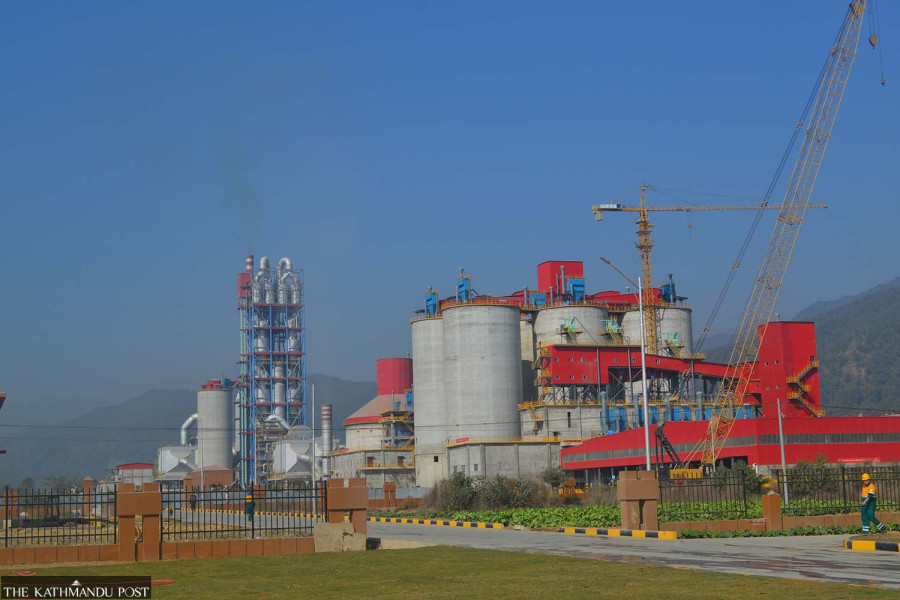
bookmark
Yagya Banjade
Published at : June 15, 2026
Updated at : June 15, 2026 10:26
Kathmandu
Nepal’s industrial sector is showing further signs of strain, with new industry registrations, factory utilisation and industrial credit growth all declining in the first half of the current fiscal year, underscoring concerns about the country’s weak investment climate and slowing industrialisation.
A total of 461 new industries, ranging from small and medium enterprises to large-scale factories, were registered nationwide between mid-July and mid-January, according to a recent report released by Nepal Rastra Bank. The figure is 120 lower than during the same period of the previous fiscal year, when 581 industries were registered.
Industrialists and business leaders attribute the decline to long-standing structural problems, including policy uncertainty, land-related hurdles, forest-clearing issues, labour challenges, and what they describe as inadequate government support for the productive sector.
The difficulties facing manufacturers were vividly captured in remarks made by Hari Bhakta Sharma, executive director of Deurali Janata Pharmaceuticals and former president of the Confederation of Nepalese Industries, during a parliamentary Finance Committee meeting in late May.
“We must have committed great sins in a previous life to have ended up running industries in this one,” Sharma said, reflecting frustrations widely shared across Nepal’s manufacturing sector.
His comments mirror broader concerns about the state of industrial production in Nepal. Manufacturing’s contribution to the economy has steadily diminished over recent decades. Its share of gross domestic product has fallen from around ten percent three decades ago to below six percent today, one of the lowest levels in South Asia.
“Industries have been operating at less than half of their installed capacity for a long time. Problems that existed when factories were established remain unresolved,” said Anjan Shrestha, president of the Federation of Nepalese Chambers of Commerce and Industry.
“Market demand has not recovered sufficiently. There is also fear among business owners because law enforcement agencies are increasingly detaining entrepreneurs,” he said.
Shrestha said some provisions in the upcoming fiscal year’s budget appear intended to address industrial concerns, but their effectiveness will depend on implementation.
He also pointed to what he described as declining business confidence amid public criticism of the private sector and the revival of disputes surrounding dedicated and trunk power lines. According to him, uncertainty over industrial land leases affecting roughly 700 industries has further discouraged new investment.
“Under such circumstances, entrepreneurs are reluctant to expand or make fresh investments,” Shrestha said, adding that many businesses have adopted a wait-and-see approach.
Among the newly registered industries during the review period, Bagmati Province accounted for the largest share, with 363 registrations. Sudurpaschim Province recorded the fewest, with only four.
The new industries attracted proposed foreign investment worth Rs55.83 billion and are expected to generate employment for 22,885 people, according to the central bank report.
Industrial capacity utilisation also weakened during the period. Average factory utilisation stood at 42.11 percent, down from 42.94 percent a year earlier.
Garment factories recorded the highest utilisation rate at 95.74 percent, followed by other textile producers at 90 percent. Hydropower plants operated at 82.74 percent of capacity, tyre and tube manufacturers at 76.20 percent, and instant noodle producers at 70.06 percent.
Capacity utilisation increased in sectors including garments, sugar, steel products, soybean oil, aluminium, beer, processed leather, ointments, tyres and tubes, chemicals, sawn timber, soft drinks, alcoholic beverages, biscuits, yarn and cement.
However, utilisation declined among producers of galvanised iron pipes, raw leather, vegetable ghee, cigarettes, bricks, GI wire, steel rods, footwear, wheat flour, processed tea, dairy products, paper, electrical wires and cables, and household metal goods.
Provincial data show that industries in Lumbini Province recorded the highest average utilisation rate at 50.44 percent, while Sudurpaschim Province recorded the lowest at 30.82 percent.
Over the past six years, average industrial utilisation has increased in Madhesh, Bagmati, Lumbini and Karnali provinces, while it has declined in Koshi, Gandaki and Sudurpaschim.
Industrial credit growth has also slowed sharply. According to Nepal Rastra Bank, loans extended by banks and financial institutions to the industrial sector grew by 7.99 percent in the first six months of the current fiscal year, compared with growth of 17.66 percent during the same period a year earlier.
Total outstanding industrial loans reached Rs1.78 trillion during the review period.
Industrial lending accounts for 30.82 percent of total credit issued by banks and financial institutions. Of this, 35.67 percent went to non-food manufacturing industries, 26.62 percent to electricity, gas and water-related industries, 20.64 percent to agriculture, forestry and beverage industries, 12.26 percent to construction-related industries, 4.14 percent to metal products, machinery and electronics, and 0.67 percent to mining.
The central bank report recommends accelerating industrial infrastructure development, improving productivity, ensuring reliable access to raw materials, strengthening the competitiveness of domestic products and diversifying export-oriented goods to attract greater investment into industry.
It also identifies persistent challenges, including inadequate capital, high production costs, technological backwardness, underutilised capacity, shortages of skilled labour, workforce migration and the need for more environmentally sustainable industrial operations.
Economists note that Nepal’s economy has shifted toward services without undergoing substantial industrialisation. While the contribution of agriculture and industry has gradually contracted, the service sector’s share has continued to expand.
Agriculture’s contribution to GDP fell from 28.4 percent in fiscal year 2015-16 to 25.2 percent in 2024-25, while the service sector’s share increased from 57.5 percent to 62 percent over the same period. Industry’s contribution declined from 14.1 percent to 12.8 percent.
Experts argue that Nepal needs a more productive pattern of structural transformation that raises incomes, boosts productivity and strengthens domestic manufacturing.
The outlook for the productive sector remains challenging. Over the past decade, manufacturing has contributed an average of only 5.4 percent to GDP. While the overall economy expanded by an average of 4.2 percent annually during the period, manufacturing grew by just 2.9 percent.
Analysts say insufficient investment, heavy dependence on imported raw materials, limited adoption of innovation and advanced technology, and high production costs have weakened the competitiveness of Nepali industries and slowed the country’s industrial development.
Yagya Banjade
Banjade covers government finance, banking, capital markets, and the economy for Kantipur Daily.


Most Read from Money
Nearly 400 Kailash-bound pilgrims out of contact after Rasuwa flash flood
What is the Nepal government’s ‘one-door policy’ for flood relief?
How Nepal is mobilising funds in flood response
Prithvi Highway shutdown puts Kathmandu supplies under pressure

Rasuwa floods weigh on Nepal’s stock market as hydropower, insurers slide
Editor's Picks

What triggered the Rasuwa flood? Scientists piece together a complex chain of events

The floods keep coming. Nepal keeps starting over

In a settlement destroyed by the Bhotekoshi flood, a disabled couple offer strangers the little they have

Nepal working on detailed assessment as Bhotekoshi flood reconstruction could cost up to $5 billion

Rabindra Dhant gave Nepal a reason to smile. Now his camp wants real action behind the praise
E-PAPER | September 04, 2026

×