Inflation cuts deeper as food and fuel costs strain households
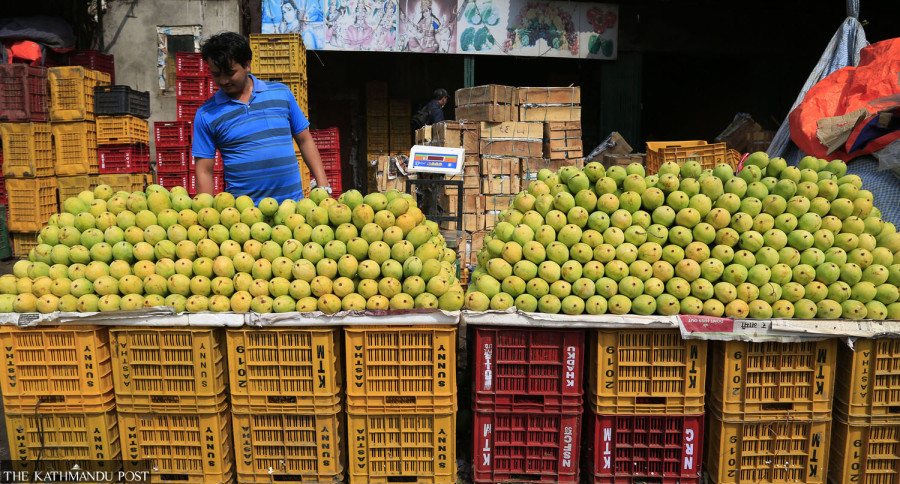
Consumers say official inflation figures fail to reflect the sharp rise in daily expenses. Data from Nepal Rastra Bank show that consumer inflation reached 5.04 percent in mid-May, a 16-month high. Post File Photo
Saru Katuwal has been struggling to make ends meet in recent months as fuel prices and the cost of daily essentials continue to rise.
Katuwal, 28, is pursuing a master's degree while working at a Kathmandu restaurant.
“I have to send money to my parents as well. As my income from a single job was no longer enough to cover my monthly expenses, I joined another restaurant nearly a month ago and now work late into the evening,” Katuwal said during a break from her busy shift at Naxal. “Despite all the hustle, it is becoming increasingly difficult to manage my expenses.”
Katuwal fears she may have to miss classes or even discontinue her studies.
“My transportation costs have doubled. The landlord has also said he will increase the rent from July. I am worried,” she said.
Parshuram Acharya, who works as an office helper at a private company in Dhumbarahi, has also been working relentlessly to support his family. But inflation, he says, is making life increasingly difficult even in his early 60s.
“Vegetable prices go up almost every day. Edible oil, rice, lentils, onions, potatoes—everything is getting more expensive, making it difficult to manage even two meals a day for the whole month,” said Acharya, who lives with his family of five in a rented flat in Mandikhatar.
“Even though my son works at a clothing store, most of our income goes towards food. A sack of rice costs more than Rs2,500, a litre of edible oil over Rs300, and vegetables are always expensive,” he said. “Even with two incomes, it is becoming difficult to afford a decent living.”
Data from Nepal Rastra Bank show that consumer inflation reached 5.04 percent in mid-May, a 16-month high.
Food and beverage inflation stood at 4.63 percent in mid-May, compared to 1.52 percent during the same period of the previous fiscal year.
Within the food and beverage category, the year-on-year price index for fruits increased by 18.60 percent, ghee and oil by 13.99 percent, vegetables by 5.40 percent, and meat and fish by 4.16 percent.
More than three months after the US-Israeli war with Iran erupted, global trade continues to feel the impact, and prospects for peace remain uncertain. However, the US and Iran announced on Monday that they intend to sign a deal to end hostilities and reopen the Strait of Hormuz, one of the world's most important maritime chokepoints.
Petrol prices have increased by 38.21 percent to Rs217 per litre, diesel by 58 percent to Rs225 per litre, and liquefied petroleum gas by 13 percent to Rs2,160 per cylinder.
The World Meteorological Organisation is warning that this summer’s El Nino event could be the worst yet. Compounded by fertilizer shortages, inflation and rising oil prices, these shocks threaten to push an already fragile food industry to the brink, and the impact will land squarely in consumers’ shopping baskets, Reuters reported.
While El Niño is a recurring weather pattern characterised by weakened trade winds and warmer Pacific Ocean currents, a “super” El Niño could reach unprecedented intensity, affecting producers, retailers and farmers alike.
Current projections indicate price shocks ranging from 10 percent to 50 percent for key commodities. Highly exposed crops such as rice, palm oil, sugarcane and coffee could see prices surge by 50 percent to 100 percent or even more.
“The central bank says inflation is at 5 percent, but inflation in the market is closer to 8 percent,” said Ram Prasad Gyawali, head of the Central Department of Economics at Tribhuvan University. “If the central bank prepared a separate consumer price index focusing on essential commodities, it would provide a more realistic picture of inflation.”
Gyawali said fuel prices remain the main driver of inflation and that prices could ease once the conflict ends. He added that El Niño may not have as significant an impact on prices as some fear.
“If the government effectively manages the supply and distribution of essential commodities, it could provide some relief to consumers affected by unnatural price hikes,” he said.
Consumer rights activists argue that official inflation figures fail to reflect the reality faced by ordinary people, as the prices of goods and services have risen sharply.
“The prices of goods and services have increased by around 40 percent since the Gen Z movement in September and the general election in March,” said Prem Lal Maharjan, president of the National Consumer Forum. “While the central bank puts inflation at 5 percent, market observations suggest it is closer to 10 percent, and it could rise further in the coming days.”
Maharjan argued that beyond higher transportation costs, syndicates and cartel-like practices among businesses have contributed to price increases.
“Like previous governments, the Balendra Shah administration also appears more focused on politics than on market oversight,” said Maharjan. “While it is busy conducting investigations, it should also be paying close attention to rising prices and market regulation, issues that directly affect ordinary Nepalis. But so far, it has failed to address them effectively.”
Krishana Prasain is a business reporter for The Kathmandu Post covering markets. Before joining The Kathmandu Post in 2018, she spent 3 years in New Business Age magazine covering business.




 26.02°C Kathmandu