A lifetime of contribution, a struggle for dignity in old age
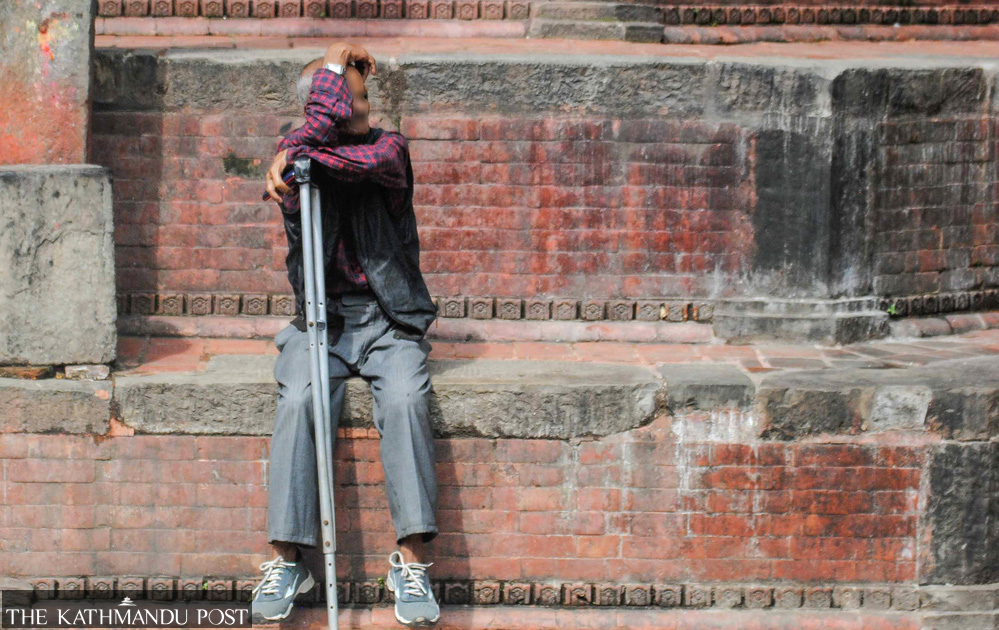
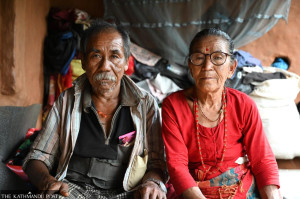
From public spaces to their own homes, many senior citizens are finding respect, care, and support increasingly hard to come by. As younger people move away from their families, many elderly people are left isolated. Post file photo
When 78-year-old Shanta Kumar Shrestha asked someone not to enter a temple wearing shoes, he expected a gesture of respect. Instead, he was hit with a helmet.
The incident, captured on camera and widely shared on social media, took place a few days ago during evening prayers at a temple in ward 10 of Bharatpur Metropolitan City in Chitwan. Devotees were lighting lamps, burning incense and participating in the evening arati when a child attempted to enter the temple wearing shoes.
Shrestha stopped the child and asked him to remove his shoes. Another man, 21-year-old Shekhar Chand, confronted Shrestha, accusing him of preventing the child from entering the temple, and hit him with a helmet.
According to Deputy Superintendent of Police Chandra Bhushan Yadav at the Chitwan District Police Office, the incident took place on July 23. Chand, a resident of Shivaraj Municipality in Kapilvastu, was taken into custody soon after.
“An investigation is underway after a case was registered against him under charges related to indecent behaviour,” Yadav said. “The legal process is ongoing.”
In March, police arrested a man accused of behaving abusively towards an elderly person on the roadside in Lagankhel, Lalitpur. A video showed an elderly man walking along the pavement while a group carrying flags passed by. After he said something, several people surrounded him, with one person appearing to attempt to physically attack him.
Police later detained 30-year-old Ram Sharan Sharma Bajgain of Takhel in Godawari Municipality in connection with the incident. The matter also drew the attention of Home Minister Sudan Gurung, who shared the video on social media with a message saying, “Please take note, no one is above the law.” He later visited the victim at his home.
For 65-year-old Sabitri Baral of Green Land, a residential neighbourhood in Tokha Municipality, taking public transport has become an experience she tries to avoid.
She still recalls an unpleasant journey several months ago when she took a microbus from Green Land to a temple at Jhor. She had no option but to use public transport after failing to find a taxi.
“The vehicle was crowded, but we got on anyway,” she said. “Instead of offering a seat to an elderly passenger, people at the front shouted at us to move to the back. Some even said, ‘Elderly people should take a taxi.’”
Such experiences have left her reluctant to use public transport. “Now, whenever I need to go somewhere, I ask my sons to take me. If they are busy, they call a taxi for me,” she said.
These incidents are not isolated. They reflect a broader reality faced by many elderly people in Nepal: humiliation, neglect and abuse in places where they expect safety and dignity, from their own homes to public spaces.
Baral uses Facebook and often sees videos of elderly people being mistreated. Such incidents leave her deeply upset.
“We were young once, too. Everyone grows old someday,” she said. “But why do people hurt us as if they themselves will never reach old age?”
She believes society must do more to improve public attitudes. It must also ensure that elderly people are safe and treated with dignity in their own homes.
Experts working with senior citizens say abuse, both visible and hidden, has become a daily reality for many elderly people.
“Senior citizens face disrespect everywhere,” said Sharada Devi Chand, first vice-president of the National Senior Citizens Federation (Nascif). “Buses refusing to stop for them, passengers refusing to offer seats, calling them ‘old people’ in a derogatory way, and preventing them from sitting in public spaces have become normalised.”
Verbal abuse is the most common form of mistreatment, she said.
Sociologists argue that abuse of elderly people should not be viewed only as a failure of individual morality.
Laxman Prasad Sharma, an associate professor at the Department of Sociology at Tribhuvan University, said neglect and discrimination against elderly people must also be understood through broader social changes.
“Such behaviour is linked to changing social values, economic systems, transformations in family structures, changing social relationships and existing power dynamics within society,” Sharma said. “The scale and form of such behaviour vary from one society to another.”
He said incidents of inequality and neglect can become more visible in capitalist societies, where individual freedom, competition, consumerism and economic productivity often receive greater emphasis.
“As younger generations move away from their families in search of employment, education and opportunities, many elderly people are left isolated and socially marginalised,” he said.
Such attitudes risk being carried forward by future generations, Sharma warned.
“If children grow up seeing disrespectful behaviour towards elderly people as normal, that behaviour can become part of social culture in the future,” he said. “The issue requires a broader response involving families, communities, educational institutions and the state.”
Post file photo
Mental health toll
“Abuse and neglect can make elderly people feel anxious, lonely, and emotionally distressed,” said senior psychiatrist Professor Dev Kumar Thapa. “In such situations, family relationships need to be strengthened, and attention should be given to reducing isolation.”
According to Thapa, around 10 percent of elderly people in Nepal experience some form of abuse. Verbal abuse is the most common, he said.
“Physical violence, depriving them of food or medicine, and failing to provide proper care can all negatively affect their mental health,” he said.
Surya Prasad Shrestha, president of Nascif, said many elderly people are increasingly experiencing loneliness as their children leave the country in search of education and employment.
“Many elderly people are now living in situations of isolation, lack of care, and insecurity,” he said. “Along with creating jobs for young people, the country also needs to build social infrastructure and an environment where families remain connected.”
He added that many elderly people struggle to seek justice because they lack information about available resources and legal procedures.
Thapa says families and communities have a crucial role in ensuring proper care for elderly people.
“Just as parents care for their children when they are young, children should provide their parents with the same level of attention, healthcare and medical support when they grow old,” he said.
Thapa said Nepal lacks adequate social welfare mechanisms for senior citizens. He believes the country needs a system similar to those in developed countries, where trained mental health professionals visit elderly people at home and provide support.
“The government should introduce proper policies and create a system to provide counsellors or occupational therapists who can offer support,” he said.
He also advises families to seek help from counsellors or psychiatrists if an elderly person becomes withdrawn, starts behaving differently from before or prefers to remain isolated.
What does the law say?
Nepal Police data show 46 cases of indecent behaviour against senior citizens were registered in the fiscal year 2023-24 and 41 cases in 2024-25.
Under the Senior Citizens Act, 2006, anyone aged 60 or above is classified as a senior citizen. According to the National Population and Housing Census 2021, Nepal has around 2.97 million people above the age of 60, accounting for 10.2 percent of the country’s total population.
Nascif presidentShrestha said many elderly people remain unaware of their legal rights and protections.
“Government agencies and various organisations conduct awareness programmes in remote areas every year,” he said. “But many senior citizens still do not know that there are specific laws designed to protect them.”
He said many elderly people face abuse both at home and in society but hesitate to speak out because of social pressure.
“Many remain silent because they fear what society will say or worry that speaking against their own children will damage the family’s reputation,” he said. “We often find that they share their pain only with friends at day-care centres, temples or public resting places, but do not want to take the matter to formal authorities.”
According to Shrestha, some elderly people also face neglect and humiliation within families, while others are deceived or pressured in attempts to take control of their movable and immovable property. Very few seek legal remedies, he said.
Article 41 of Nepal’s constitution guarantees senior citizens the fundamental right to special protection and social security. Legal provisions also exist under the Senior Citizens Act, 2006, its regulations issued in 2008 and other amendments to existing laws.
However, senior advocate Prakash Mani Sharma said legal provisions alone are not enough without effective implementation.
“If laws are properly enforced through local units, judicial committees and courts, no elderly person should have to live in humiliation, neglect or without basic necessities,” he said.
He said caring for and respecting elderly people is not only a moral responsibility but also a legal obligation.
“The law requires families to provide food, clothing, healthcare, respectful living arrangements at home, and opportunities for elderly people to participate in religious and social activities,” Sharma said. “If families fail to fulfil these responsibilities, senior citizens can seek legal remedies by filing complaints with local judicial committees.”
Under Nepali law, abuse, humiliation, attempts to seize an elderly person’s property through deception or coercion, and depriving them of basic rights are criminal offences. Depending on the nature of the offence, perpetrators can face fines ranging from Rs10,000 to Rs500,000, imprisonment from one to five years, or both.
The law also provides priority and certain concessions for senior citizens in public transport, healthcare services, courts and other public facilities.
The constitution recognises elderly people not as objects of charity or sympathy, but as citizens entitled to special protection.
“Recognising their lifelong contribution to the nation and society, ensuring their social security, protection and dignity is the constitutional responsibility of the state,” Sharma said. “All of us will become senior citizens someday. Respecting the elderly today is also about building the foundation for our own dignity in the future.”




 16.01°C Kathmandu