Months after Bhotekoshi floods, families still await bodies and closure
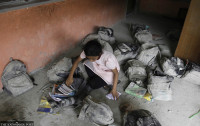
DNA matches alone cannot establish which missing family member the recovered remains belong to, and this has delayed identification and the return of bodies. Officials on the Disaster Victim Identification team said they have been narrowing down the identification process by comparing antemortem features of victims, including tattoos and other distinguishing marks. File Photo/Nepal Photo Library
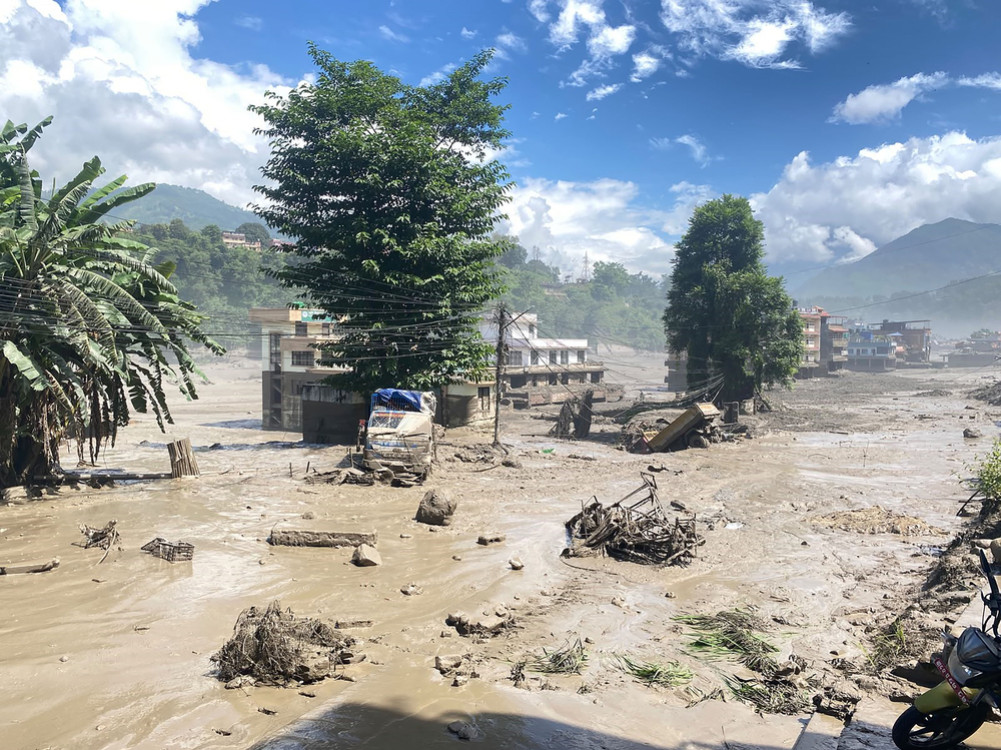
Even nearly three months after the August 26 Bhotekoshi floods, families of the missing are still waiting for the bodies of their loved ones, as the government has yet to hand over a single body, leaving them without the chance to perform funeral rites and find closure.
Authorities had collected 1,445 samples from the bodies of flood victims recovered from the riverbanks in various districts, along with blood samples from 2,111 family members of missing persons.
Officials say profiling of the samples from most of the recovered bodies has been completed, and matches have been found for 195 samples.
Officials said even when DNA samples match those collected from relatives, it does not necessarily establish that the remains belong to a specific missing person, as they could belong to any missing member of the same family.
“Identifying individual victims is extremely challenging, complex and sensitive,” said Dr Srijana Kunwar, coordinator of the Disaster Victim Identification team under the National Disaster Risk Reduction and Management Authority. “Many families have lost multiple members, including siblings. A DNA match could belong to any one of the siblings, so confirming that a particular body belongs to a specific individual is not as straightforward as people might think.”
The Disaster Victim Identification team was formed under the National Disaster Risk Reduction and Management Authority in the aftermath of the flood.
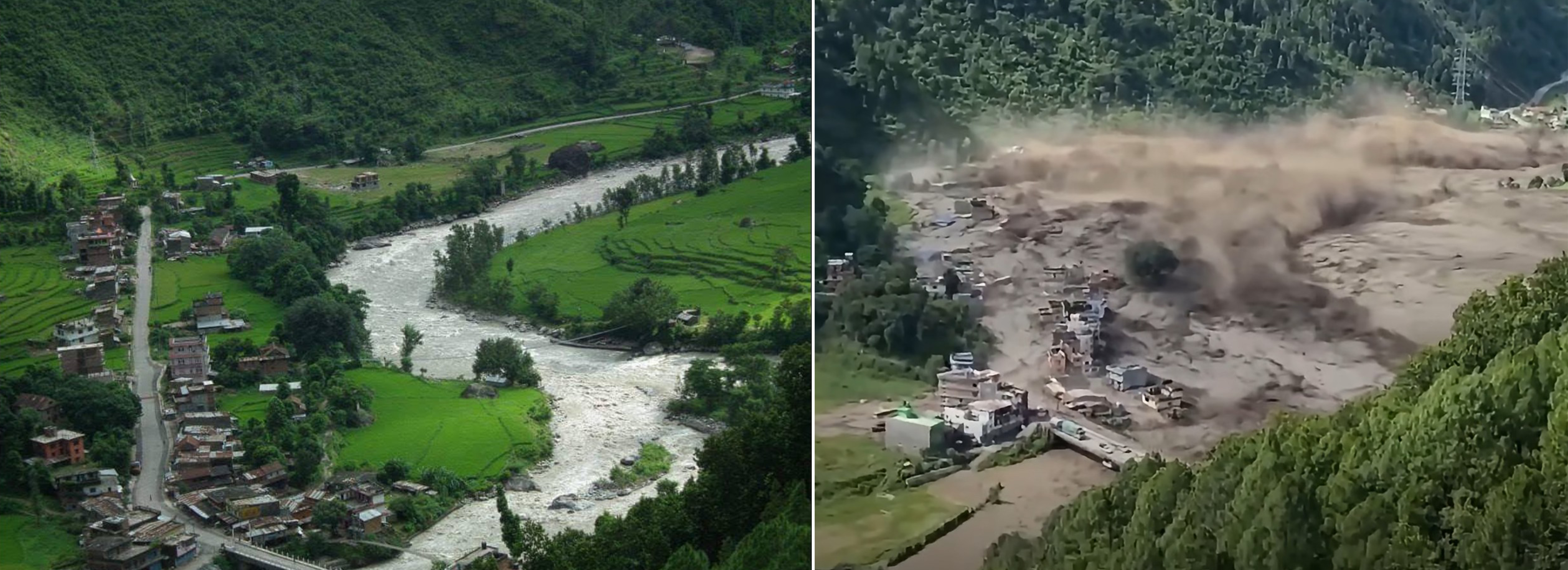
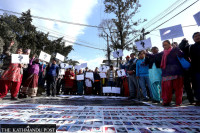
A photo combo shows Betrawati Bazar in Nuwakot before and after the disaster. File Photo
Of 195 body samples matched with reference samples from victims’ family members, officials do not know which families lost single members and which lost multiple members.
Multiple agencies have been working to establish the identities of dead bodies. The Khumaltar-based National Forensic Science Laboratory and the Nepal Police Central Forensic Science Laboratory carried out the DNA testing, while the Disaster Victim Identification team is working for the final verification of identities.
Officials at the two labs said that they are only tasked with carrying out testing and matching samples from recovered bodies with reference samples from relatives.
“We have furnished our report to the Disaster Victim Identification team,” said Mukul Pradhan, information officer at the National Forensic Science Laboratory. “The agencies concerned might have been working on the test report and verification.”
Officials on the Disaster Victim Identification team said they have been narrowing down the identification process by comparing antemortem features of victims, including tattoos and other distinguishing marks. Also, they have been consulting doctors and health workers who performed postmortems about the physical features of the recovered bodies.
Kunwar said that multiple samples may have been collected from the same body, as body parts were recovered from different locations. She added that samples from the remains were tested at different labs, while reference samples from relatives may also have been collected and tested at different labs, further complicating the matching process.
“We have to prevent duplication, follow international protocol, and perform our task scientifically and avoid disputes,” said Kunwar, who is also the coordinator of the Disaster Victim Identification team. “It is taking a long time due to the complex process.”
The delay in handing over the bodies has prolonged the anguish of bereaved family members. Officials at the National Forensic Science Laboratory said that they still get multiple phone calls every day from close family members of those missing.
Most callers have similar questions: “Why is the DNA testing taking so long, and how much longer will they have to wait to receive the bodies of their loved ones?”
“Many family members have yet to perform the funeral and are waiting for the remains,” said Pradhan, information officer at the laboratory. “Initially, family members of the victims used to visit the laboratory in person, but these days, they mostly call us.”
DNA profiling is one of the most reliable ways to confirm identities. Experts confirm the genetic link between family members and disaster victims by comparing DNA samples of close family members- parents, children, or siblings.
The Khumaltar lab received 857 samples for testing. Officials say the lab has completed profiling 827 samples and is working on the remaining 30.
File Photo
Testing of other samples were carried out by Nepal Police Central Forensic Science Laboratory.
“We have also completed profiling of the samples of the victims and performed matching with reference to dozens of samples,” said Deputy Inspector General Abhi Narayan Kaphle, who is also the spokesperson of Nepal Police. “We have also furnished our report to the Disaster Victim Identification team.”
Officials from both the labs said they received technical and technological help from India, China, and South Korea to identify the recovered bodies. Those countries also deployed expert teams, equipment, and testing reagents.
“Without their assistance, it would have taken us two years to complete all the testing,” said Kaphle. “Their support was crucial, and our staff also gained valuable knowledge about the examination process.”
Many family members of those missing in the August 26 floods have already performed funeral rites for their loved ones after finding the identification process too lengthy.
“I had gone to the police office to provide a blood sample as a reference for identifying the bodies,” said Nirajan Paudel, a family member of flood victims. “But when I learned how lengthy and tedious the testing process was, I returned without giving a sample. I found the process futile because it could take months. We would have to wait indefinitely for the bodies, and there is no guarantee that we would ever find them.”
Paudel, who lost his father, mother, uncle, aunt, and cousin in the flood, said he performed the funeral using effigies made of kusha grass, as prescribed by Hindu tradition for those whose bodies cannot be recovered.
At least 1,457 dead bodies of flood victims have been recovered, while 5,285 are missing, according to the National Disaster Risk Reduction and Management Authority. Authorities have buried 1,148 dead bodies recovered from riverbanks, taking DNA samples to preserve them until their identities are established, after which they will be exhumed and handed over to their families.
Arjun Poudel is a health reporter for The Kathmandu Post. Before joining the Post, he worked for Sagarmatha Television, Naya Patrika, Republica and The Himalayan Times.




 14.12°C Kathmandu