



 22.94°C Kathmandu

Thu, Oct 22, 2026
Money
Inside the mission of Everest’s first mountain rangers
Stationed at Camp II, Nepal’s first Everest rangers monitor climbers, enforce waste rules and tackle growing garbage on the peak.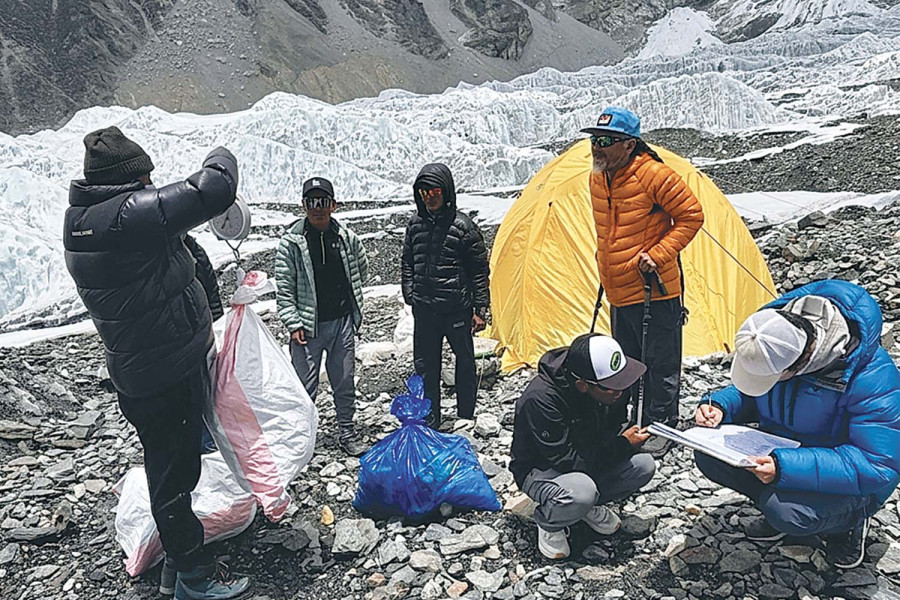
bookmark![]()
Ngima Wangchu Sherpa Post Photo ![]()
![]()
Sangam Prasain
Published at : June 9, 2026
Updated at : June 9, 2026 06:34
Kathmandu
The face was sunburned and weathered by years in the high Himalayas. Thin and pale from weeks spent above 6,000 metres, the man in a black cap quietly stepped onto a stage in Kathmandu last week. He was introduced as Ngima Wangchu Sherpa—Nepal’s first mountain ranger.
For most people, the title may sound unusual. But on Mount Everest, where decades of commercial climbing has left behind tonnes of garbage and human waste, the role could become one of the most important jobs on the mountain.
During this spring climbing season, Ngima Wangchu, 53, spent weeks stationed at Camp II, nearly 6,400 metres above sea level, overseeing waste management, educating climbers and providing emergency support in one of the harshest environments on earth.
“At first glance, climbers see me from a distance and think I’m just another guide walking around,” he said. “But most of them don’t really want to encounter me.”
The reason is written across the back of his jacket: Mountain Ranger.
“I stare at them sometimes just to give them the feeling that I’m like a policeman here and that throwing garbage is being monitored,” he said with a smile. “This season many climbers started noticing me. I don’t want to make them afraid, but I want them to know someone is watching.”
The mountain ranger programme was introduced this spring by the Sagarmatha Pollution Control Committee (SPCC), the organisation responsible for waste management in the Everest region. The initiative comes as criticism grows over the amount of trash accumulating on the world’s highest mountain.
For the first time, the SPCC established an Everest Rangers Base at Camp II.
Ngima Wangchu, a four-time Everest summiteer, was tasked with monitoring climbers and ensuring compliance with a new rule requiring every climber and high-altitude guide to bring down at least two kilograms of garbage from higher camps, particularly Camp III and Camp IV.

“We collect the waste brought by climbers, weigh it, put it into sacks and issue a clearance chit,” he explained. “Later, the collected waste is taken to Camp I and then transported by drones to Everest Base Camp.”
For Ngima Wangchu, the assignment was unlike anything he had done before.
“This is my first experience as a ranger,” he said. “We not only collect garbage but also encourage climbers to keep Everest clean.” “Besides, we do respond to emergencies—supplying bottled oxygen to those in need in the higher camps or rescue climbers.”
The challenge is enormous.
Decades of commercial mountaineering have transformed Everest into one of the world’s highest garbage dumps. Every climbing season, hundreds of climbers, Sherpas, guides and support staff leave behind oxygen cylinders, tents, ropes, food packaging, gas canisters and bodily waste.
Many of these materials remain frozen for years in the mountain’s upper reaches before reappearing as glaciers melt.
Plastic has become one of the most persistent threats. A single plastic bag can take centuries to decompose.
Chocolate wrappers, energy gel packets and other expedition waste gradually fragment under intense ultraviolet radiation, extreme cold and strong winds, creating microplastics that contaminate snow, streams and drinking water sources throughout the Khumbu region.
Even the smallest piece of litter can have long-term consequences.
The challenge of cleaning Everest extends beyond discarded tents, oxygen cylinders and food packaging.
More than 300 people have died on Mount Everest since climbing records began, and an estimated 200 bodies remain on the mountain, many of them in the notorious "Death Zone" above 8,000 metres. The extreme altitude, harsh weather and difficult terrain make body recovery one of the most dangerous operations in mountaineering.
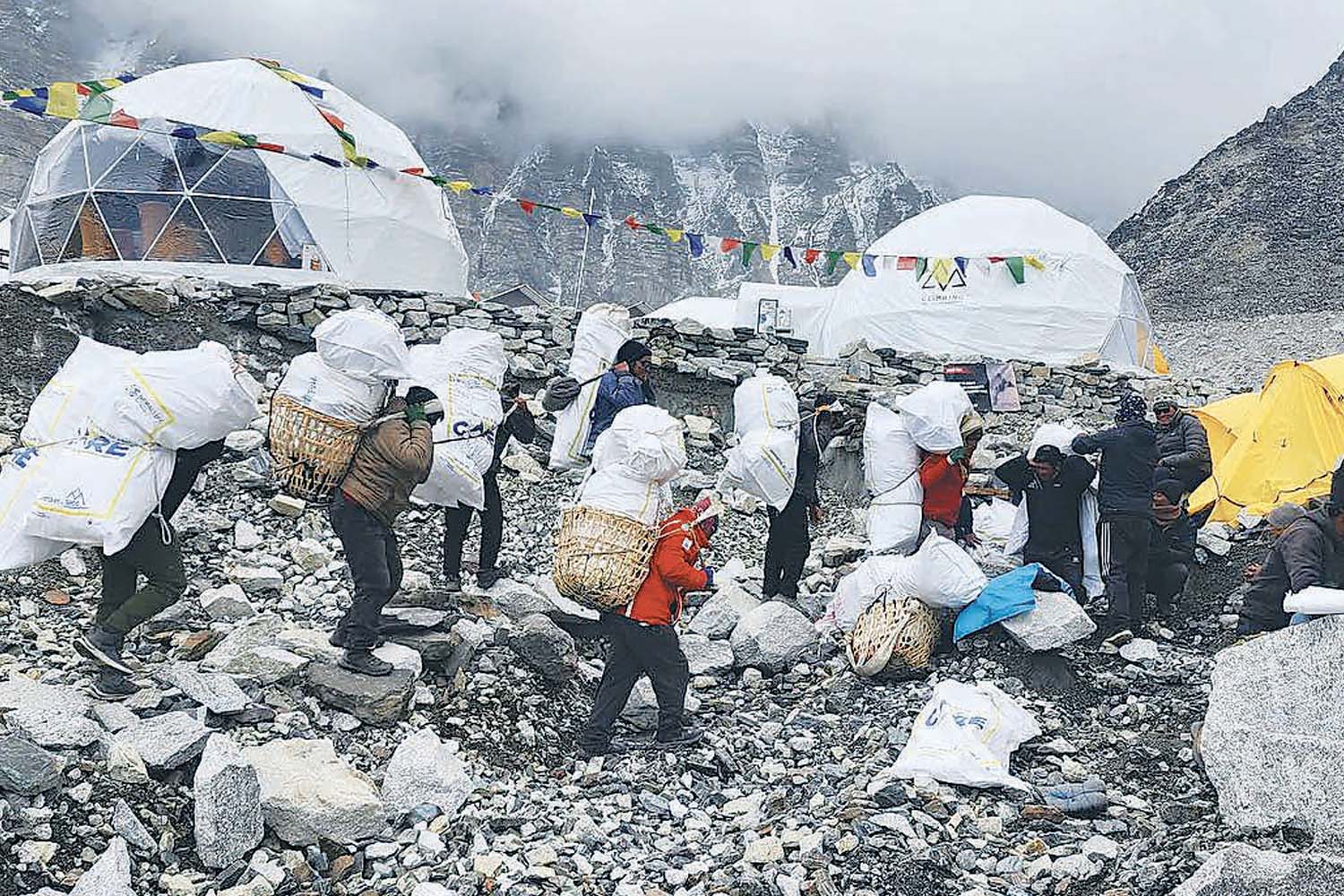
Removing bodies from higher camps is both risky and costly because of the thin air and the manpower required. According to mountaineering officials, retrieving a body from Everest can cost anywhere between $20,000 and $200,000, depending on its location and the complexity of the operation.
“Most climbers’ bodies are left behind on Everest due to the difficulties and cost factors involved,” said Tshering Sherpa, chief executive officer of the SPCC. “Some families want the body to remain on Everest, while others simply cannot afford the expense of retrieval. This is a real challenge when we talk about cleaning Everest.”
The issue has prompted policymakers to consider stricter regulations for expedition operators.
Under a proposed law, agencies organising mountaineering expeditions would be required to obtain insurance coverage from companies licensed under Nepali law before an expedition begins. The coverage would include personal accident insurance, medical treatment insurance, search-and-rescue insurance and insurance for the management and retrieval of dead bodies.
The proposal is part of a broader effort to address both environmental and safety concerns on Everest, where increasing numbers of climbers are placing unprecedented pressure on the mountain's fragile ecosystem and rescue infrastructure.
For the SPCC, the introduction of mountain rangers is only the first step. Alongside waste collection, future conservation efforts will increasingly focus on tackling long-standing issues such as abandoned equipment, human waste and the growing number of unrecovered bodies that remain frozen high on the mountain.
As climbing traffic has surged over the years, Everest has increasingly become a symbol of environmental neglect alongside its reputation as the world's ultimate mountaineering challenge.
“A mountain is not just a mountain,” said Tshering Sherpa. “It is our god. It is connected to our livelihood. Keeping it clean is our responsibility.”
“Mountains have immense value to our communities and to the sustainability of high-value tourism,” he added.
The ranger concept emerged after SPCC officials conducted an assessment expedition on Everest in 2024.
“For decades we have talked about the garbage problem,” Tshering said. “People criticise Everest on social media and ask why it remains littered. We felt we had to go there ourselves and understand the situation.”
What they discovered was both obvious and sobering.
“There is waste above Camp II. That is reality,” he said. “But another reality is that bringing it down is extremely difficult. Waste management at those altitudes is dangerous and often life-threatening.”
The pressure on the mountain has intensified as climber numbers continue to rise.
This spring, Nepal issued a record 495 climbing permits to foreign climbers attempting Everest from the south side. Since every climber requires at least one guide, more than 1,000 people reached the summit during the season, which ended on May 29.
“Anyone can imagine the amount of garbage generated in the higher camps,” Tshering said.
The numbers collected by the SPCC illustrate the scale of the challenge.
This spring, the organisation recovered 1.22 tonnes of non-recyclable waste from Camp III and the South Col. Teams also brought down 210 empty gas canisters, a portable stove and 1.76 tonnes of human-waste bags from the upper mountain.
Another 6.52 tonnes of waste—including plastics, metal cans, paper, kitchen refuse, tents, ropes and other climbing materials—passed through the SPCC’s Khumbu Icefall checkpoint.
“The garbage collected at Base Camp is still being assessed,” Tshering said.
The problem extends far beyond a single season. During the spring of 2024, the SPCC collected 85 tonnes of waste, including nearly 28 tonnes of human waste. The Nepali Army removed an additional 11 tonnes. In 2025, SPCC's waste collection reached 110 tonnes.
Faced with mounting environmental pressure, the organisation introduced stricter waste-return requirements this year.
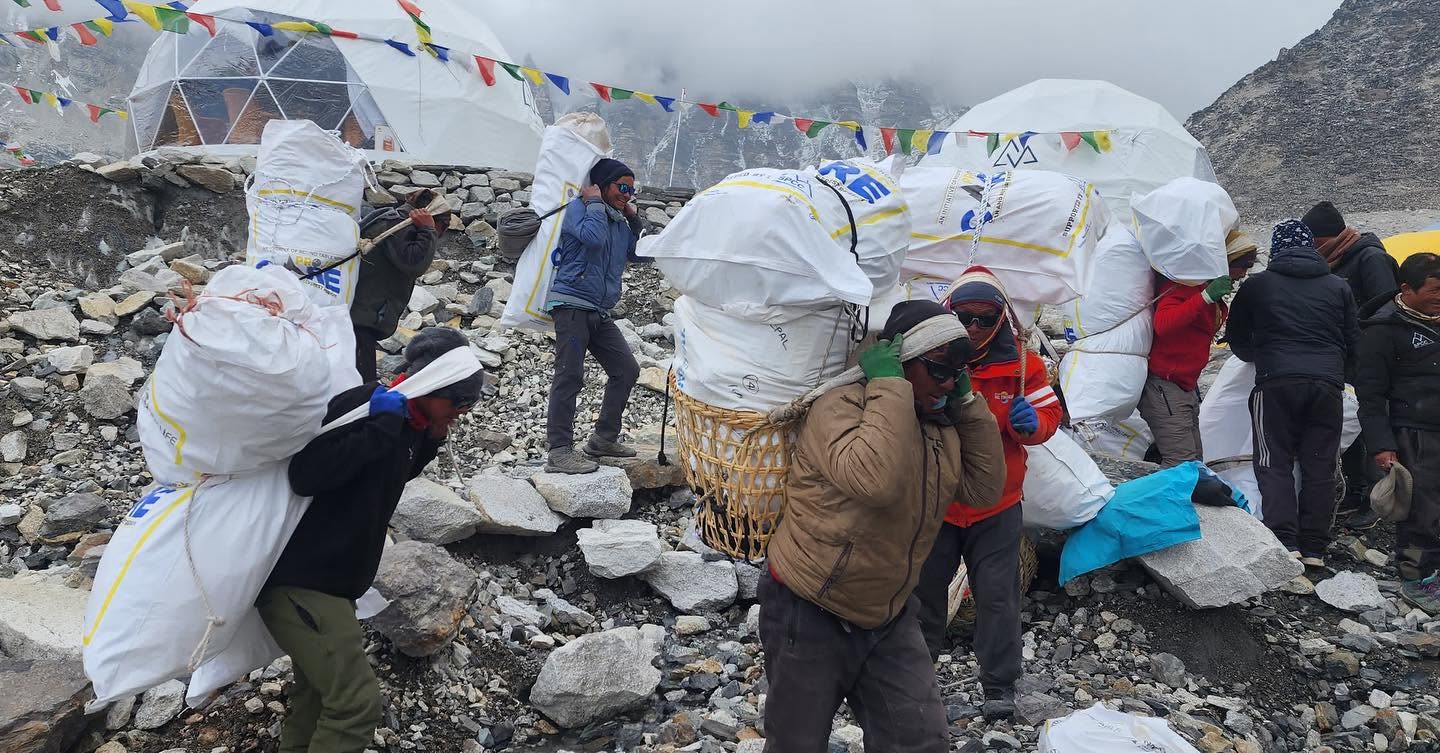
Under the new rules, every climber and high-altitude worker must return at least two kilograms of garbage from areas above Camp II. The waste must be submitted directly to mountain rangers stationed at Camp II before climbers descend.
The programme is only beginning.
“We started with two rangers this year,” Tshering said. “Next year we plan to increase the number to seven or eight.”
The organisation also intends to expand cleanup efforts higher up the mountain, targeting Camp IV and other areas where waste has accumulated over decades.
The ranger programme complements existing regulations requiring climbers to deposit a total of eight kilograms of garbage at Everest Base Camp. Climbers must also place a refundable $4,000 garbage deposit, which is returned only if waste-management requirements are fulfilled.
Nepal is now considering even stronger measures.
Following a 2024 Supreme Court order directing authorities to find sustainable solutions for mountain conservation and climber safety, the government has proposed legislation that would convert the refundable garbage deposit into a non-refundable environmental fee.
The fund would be used to support long-term cleanup operations and environmental protection programmes in mountain regions.
The government has also sharply increased climbing royalties. Under revised regulations, the spring permit fee for foreign climbers using the south route has risen from $11,000 to $15,000 per person.
For Ngima Wangchu, however, the battle against Everest’s garbage crisis often comes down to something much simpler: being seen.
As climbers move through Camp II on their way to the summit, they now know someone is watching when they come down.
Sangam Prasain
Sangam Prasain is Business Editor at The Kathmandu Post, covering tourism, agriculture, mountaineering, aviation, infrastructure and other economic affairs. He joined The Kathmandu Post in October 2009.

Most Read from Money

Nepal travel agents threaten to stop selling Thailand trips over visa rules

Why does an hour long flight to Dhangadhi cost more than a flight to New Delhi?
Malaysia rejects Nepal’s demand to open recruitment to all manpower agencies

No school, but a graduation cap for women dairy farmers
Nepal arrests four medical service providers as Malaysia recruitment row deepens
Editor's Picks




E-PAPER | October 22, 2026

×