



 14.69°C Kathmandu

Sat, Oct 24, 2026
Money
Old parties crumble as RSP heads for two-thirds majority
Voters’ frustration with decades of instability and corruption fuels sweeping mandates, raising hopes for political stability and economic reforms.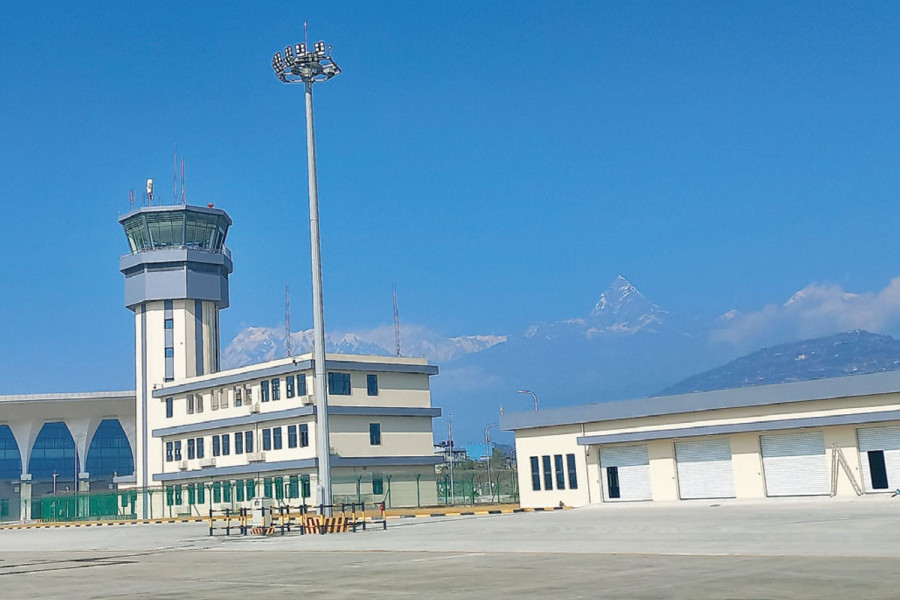
bookmark
Sangam Prasain & Krishana Prasain
Published at : March 9, 2026
Updated at : March 9, 2026 08:06
Kathmandu
Nepal’s traditional political parties faced a dramatic collapse as a wave led by rapper-turned-politician Balendra Shah, popularly known as Balen, powered the Rastriya Swatantra Party (RSP) towards a historic two-thirds majority in the House of Representatives, a result not seen in the country in nearly seven decades.
The last such sweeping mandate came in the 1959 general elections, when the Nepali Congress won 74 of the total 109 parliamentary seats. The current RSP victory is bigger considering the around 50 percent proportional representation vote the party is amassing this time.
Nepal’s federal parliament has a total of 275 seats, combining 165 direct and 110 proportional representation seats. Analysts estimate that the RSP could secure 185–190 seats, surpassing the 184 seats required for a two-thirds majority.
Economists and businesses have pinned high hopes that a stable government with a two-thirds majority would change a regime plagued by corruption, scandals, and impunity.
Nepal has faced chronic instability due to a bloody Maoist insurgency (1996–2006), the royal massacre in 2001, and a rocky transition from monarchy to a federal republic.
The shift in 2008 left a legacy of fragile coalition governments, weak party cohesion, and deep-rooted corruption, causing frequent leadership changes and public disillusionment.
In the last three decades, Nepal has seen over three dozen governments taking office and none completing a five-year term.
Corruption escalated and economic performance hit new lows.
Major scandals such as the Bhutanese refugee scam, Lalita Niwas land grab, gold smuggling, aircraft purchases for Nepal Airlines, corruption in the construction of international airports in Pokhara and Bhairahawa, the Teramocs procurement scam, tax settlement commission scandal, widespread misappropriation of funds in credit cooperatives linked to political figures, and visit visa extortion, among others, have shaken public confidence in the political establishment.
Nepotism, weak political oversight, and the nexus between politicians and business interests drive corruption, particularly in public procurement. Roads and critical infrastructure projects take 7-10 years to complete, dairy and sugarcane farmers are not paid on time for their produce, and government service delivery remains poor.
Former chief election commissioner Bhoj Raj Pokharel told Kantipur, the sister publication of the Post, that the election outcome represents an eruption of long-suppressed public frustration.
“For decades, the leaders of three major parties played ‘musical chairs’ with power. This period saw major corruption scandals, impunity flourish and state institutions weakened through politicisation,” Pokharel said.
He added that political leaders often jailed their opponents while protecting their allies, a practice that gradually alienated voters.
“People had become fed up,” Pokharel said, adding that voters had long been searching for a credible alternative, and this election appeared to have finally provided one.
With no decent jobs at home, youths, particularly from the agriculture sector, left to foreign countries and the country became an import-driven economy.
Constitutional expert Bipin Adhikari said the results reflect a powerful public demand for political change.
“Wave matters. Nepal is experiencing a wave for change—away from the grip of old parties. The real question is whether new leaders can understand the wave and sustain it—because waves, if mishandled, vanish fast. Politics that shuts everyone else out eventually shuts itself down,” Adhikari wrote on his Facebook page while congratulating the RSP on its victory.
Nepal's business environment has suffered from systemic corruption—ranked 107th out of 180 countries in 2024—characterized by political cronyism, cartelism, and extortion in procurement, particularly affecting large infrastructure projects. This has eroded competitiveness and trust, hindering sustainable growth.
Cartelism and syndicates are rampant in industries such as cement and steel, restricting competition and preventing new entries.
Multiple financial institutions have faced crises due to embezzlement by directors and poor corporate governance, as seen in cases involving Capital Merchant Banking and Finance and Nepal Share Markets and Finance.
Widespread corruption deters both domestic and foreign investment, as companies struggle with extortion and the need for political connections.
Birendra Raj Pandey, president of the Confederation of Nepalese Industries, said that the private sector hopes the election outcome will bring stability and encourage investment from both domestic and international players.
“We have been recommending that employment and entrepreneurship be placed at centre stage and the RSP manifesto has included many of those issues. We hope now that promises will be delivered,” he said.
“The private sector hopes for policy consistency and that is delivered if the government is consistent.”
With a stable government, he said, investor confidence would improve, encouraging both domestic investment and foreign direct investment, which in the long run would generate employment and increase economic activities.
However, the private sector says there are numerous challenges given the critical global scenario.
Global conflicts are escalating, which has been negatively affecting the global economy. Many countries have started safeguarding their industries and the new government needs to proactively tackle the situation seriously while safeguarding national interests, said Pandey.
Experts say the new government has many challenges—not just addressing the needs of Nepal’s nearly 30 million people, but also navigating regional and global geopolitics, particularly the tensions unfolding in the Middle East.
According to government statistics, around 1.7 million Nepalis are currently working in Middle Eastern countries, and growing tensions mean the new government may have to act swiftly to ensure their safety if the situation worsens.
Besides, the emerging fuel and cooking gas crisis and rising inflation triggered by the Middle East crisis are also challenges that the new government could face. Low investment at home is another concern.
“There is no lack of resources within the country as banks have billions of rupees unused. If investors are assured, the country can achieve high growth,” said Prof Ram Prasad Gyanwali, head of the Central Department of Economics at the Tribhuvan University.
“A two-thirds majority will definitely have a positive impact on the economy.”
“We hope that the government will be stable for five years,” he said, adding that internal complexities within the party could emerge as some groups seek opportunities or practice nepotism—patterns Nepalis have seen in the past.
Currently, the private sector has been completely discouraged due to the destruction caused during the Gen Z movement. “If the new government can assure a favorable business environment, investment will also boost,” said Gyanwali.
Women in Nepal face significant barriers to economic growth, driven by limited access to finance, low asset ownership, and the heavy burden of unpaid labor.
Darshana Shrestha, president of the Federation of Women Entrepreneurs Association of Nepal, said that if the new government focuses on education and health, it will ultimately have a positive impact on entrepreneurship.
“Once basic things like education and health are addressed by the government, people will look for economic empowerment.”
“We are hopeful that the government will work on youth employment and entrepreneurship. We already have policies for entrepreneurship and creating a business environment, and we hope the new government will strictly implement those policies,” she said.
“People voted for a majority government with hope, so as entrepreneurs we are looking for an enabling business environment in terms of policy, access to finance and access to global markets.”
Nepal's economic growth is severely hindered by chronic political instability—characterized by frequent government changes and policy shifts—and, as one of the world's most climate-vulnerable nations, by intense natural disasters like floods and landslides that cause significant GDP losses.
These factors have led to a projected 2.2 percent annual GDP loss by 2050, high unemployment, and heavy reliance on remittances.
Frequent floods and landslides devastate agricultural output, ruining livelihoods and threatening food security. High youth unemployment—nearly 22.7 percent in fiscal year 2022–23—and an import-dependent economy have further constrained growth.
A large portion of the national budget, around 60 percent, goes toward administrative costs, with only a small share available for development projects, which are often delayed.
Economist Kalpana Khanal said that with a stable government, it becomes easier to speed up policy changes that previously took years.
“Nepal spent years passing crucial bills in Parliament because of frequent changes in government. The new government should not repeat this, as passing bills on time has huge benefits for the country.”
“With institutional stability, there will be good institutional memory. A stable government also means a stable bureaucracy. One of the reasons for bureaucratic turnover, which can disrupt public service delivery, especially at local levels, is political instability.”
“We hope that the new government will appoint people who are professionally fit for positions rather than relying on political appointments.”
Sangam Prasain
Sangam Prasain is Business Editor at The Kathmandu Post, covering tourism, agriculture, mountaineering, aviation, infrastructure and other economic affairs. He joined The Kathmandu Post in October 2009.
Krishana Prasain
Krishana Prasain is a business reporter for The Kathmandu Post covering markets. Before joining The Kathmandu Post in 2018, she spent 3 years in New Business Age magazine covering business.




Most Read from Money

Why does an hour long flight to Dhangadhi cost more than a flight to New Delhi?
Nepal travel agents threaten to stop selling Thailand trips over visa rules
Malaysia rejects Nepal’s demand to open recruitment to all manpower agencies
No school, but a graduation cap for women dairy farmers
Nepal arrests four medical service providers as Malaysia recruitment row deepens
Editor's Picks




E-PAPER | October 24, 2026

×