



 14.81°C Kathmandu
Sat, Oct 24, 2026
Money
VAT on electricity sparks debate over bills, grid capacity and fairness
Government defends new tax as essential for power infrastructure upgrades, but experts and critics warn it could increase household costs and dampen electricity demand.
bookmark
Seema Tamang
Published at : June 1, 2026
Updated at : June 1, 2026 21:00
Kathmandu
The government has imposed Value Added Tax (VAT) of 5 percent and 13 percent on electricity consumption from the upcoming fiscal year, a move that appears at odds with its own policy of promoting greater domestic electricity use.
Director of the Inland Revenue Department, Shiva Sharma, said that, in principle, a 5 percent VAT would be levied on household consumers, while a 13 percent VAT would apply to others. However, he did not elaborate on which sectors or categories would fall under the latter group.
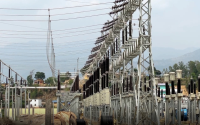
The government has claimed that the move to impose VAT on electricity is part of a broader effort to mobilise resources for upgrading and expanding generation, transmission and distribution infrastructure as electricity demand continues to rise across the country.
Addressing a programme in the Capital, Finance Minister Swarnim Wagle said the government is shifting, at least for the time being, from an import-based taxation system to a consumption-based one.
“We are trying to recover through consumption taxes the revenue forgone through various income-tax exemptions by collecting small amounts from a broader base,” he said.
Wagle said the government is discussing two or three options to ensure that the tax burden does not ultimately fall on end consumers. “We will request the Electricity Regulatory Commission to adjust tariffs,” he said. “Even a reduction of 50 paisa per unit by the commission would provide some relief.”
The decision has sparked concern among consumers, economists and former energy officials, who warn that the additional tax burden could increase inflationary pressure and disproportionately affect middle- and low-income households. Critics have also pointed to what they describe as a policy contradiction, noting that the government has recently offered customs duty exemptions to promote electric cooking and clean energy adoption, while simultaneously introducing a tax on electricity consumption.
Wagle, however, defended the policy, arguing that its impact on ordinary households would remain limited while it would provide essential funding for long-term infrastructure development. He said the government was not targeting basic consumption but higher usage levels.
“Around 1.2 million households in Nepal consume between 51 and 150 units of electricity. For them, a 5 percent VAT will add only up to Rs24 per month,” Wagle said. “Around 200,000 households consume between 151 and 250 units, many of which use appliances such as air conditioners, induction cookers and EV fast chargers. For them, the additional burden will range from Rs25 to Rs102 per month.”
He added that Nepal requires more than Rs85 billion over the next three to four years to expand and strengthen its energy infrastructure, including substations, transmission lines and distribution networks. According to him, the VAT mechanism is one of several tools intended to finance this expansion without putting excessive pressure on the state budget.
Wagle also said the government would remain open to policy revision if the tax resulted in genuine affordability challenges for consumers. “If it is found that people cannot afford electricity due to this measure, we will review the policy,” he said.
The announcement comes at a time when the Nepal Electricity Authority (NEA) is managing growing demand and seasonal fluctuations in consumption. According to NEA figures, electricity worth Rs20.41 billion was sold between mid-July and mid-April of the current fiscal year, while electricity worth Rs7.39 billion was purchased during the same period.
In a separate statement in Parliament on Sunday, Prime Minister Balendra Shah defended the tax, saying the revenue collected would be fully allocated to energy infrastructure development. He said the VAT rate amounted to only Rs5 per Rs100 of electricity consumption and was necessary to support long-term system upgrades.
Shah also argued that Nepal was not yet in a position to transition rapidly to an entirely electric-based energy consumption model. He warned that widespread adoption of electric cooking without adequate infrastructure upgrades could strain the power system.
“If every kitchen in the country starts using electric or induction stoves, transformers and substations could fail,” Shah said in Parliament. “We need resources to upgrade transformers, transmission lines and substations. The VAT above 50 units is meant to support that effort.”
His remarks were made in the context of growing promotion of electric cooking and electric vehicles as alternatives to imported petroleum products. However, critics have questioned the technical basis of claims that the current grid could not handle increased household electrification, pointing to existing capacity and ongoing expansion projects.
Former energy ministers and senior officials have strongly opposed the government’s justification for the tax, arguing that it may discourage electricity consumption and slow Nepal’s transition towards clean energy.
Former Energy Minister Kulman Ghising said taxing consumption above 50 units would encourage households to artificially restrict usage to avoid crossing the threshold, thereby undermining demand growth. He also questioned the structure of revenue collection, noting that VAT proceeds would go directly into the state treasury rather than being earmarked for Nepal Electricity Authority improvements.
Ghising estimated that the tax could generate approximately Rs420 million per month, or over Rs5 billion annually, based on current consumption patterns.
“If the government needs additional investment, it must provide a clear and transparent explanation instead of justifying taxation through infrastructure concerns,” he said. “Electricity consumption should be encouraged, not penalised.”
Rastriya Prajatantra Party chair and former energy minister Rajendra Lingden also warned that the policy could drive up inflation by increasing production and service costs across multiple sectors. He argued that electricity should be treated as a strategic national resource that must be made more affordable to stimulate industrial growth.
“Electricity is Nepal’s main strength. We should be expanding production, reducing prices and increasing consumption,” Lingden said. “Instead, we should be attracting industries with cheap power and creating domestic employment opportunities.”
He further criticised the government’s argument linking infrastructure constraints to taxation. “It is contradictory to discourage electric cooking and electric vehicle adoption while claiming that transformers will explode,” he said.
Lingden added that even small-scale users, such as rural mills, would be affected by increased tariffs. He warned that higher electricity costs would eventually be passed on to consumers through increased prices of goods and services. “Large industries like steel factories will also pass costs to consumers. Ultimately, households will bear the burden. This is a policy that needs to be reconsidered,” he said.
Former NEA managing director Ghising also dismissed claims that the system lacks the capacity to handle rising demand. He said significant investments had already been made in strengthening Nepal’s transmission and distribution network.
According to him, substations with a combined capacity exceeding 14,000 MVA and distribution transformers exceeding 5,000 MVA are currently operational across the country. In addition, transmission lines of 132 kV, 220 kV and 400 kV are already in operation, with further expansion projects underway.
“Consumers are already using induction cookers, electric heaters, water heaters and electric vehicles. The electrical load does not peak uniformly across time or location,” he said. “Therefore, the claim that the system will fail or transformers will explode is not technically accurate.”
He added that infrastructure development is intended precisely to accommodate rising consumption and that it should not be used as justification for restricting electricity use through taxation.
NEA data show that 2.60 million domestic consumers use more than 50 units of electricity per month and will therefore fall under the new VAT regime. The authority noted that this figure covers only household consumers and does not yet include industrial customers, meaning the number of affected consumers could rise further. Officials estimate annual revenue of around Rs5.5 billion from the VAT on households. It doesn’t include the 13 percent levied in other sectors.
Meanwhile, 3.034 million consumers use less than 50 units of electricity per month and will remain outside the VAT net. The NEA said the number of consumers exceeding the 50-unit threshold typically rises during the summer months in the Tarai due to higher electricity demand and falls during winter.
The authority added that these figures do not include consumers served through community rural electrification cooperatives.
Former energy secretary Anup Upadhyay said the government’s VAT policy effectively functions as a consumption tax rather than a conventional VAT mechanism. He argued that while VAT is typically refundable for registered businesses, ordinary consumers are not eligible for refunds, making the measure structurally different in practice.
“If VAT is imposed, it should ideally be refundable. But since only registered companies can claim input tax credit, this becomes a consumption tax for ordinary households,” he said.
Upadhyay further noted that electricity tariffs already incorporate costs related to generation, maintenance, principal and interest repayments, expansion and service charges. He questioned the rationale for imposing an additional tax on top of an already costed tariff structure.
“The NEA already includes infrastructure development costs in electricity tariffs. Why is there a need for a separate tax on consumption?” he asked.
He warned that the policy would increase production costs, reduce purchasing power and disproportionately affect the middle class. He also suggested that the policy could lead to inefficient energy use patterns, including the wastage of surplus energy during low-demand periods.
“During peak summer in the Tarai, electricity demand for fans and cooling devices rises sharply. If consumers reduce usage due to higher costs, surplus energy may go unused,” he said. “The government appears overly focused on revenue generation rather than consumption expansion.”
Former energy minister Pampha Bhusal also criticised the decision, saying it runs counter to Nepal’s clean energy transition goals at a time when the country should be reducing dependence on imported fossil fuels.
She said households consuming up to 300 units per month are likely to be affected and recalled that during her tenure, electricity was provided free for consumption up to 20 units per month, benefiting around 2.4 million consumers.
“At that time, nearly 2.4 million out of six million consumers benefited from free electricity up to 20 units,” she said. “Today, that approach has been reversed at a time when we should be encouraging electricity use across agriculture, transport and domestic sectors.”
The story has been updated.
Seema Tamang
Seema covers business and economy for Kantipur Publications.




Most Read from Money

Why does an hour long flight to Dhangadhi cost more than a flight to New Delhi?
Nepal travel agents threaten to stop selling Thailand trips over visa rules
Malaysia rejects Nepal’s demand to open recruitment to all manpower agencies

No school, but a graduation cap for women dairy farmers
Nepal arrests four medical service providers as Malaysia recruitment row deepens
Editor's Picks




E-PAPER | October 24, 2026

×