How Youssef Wehbe and Soma Fight Club are pushing Rabindra Dhant and Yuki Angdembe to the pinnacle of MMA
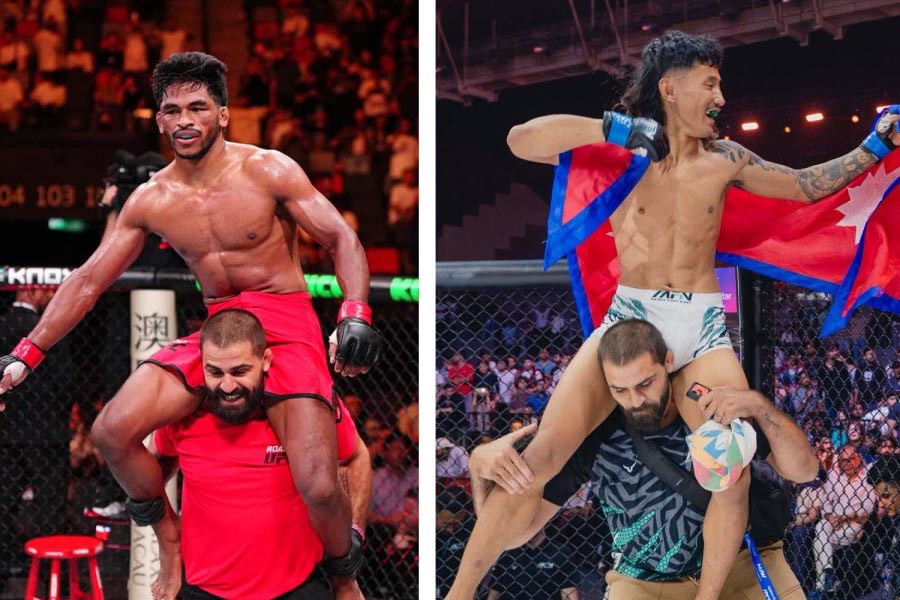
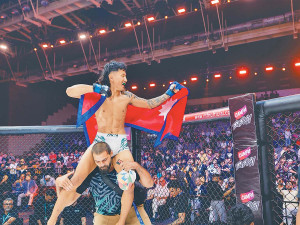
Soma Fight Club’s head MMA coach Wehbe opens up about cornering and training Dhant and Angdembe, the power of Nepali fans, Gorkhali mentality, and why the country must invest in combat sports.Coach Youssef Wehbe carries Rabindra Dhant and Yuki Angdembe after their wins at Road to UFC in Macau and Matrix Fight Night-18 in India, respectively. Photos: Courtesy of Diwiz Piyaand Matrix Fight Night
It is not easy to get to train at Soma Fight Club in Bali, Indonesia. Youssef Wehbe, head MMA coach at the facility, is very picky about the fighters he lets in and be part of the family.
It is specifically the reason why Rabindra Dhant and Yuki Angdembe, two of Nepal’s elite MMA fighters, often mention Soma and its key role in shaping them before and after their fights.
When Angdembe and Dhant first entered Soma, they were treated with the respect that a fight gym abides by: show them hell on the first day.
“Yuki had sought a different gym in Bali,” Wehbe told the Post over a phone call recently. “He [Yuki] had come to Soma and said, ‘I wanna try this place’. Soma had just opened then. I said to myself, ‘If you wanna try me, MF, I am gonna smash you. I whipped his ass.”
Soma is about to complete its fifth year. And it has already become one of the go-to places for MMA training for fighters across the world. The facility has also earned a special place among Nepali combat sports fans.
“Now, I can’t get rid of him [Yuki],” said Wehbe, adding that the scenario was similar when Dhant first came to Soma with his coach Diwiz Piya a couple of years ago.
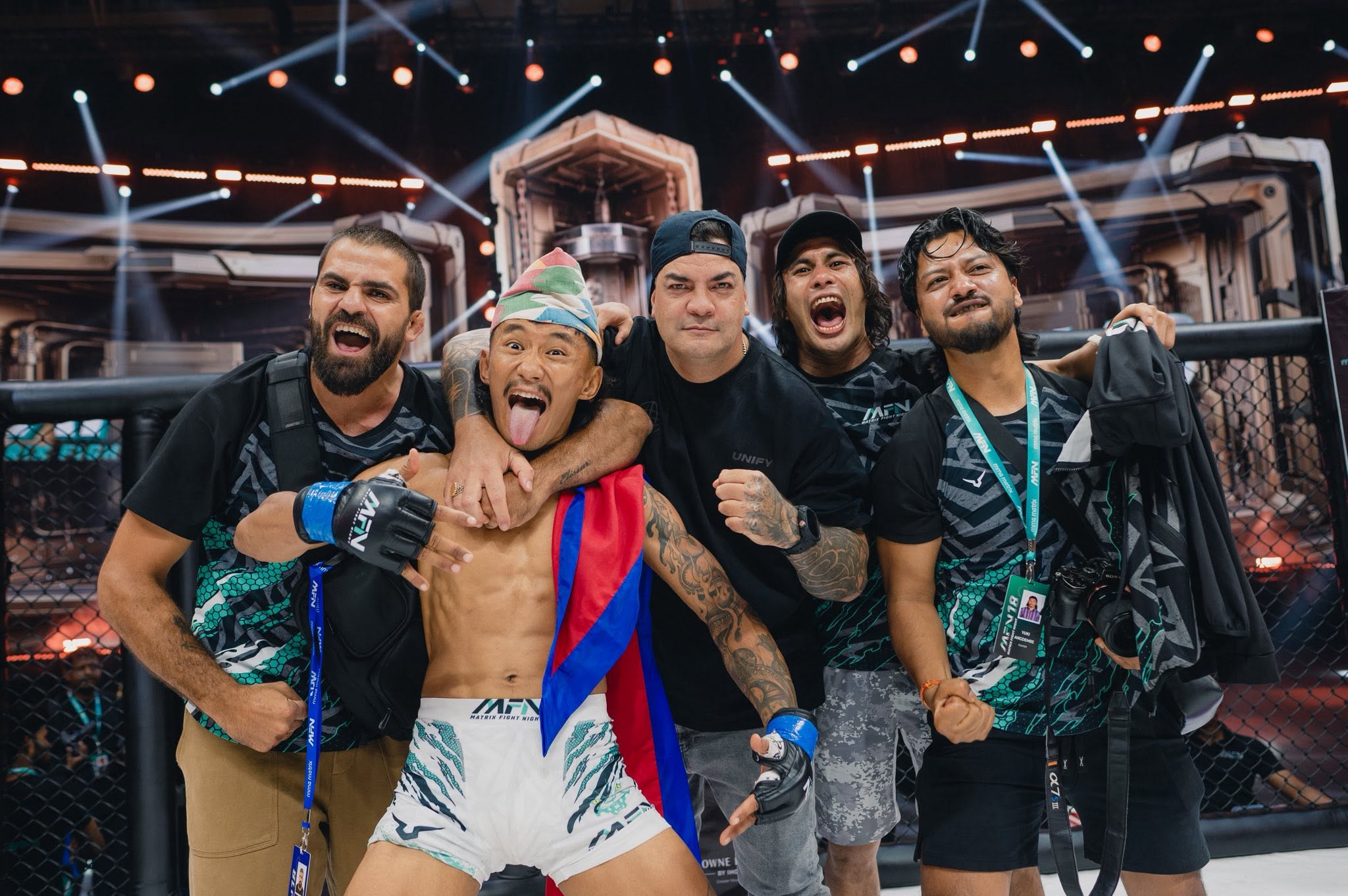
(From left) Youssef Wehbe, Yuki Angdembe, Mike Ikilei, Diwiz Piya and Sisan Baniya after Angdembe’s win at MFN-18.
Wehbe hails from Lebanon. He went by the moniker ‘The Silverback’ during his fighting days. It was when he was training at Bali MMA, a premier martial arts and fitness academy in Indonesia, that he met Gianni Subba and Mike Ikilei—Wehbe’s teammate and striking coach, respectively. Subba and Mike then later opened Soma and called in Wehbe.
Subba was born to a Nepali father and a Malaysian mother. He was raised in Hawaii and Malaysia, and went on to become Malaysia’s foremost flyweight martial artist. It was Subba who first mentioned Dhant to Wehbe.
“Rabi was then fighting at ONE when Gianni told me about him,” Wehbe recalls. “Yuki also proudly mentioned Rabi.”
For Wehbe and Mike, when Dhant first reached Soma—with his coach Piya—he was an average fighter.
“Mike used to say he [Rabindra] is good. Okay. Average,” Wehbe said.
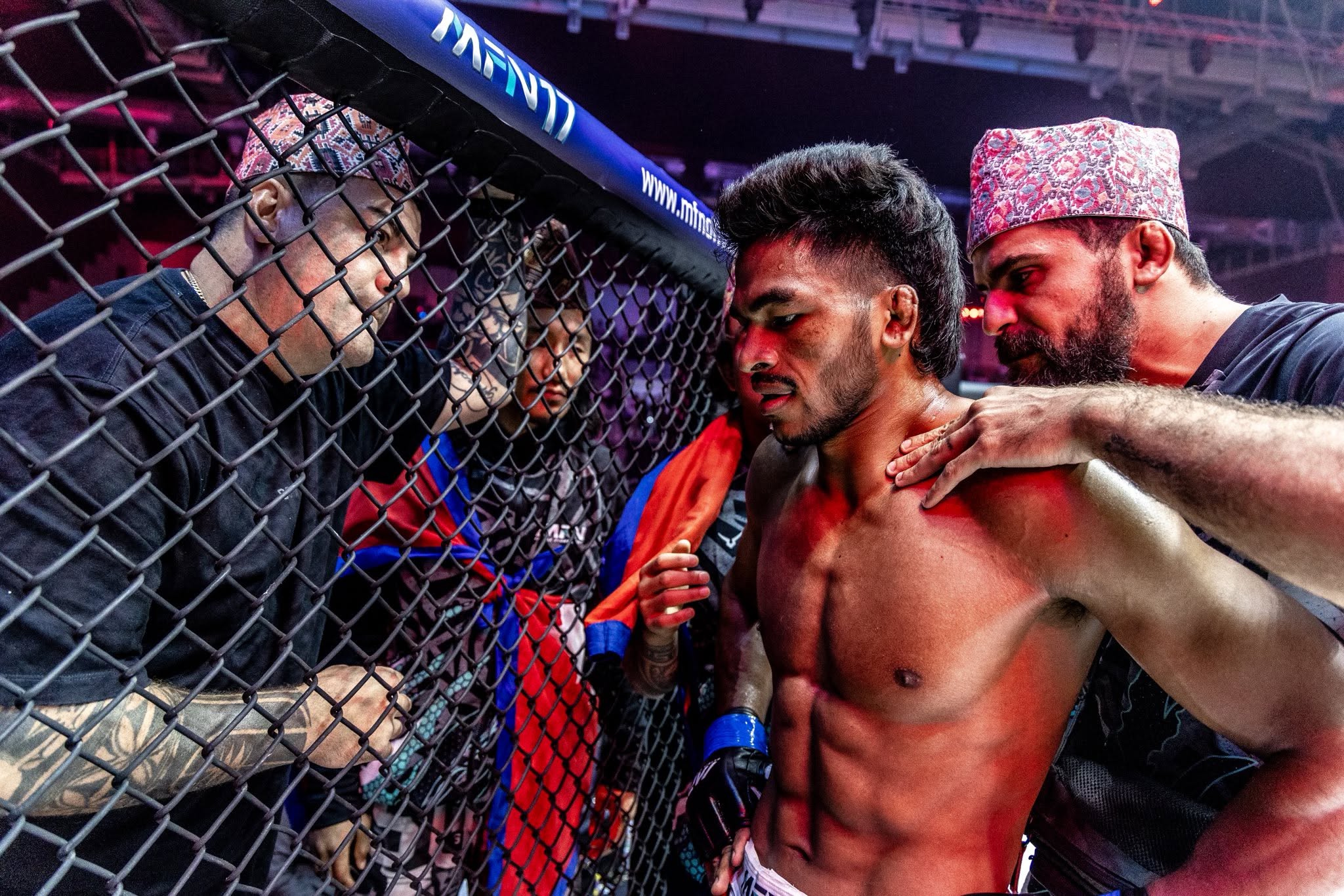
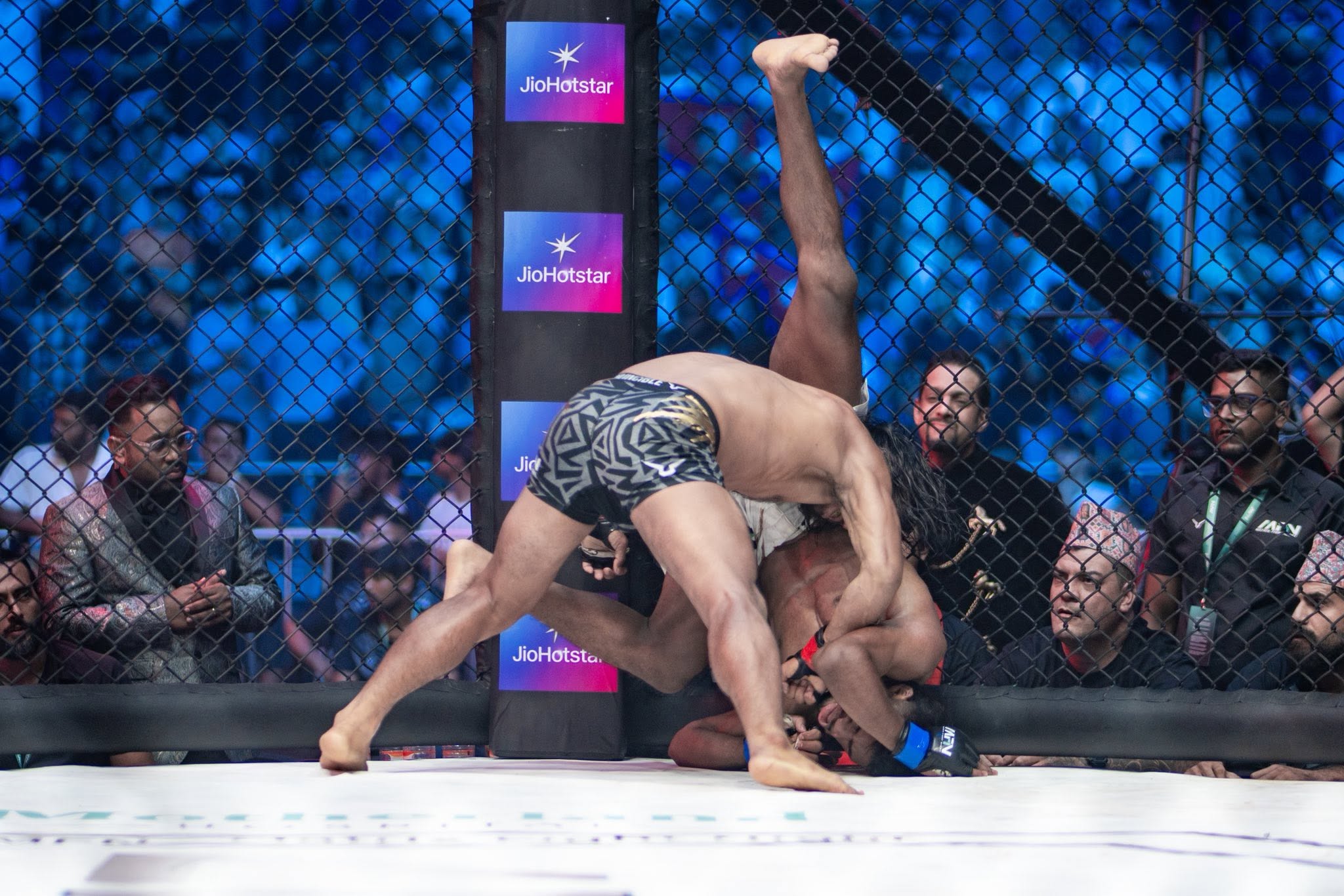
Mike Ikilei (left) and Youssef Wehbe (right) have a chat with Rabindra Dhant (centre) during his fight at MFN-17.
However, the more he learnt about Dhant and the more Dhant proved himself in the ring and training, the crazier Wehbe got.
“I measure individuals with others,” said Wehbe. “There is a guy—I won’t say the name—who beat Rabi to a pulp in the initial days. Now, Rabi goes toe to toe with him.”
Dhant’s story, as it is well known, is a motivating one—from a construction labourer to Nepal’s top MMA fighter. “It is a crazy story,” an elated Wehbe told the Post.
“Rabi was supposed to be a construction worker in Qatar. Now, see where his life choices took him. I always say it to Rabi: You are not supposed to be here. Take advantage.”
Since his pro MMA debut in 2019, Dhant has fought 11 bouts. And he has lost only one—which came against Pakistan’s Ismail Khan at ONE Championship on December 15, 2023.
It was especially when Dhant debuted at ONE and won his first fight—against Russia’s Torepchi Dongak on September 15, 2023—that made him popular among Nepalis. His star rose further when he defeated Indian favourite and champion Chungreng Koren and took the bantamweight title at Matrix Fight Night-17 in August last year.
Youssef Wehbe and Mike Ikilei watch Rabindra Dhant vs Chungreng Koren from the corner at MFN-17.
“It was a big win for Rabi,” said Wehbe, who was in the ring side when Dhant defeated Koren in Uttar Pradesh, India. “Around six weeks before that fight, Dhant had torn his hamstring. He did not just recover after following specialised training plans at Soma… It was his mentality and Gorkha blood.”
Now, Dhant is on a path where no Nepali had ever wandered before—at the Road to UFC (RTU). Launched by the UFC in 2022, RTU is an annual, single-elimination tournament series that offers top rising prospects from the Asia-Pacific region a direct path to an official UFC contract.
There are three stages in Dhant’s bantamweight division at RTU Season 5—quarterfinal, semifinal and final. He has already won his first fight—against Kimbert Alintozon of the Philippines—in Macau in May.
“I was 100 percent sure that Rabi would win his fight against Kimbert,” said Wehbe. “We, including Mike, put plans for a year and more. And the way we all had prepared and trained, the win was visible from the very start.”
However, Wehbe says he cannot give a similar guarantee in Dhant’s upcoming fight at the semifinal, where Dhant is facing New Zealand’s Kasib Murdoch in Shanghai, China, on August 28.
“This will be Rabi’s greatest challenge to date,” Wehbe said. “Irrespective of the result for now, I am certain that it will be a very good fight.”
Nonetheless, Wehbe stressed that the “Soma family” is backing Dhant to the very end and working together to make sure he wins his next fight and then the final as well and earn a UFC contract.
“There are many MMA promotions in the world. Too many,” Wehbe said. “But the UFC is the pinnacle. Getting to fight at the UFC is a very big thing. And I want to see Rabi there.”
Soma is a family
Two days ago, Wehbe posted a group photo of the available fighters in Soma. Including Wehbe, there were individuals from 13 countries—Nepal, Lebanon, Ukraine, India, New Zealand, Australia, United States, Russia, Egypt, Armenia, Algeria and Turkey.
“That’s the beauty of Soma. We live and push each other like a family,” said Wehbe. “But it is not easy to be part of this family.”
Why does Soma place so much emphasis on the notion of “living like a family”?
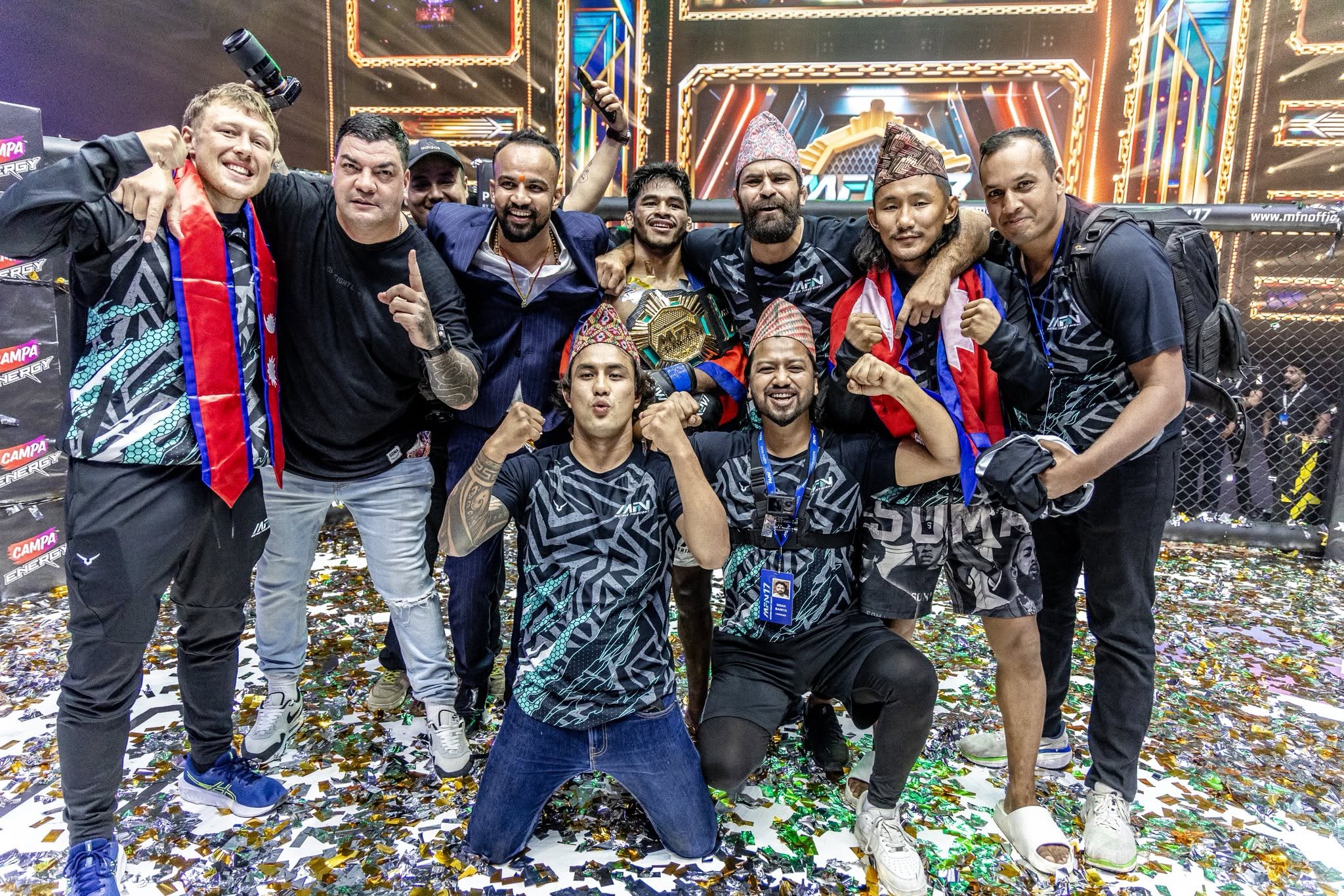
Zack “Bahadur” Bennet, Mike Ikilei, Youssef Wehbe, Yuki Angdembe, Diwiz Piya and Sisan Baniya among others pose with Rabindra Dhant after he defeated Chungreng Koren and claimed the bantamweight title at MFN-17.
“Family gives you extra power,” Wehbe said. “It is why we live like a family at Soma.”
Wehbe, Mike and Subba are the three main pillars that run Soma. They all hail from three different regions, thousands of miles apart.
“But what unites us is a deep love for our families. We—myself, Mike and Gianni—are deeply family-oriented people, and everything we do is to support them,” Wehbe said. “In a sport as dangerous as MMA, it’s your family who ultimately suffers through your sacrifices and celebrates your achievements.”
How much Wehbe loves his family, especially his daughter Ayouni, can be seen on his Instagram posts and stories.
And Wehbe says he sees a similar fire in Dhant. “Rabi isn’t just fighting for himself,” Wehbe continues, “but for everyone around him and everyone standing behind him.”
Angdembe has been in Soma for a long time. Dhant and Piya have been associated with that family for around two years now.
“No matter how long you’ve spent with Soma, once a part of the family, always a part,” said Wehbe. “Even Sisan [Baniya] is a part of Soma. He is a great guy too.”
Wehbe also expects that Bali has been a home-away-from-home for Dhant in another way as well: the gods.
“Rabi often visits temples of Hanuman and Shiva as Bali has a strong Hindu religion,” Wehbe said. “It is important because in combat sports, you do need a bit of luck that comes through blessing. I also feel Rabi gets stronger after he visits these temples in Bali.”
Fond of Nepalis
Wehbe spent his quality days—when he was a fighter—in the Gulf. When he lived in Dubai and Qatar, Wehbe often came across Nepalis.
“Many Nepalis do not have ideal jobs in Dubai and Qatar. But one needs to do it for money,” Wehbe said. “But Nepalis have a deep identity and great history from what I have learnt.”
Wehbe got to know Nepal closely through Subba. Then, there was Angdembe. And then Dhant and Piya.
“Right now, I have Nepali hats [dhaka topi] and Nepali knives [khukuri] of different sizes,” said Wehbe, who wore a dhaka topi when he entered the ring and celebrated Dhant’s win over Koren at MFN-17.
Wehbe insists on being present for every bout his fighters take, convinced that trust in the corner is paramount. Yet cornering Dhant and Angdembe revealed an unexpected highlight—the vocal loyalty of the Nepali diaspora.
“At MFN, the support Dhant and Angdembe had from Nepali fans so far from home was astonishing. It was in India, near to Nepal, so it was believable,” Wehbe recalled. “But to see even a bigger crowd in Macau, I was damned.”
Wehbe says he was not the only one to be surprised at Dhant’s supporters in Macau.
“It was not just me. Even the UFC was shocked to see such a big crowd, and that too not for the main cards,” Wehbe remembers. “Once Rabi’s fight was over, the venue was almost empty. I also saw videos of Nepalis gathering in different places back home to watch Rabi’s fight. I have to admit it, Nepali fans are extremely supportive of their athletes. I hope to see a similar crowd in Shanghai too.”
There is one more thing Wehbe loved about Nepali supporters: the way they accept and love back people who love them.
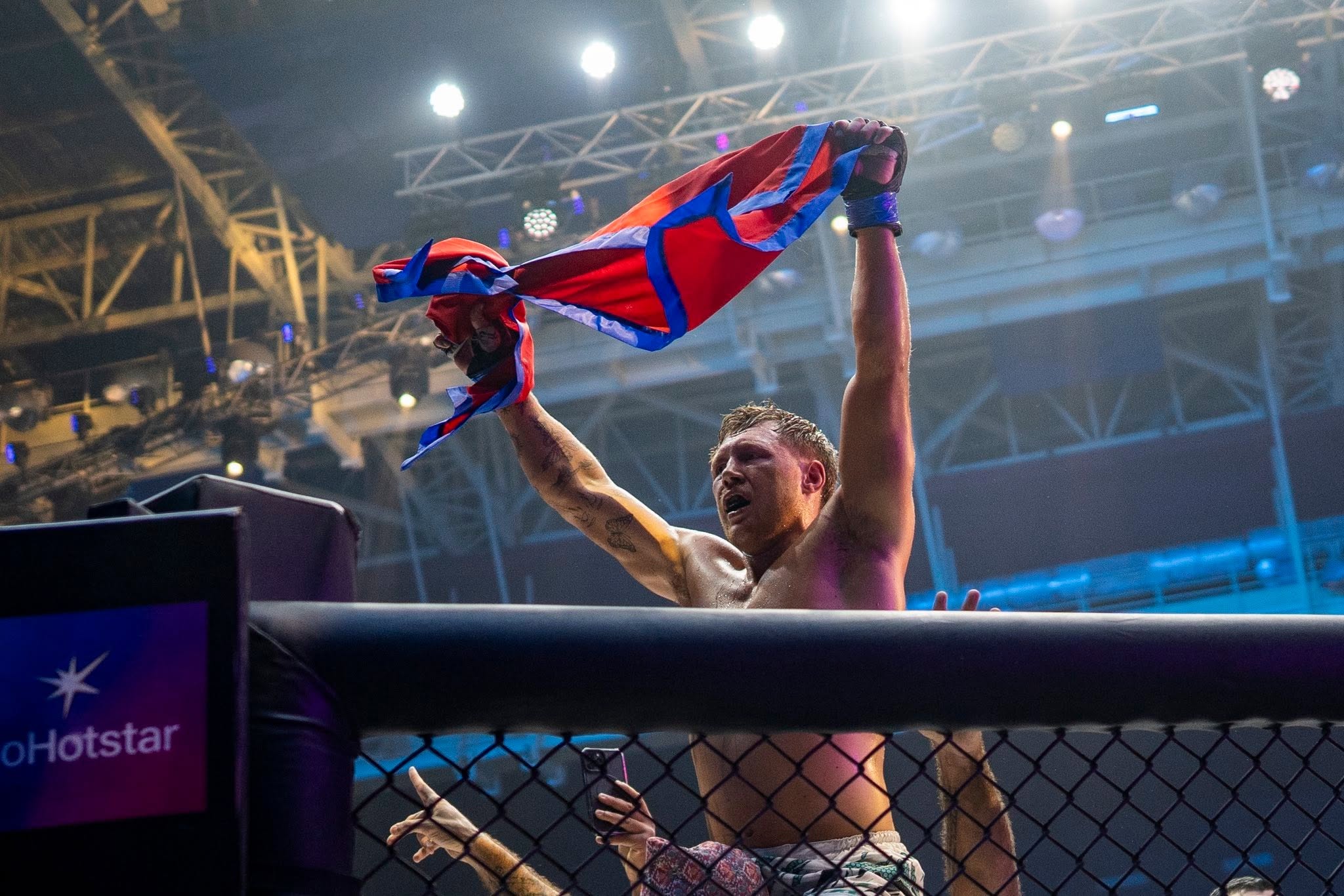
“Zack had asked Yuki for Nepal’s flag before entering the ring at MFN-17. And when Nepali fans saw it, they accepted Zack as their own in no time,” Wehbe recalls. “At the end of the fight, after Zack won, he even screamed ‘Jay Nepal’. The next thing, Zack got a nickname from Nepali fans. He is now Zack “Bahadur” Bennet.”
New Zealand’s Zack Bennet, who fights out of Soma Fight Club, celebrates his win at MFN-17 with Nepal’s flag.
Bennet hails from New Zealand and was fighting Afghanistan’s Abdul Fazeel before the Dhant vs Koren main event at MFN-17. Bennet won by split decision. He now holds a professional record of 6-0.
“The whole of Soma is in love with Nepali culture. Everyone supports and loves Rabi, Diwiz and Yuki,” Wehbe told the Post. “And this trio love and support them back wholeheartedly.”
“Nepal, invest in MMA”
Wehbe has understood how much Nepalis love this combat sport. And he wants to see Nepal reach great heights in MMA.
“Firstly, the fighters your country has. Rabi and Yuki are already at a high level; not the highest though. There are many more youngsters coming up, such as Rahul [Hamal Thakuri] and Kunjan [Kakshapati], among others,” says Wehbe. “But they need more and better facilities and resources to challenge the world.”
So, what does Wehbe suggest for Nepal?
“Just give some money to Diwiz, and he will take Nepali MMA to the next level,” Wehbe said on a serious note. “You also need a federation for MMA and get affiliated with the International Mixed Martial Arts Federation (IMMAF). And that should be led by Diwiz.”
There is a specific reason why Wehbe has so much trust in Piya.
“Diwiz is a very good guy. It is not easy to let your fighter be coached by someone else. Diwiz brought Rabi to Soma because he wanted Rabi to get better. These two—Diwiz and Rabi—complete each other. There is no Diwiz without Rabi, and no Rabi without Diwiz.”
He also has high praise for Angdembe.
“Yuki started MMA far sooner than Rabi. There are not many fighters who would want others to get ahead of them. But it was Yuki who told me about Rabi and asked to have him in,” Wehbe said. “Even now, Yuki supports Rabi every time, in every way possible. He does not care if Rabi is getting ahead of them. But I am sure Yuki will also soon get a chance at RTU because he is a good fighter who gives his all.”
Wehbe also has a huge respect for Nepal’s history.
“You all come from a country that was never colonised,” Wehbe said. “There are a handful of countries like Nepal. And the Gorkhali mentality, wow. You must channel this mentality into MMA.”
Wehbe also wants Nepalis to take a lesson from Dhant’s journey.
“I do not want to say that every Nepali should take up MMA,” Wehbe added. “What Nepalis and many others can learn from Rabi is that you just need to chase your dreams and take risks in anything you do.”
After over half an hour of phone conversation and a final question of what he wants from Dhant, Angdembe and overall Nepali MMA, Wehbe responded, “To see these fighters and Nepali MMA improve, improve, improve and improve.”
Nayak Paudel covers sports for The Kathmandu Post. He previously worked at the Post (2018–19) and spent over five years at The Rising Nepal. His reporting spans crime, health, education, and social issues.




 27.61°C Kathmandu