



 22.94°C Kathmandu

Thu, Oct 22, 2026
Money
Non-domestic goods dominate Nepal’s exports as high-value products struggle
Exports of goods identified under the Nepal Trade Integrated Strategy grew just 3.16 percent last fiscal year, as weak domestic production, policy instability and poor coordination hamper efforts to diversify exports.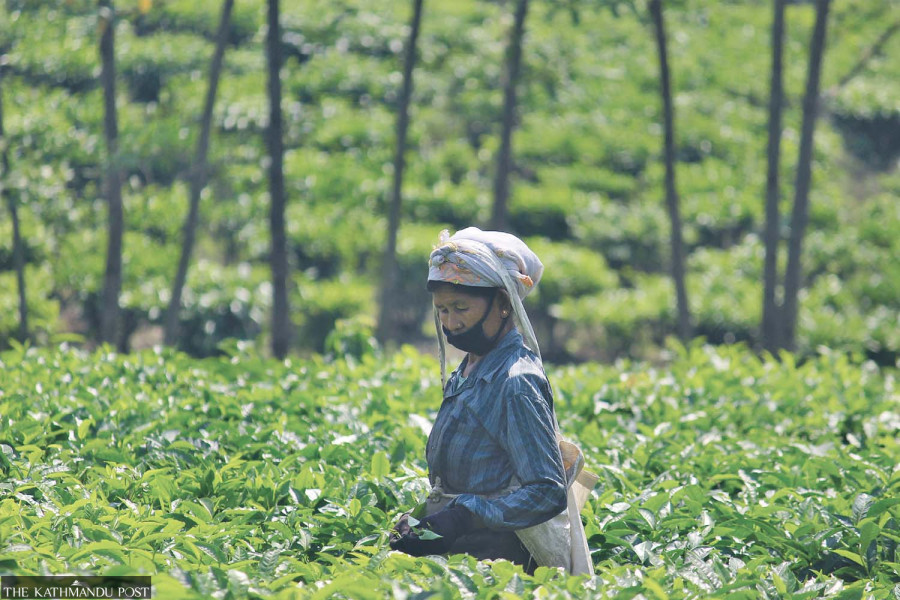
bookmark
Krishana Prasain
Published at : August 16, 2026
Updated at : August 16, 2026 06:52
Kathmandu
Nepal’s export of high-value goods grew by just 3.16 percent in the last fiscal year compared to the previous fiscal data, sharply contrasting with overall export growth of 13.81 percent during the period.
Exports of products listed under the Nepal Trade Integrated Strategy (NTIS) 2023 reached Rs104.62 billion in the last fiscal year, up marginally from Rs101.41 billion in the fiscal 2024-25.
The government identifies these products as having high export potential and has sought to promote them to diversify exports and boost foreign exchange earnings.
The government introduced the revised NTIS 2023, replacing the NTIS 2016, to boost exports and support Nepal’s graduation from the least developed country category. But three years into its implementation, exports of several identified products have continued to underperform.
Lack of coordination among government agencies, frequent changes in bureaucrats and ministers, policy shifts and political instability have hindered the implementation of NTIS, discouraging investment, productivity and exports of the listed goods, according to industry representatives.
Nepal’s overall export growth, meanwhile, has been dominated by goods the country does not produce domestically. Government data show that much of the increase has been driven by edible oil. According to the Department of Customs, Nepal exported goods worth Rs315.29 billion in the last fiscal year ended mid-July. Edible oil exports accounted for Rs146 billion. Nepali traders import crude edible oil and re-export the processed product to India, taking advantage of tariff concessions under the South Asian Free Trade Area regime.
Private-sector representatives say Nepal needs production- and industry-focused policies, along with legal reforms, to increase productivity and strengthen exports.
“Despite a good concept and policy, the goods listed in NTIS have not been able to grow as expected mainly due to lack of coordination,” said Birendra Raj Pandey, president of the Confederation of Nepalese Industries.
He said the government is preparing industrial development policies and that reforms to some legal provisions could help increase productivity, particularly under a stable government.
“The share of GDP from manufacturing is declining and it needs to be reversed,” Pandey said. Low industrial capacity utilisation and a slowdown in economic activity have hurt production, he added, arguing that increased capital spending and other forms of investment could help revive economic activity.
Nepal has been producing many of the NTIS-listed goods for years, but their production methods and markets have changed little, Pandey said. “The product and market both need to be diversified for market expansion. We need to produce goods that have a competitive advantage compared to our neighbouring countries.”
Among the NTIS-listed products, exports of carpet, tea, iron and steel products, cement, handmade paper and spices declined during the review period.
Carpet exports fell 3.63 percent to Rs10.38 billion, with 367,454 square metres shipped during the year. Traders said the imposition of value-added tax on carpets and raw materials has made Nepali carpets more expensive in the Chinese market, hurting exports.
The government’s National Strategic Work Plan for Carpet Export (2026-2031) aims to modernise the industry, upgrade workers’ skills, introduce computer-based design systems, promote the use of domestic raw materials and expand export markets through digital marketing and e-commerce.
Tea exports fell 13.36 percent to Rs3.98 billion, with 13,303 tonnes exported. Repeated disruptions at the Indian border hurt shipments after India introduced stricter measures, including mandatory laboratory testing, to protect its domestic tea industry amid rising imports. The measures halted Nepali tea exports for more than a month in May and forced some factories to shut for a week in June.
Exports of iron and steel products plunged 62.43 percent to Rs6.14 billion. Shipments to India have fallen sharply since New Delhi imposed safeguard duties on selected steel products, raising concerns over export earnings and jobs.
India imposed a three-year safeguard duty in December last year, ranging from 11 percent to 12 percent on selected steel products. The levy is 12 percent in the first year, 11.5 percent in the second and 11 percent in the third. The measure applies to imports from China, Vietnam and Nepal, while specialty products such as stainless steel are exempt.
Cement exports to India fell 8 percent to Rs2 billion. Delays in issuing or renewing Bureau of Indian Standards certification have repeatedly obstructed shipments of Nepali cement, traders say.
Spices exports plunged 85 percent to Rs147 million, with Nepal exporting 1,689 tonnes of cinnamon, coriander, cumin and turmeric.
Exports of several other NTIS-listed products including yarn, readymade garments, jute and jute products, felt, large cardamom, pashmina, footwear, fabric, dog chews, medicinal herbs, rosin and resin acid, lentils, ginger, vegetables and fruits, coffee, jewellery, pasta and honey, however, increased during the year.
Yarn exports increased 8.79 percent to Rs15.66 billion, with 55,200 tonnes shipped, mostly to India and Turkey.
Readymade garment exports rose 6.27 percent to Rs9.3 billion, with 15.52 million pieces exported.
Jute and jute product exports increased 25.98 percent to Rs10.78 billion, while felt exports rose 16.2 percent to Rs5.97 billion.
Large cardamom exports jumped 64.61 percent to Rs12.64 billion, the highest value recorded, with 6,395 tonnes shipped. The increase has been attributed to tighter global supplies, stable prices and sustained demand in South Asian and Middle Eastern markets. India remains the dominant buyer, accounting for around 99 percent of Nepal’s exports, with the spice subsequently re-exported to Pakistan and the Middle East.
Pashmina exports increased 16.85 percent to Rs3.76 billion, while footwear exports jumped 56.19 percent to Rs3.19 billion. Fabric exports rose 16.97 percent to Rs3.6 billion.
Dog chew exports increased 6.62 percent to Rs4.81 billion. Traders said major US brands have continued sourcing dog chews from Nepal despite a 10 percent US tariff and concerns over supply chain disruptions.
The National Strategic Work Plan (2026-2031) for dog chew exports aims to increase production and quality, diversify markets and introduce international food-safety certifications such as Hazard Analysis Critical Control Point and Good Manufacturing Practice.
Lentil exports rose 11.02 percent to Rs401 million, while ginger exports surged 157.38 percent to Rs1.5 billion. The government’s strategic work plan for ginger aims to increase productivity and value addition, develop processing facilities and diversify export markets.
Pasta exports increased 68.49 percent to Rs4 billion. Coffee exports rose 26.74 percent to Rs144.95 million, with 70 tonnes shipped, while honey exports increased 84.36 percent to Rs105.92 million.
Nepal first adopted the NTIS in 2010, identifying 12 goods and seven services for special support as part of efforts to make trade more inclusive and contribute to poverty reduction. The strategy was revised in 2016, reducing the list of priority goods and services to 12. Products including carpets, tea, felt and large cardamom were retained as priority export products.
Krishana Prasain
Krishana Prasain is a business reporter for The Kathmandu Post covering markets. Before joining The Kathmandu Post in 2018, she spent 3 years in New Business Age magazine covering business.

Most Read from Money

Nepal travel agents threaten to stop selling Thailand trips over visa rules

Why does an hour long flight to Dhangadhi cost more than a flight to New Delhi?
Malaysia rejects Nepal’s demand to open recruitment to all manpower agencies

No school, but a graduation cap for women dairy farmers
Nepal arrests four medical service providers as Malaysia recruitment row deepens
Editor's Picks




E-PAPER | October 22, 2026

×