



 28.24°C Kathmandu

Wed, Sep 30, 2026
Health
Nepal bans three veterinary painkillers linked to vulture deaths
Nimesulide, aceclofenac and ketoprofen will be phased out over six months, during which existing stocks can still be sold.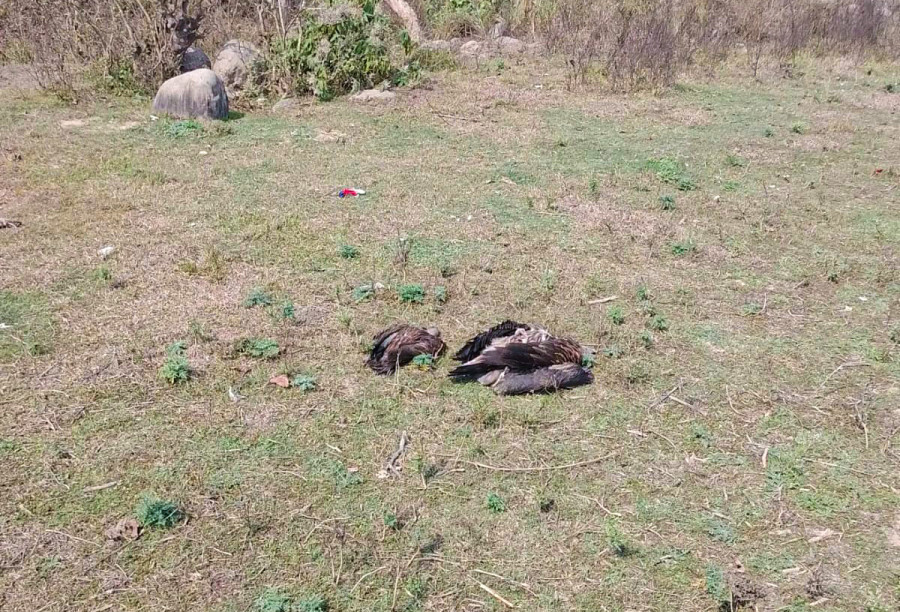
bookmark
Arjun Poudel
Published at : April 29, 2026
Updated at : April 29, 2026 17:44
Kathmandu
The Department of Drug Administration has banned three non-steroidal anti-inflammatory drugs used in the treatment of ailing animals, citing negative impacts on public health, animal health and environmental balance.
The banned drugs include Nimesulide, Aceclofenac and Ketoprofen. All three are used in veterinary treatment to manage pain, fever, and inflammation, particularly for osteoarthritis, musculoskeletal disorders, and post-operative pain in animals such as dogs, horses, and cattle.
The department, which is also the national drug regulatory body for all medicines used in human and animal treatment, said the medicines have side effects similar to those of diclofenac, which causes renal failure in vultures that consume carcasses of treated livestock.
“The decision to ban non-steroidal anti-inflammatory drugs used in the treatment of ailing animals is in line with the recommendation of the 58th meeting of the Drug Advisory Committee held recently,” said Kiran Sunder Bajracharya, information officer of the department. “We have decided to ban production for use in animals, as well as the import and renewal of these drugs.”
Veterinarians can sell existing stocks of medicines for the next six months, and after this unsold quantities must be returned to the respective manufacturers or dealers.
Officials said that the Department of National Parks and Wildlife Conservation had also made a special request for a ban on those medicines, which have contributed to mass deaths of vultures.
“I myself participated in the meeting of the Drug Advisory Committee of the department and convinced participants about the negative effects of the medicines in vulture conservation efforts,” said Hari Bhadra Acharya, senior ecologist and information officer at the department. “We hope that a complete ban on non-steroidal anti-inflammatory drugs used in the treatment of ailing animals will help protect the vulture population, which is recovering after nearing extinction.”
The government had banned diclofenac, a non-steroidal anti-inflammatory drug used in veterinary medicines, in 2006 due to its high toxicity to vultures. Following the prohibition of the medicine, mass deaths of these scavenger birds have declined to some extent.
Conservationists citing studies say Nimesulide, Aceclofenac and Ketoprofen medicines are also responsible for mass vulture deaths, similar to diclofenac.
“We hope that the move to ban the use of some non-steroidal medicines in animal treatment will help conservation efforts,” said Krishna Prasad Bhusal, a member of the International Union for Conservation of Nature’s Vulture Specialist Group. “Along with the restriction on production, import and sale of these medicines, authorities must launch an awareness drive and make market regulation effective.”
In the 1980s, Nepal lost a large number of vultures due to the haphazard use of diclofenac in treating ailing animals. Some vulture species, including Dangar vulture, Black Vulture, and Egyptian Vulture reached the brink of extinction. Conservationists say vultures are nature’s scavengers that help clean the environment by feeding on carcasses containing harmful pathogens. It is estimated that there are around 20,000 vultures of various species in Nepal.
Arjun Poudel
Arjun Poudel is a health reporter for The Kathmandu Post. Before joining the Post, he worked for Sagarmatha Television, Naya Patrika, Republica and The Himalayan Times.



Most Read from Health
JE is killing more adults in Nepal as vaccination only covers children
24 days after flood, hunger grips three Rasuwa wards

Four die in three weeks as scrub typhus spreads in Salyan

A four-year-old died of rabies at home last week, but his death does not appear in government records

Seven die of scrub typhus in one month in Salyan
Editor's Picks

What triggered the Rasuwa flood? Scientists piece together a complex chain of events

The floods keep coming. Nepal keeps starting over

In a settlement destroyed by the Bhotekoshi flood, a disabled couple offer strangers the little they have

Nepal working on detailed assessment as Bhotekoshi flood reconstruction could cost up to $5 billion

Rabindra Dhant gave Nepal a reason to smile. Now his camp wants real action behind the praise
E-PAPER | September 30, 2026

×