Nepal Medical Council has barred two Indian doctors from conducting an in vitro fertilisation consultation camp at the Hotel Yak and Yeti in Kathmandu on Thursday.
The move by the Council, the national regulatory body of medical doctors and dentists, came after it was found that neither the organiser had taken prior permission for the planned health camp nor had the foreign doctors concerned registered their medical degrees with the council and secured approval for the service.
“We had also sought help from the district administration office to prevent the foreign doctors from running the health camp without our approval,” said Dr Satis Kumar Deo, registrar of the Council. “To run any health camps or services in our country, foreign doctors must register their medical degrees with the council, and take approval for service. They had not fulfilled due procedure.”
The council officials said that they suspected ulterior motives on the party of the foreign doctors and organisers at a time when in vitro fertilisation service in Nepal has been restricted to those, who need donated eggs and sperm.
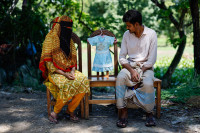
In August last year, Nepal’s Supreme Courttemporarily banned the extraction and storage of eggs (oocytes) from women and teenage girls following reports of exploitation, illegal and non-consensual extraction. Following the court's order, the Ministry of Health and Population has directed health facilities for a complete halt to commercial trading of eggs.
The ministry had planned to prepare working procedures and guidelines on egg donation so that women with infertility issues could access treatment. However, the process stalled after the court order and relevant documents were destroyed when the Supreme Court building was set on fire during the Gen Z protests last September.
IVF is a fertility treatment, where a woman’s eggs are retrieved and fertilised with sperm in a laboratory before the resulting embryo is transferred back into the uterus to establish pregnancy. It is commonly used to treat infertility, and blocked fallopian tubes, among other things.
Against this backdrop of regulatory uncertainty, hundreds of couples in the country seek such services abroad, especially in India, where the service is legal. Council officials say many patients from Nepal travel to India for renal transplants, when they cannot find suitable donors in Nepal. It is suspected that people from Tarai region go to India for sex selective abortion, which is provided by illegal clinics operating in the bordering areas.
Council officials, accompanied by the chief district officer of Kathmandu and deputy superintendent of police, on Thursday afternoon reached Hotel Yak and Yeti and met the two Indian doctors—Dr Jaideep Malhotra, Dr Narendra Malhotra—and inquired about their planned event.
“They told us that they did not know that approval is required to run consultation camps and apologised for the incident,” said Deo. “They have also committed to send a written apology to the council.”
As per the Council Act, 2020, and the regulations, 2024, it is mandatory for any foreign or domestic medical institution or doctor to be registered with the council and obtain prior approval before carrying out health camps and consultation camps.
The Council has instructed organisations and individual doctors not to organise health camps or engage in any public health-related activities without obtaining prior approval and ensuring proper verification of their medical qualifications.
The council said that it has started proactively monitoring health camps organised by individual doctors and organisations without taking consent from regulatory agencies, including the council.
Arjun Poudel is a health reporter for The Kathmandu Post. Before joining the Post, he worked for Sagarmatha Television, Naya Patrika, Republica and The Himalayan Times.




 13.68°C Kathmandu