In Nepal, wild mushrooms claim lives every monsoon, but there is no official data
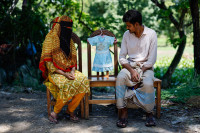
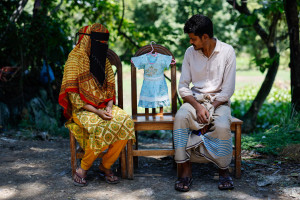
The National Disaster Risk Reduction and Management Authority maintains records of almost all disasters, but has no data on wild mushroom poisoning, which is not legally classified as a disaster.Shutterstock
Two days ago, 11 members, including nine children of the same family from Jhapa district, fell ill after consuming mushrooms collected from a nearby jungle. Luckily, there was no loss of life as they were immediately rushed to the hospital.
With the monsoon season approaching, experts have warned of a likely rise in cases of poisoning and deaths from consuming wild and toxic mushrooms that sprout in forests and grasslands during the monsoon.
“This is just the start, and people have already started getting ill and hospitalised after eating wild mushrooms,” said Dr Hari Prasad Aryal, a mushroom expert. “The number of wild mushroom poisoning cases and deaths will rise in the coming days.”
It is estimated that over three dozen people die of wild mushroom poisoning every year, and hundreds fall sick in Nepal. However, neither the government nor any other agency in the country appears to be taking the issue seriously.
What concerns experts much is that deaths, hospitalisations, and incidents of wild mushroom poisoning do not fall under the definition of disaster; thus, authorities do not even maintain separate records.
“As we don’t keep records of wild mushroom poisoning and resulting deaths, we don’t know how many people die from it or how many others fall sick in a year,” said Shanti Mahat, spokesperson of the National Disaster Risk Reduction and Management Authority (NDRRMA). “Incidents of wild mushroom poisoning and deaths are also disasters, but they are not included in the Disaster Risk Reduction and Management Act 2074.”
Experts attribute this gap to the fact that authorities may not consider it necessary to keep records of those getting sick or dying from toxic mushroom poisoning. Most of those who consume wild mushrooms or are at high risk of dying or falling ill are extremely poor.
“Such people live in the periphery of forests and often lack food at home,” said Aryal, who carried out an extensive study on wild mushroom poisoning. “They are not limited to any particular place but are found from east to west. They consume wild mushrooms themselves and give them to their family members and children without considering the consequences.”
Studies have found that there are 1,291 species of wild mushrooms in Nepal, of which over 100 species are poisonous. Food insecurity in poor and marginalised communities makes them highly vulnerable to illness and death, health officials say.
Experts say launching awareness campaigns about the risks of consuming wild mushrooms could reduce poisoning cases. They say that, along with awareness programmes for vulnerable populations, authorities must find out the underlying reasons why people consume wild mushrooms, even at the risk of death.
“Despite scores of deaths and hospitalisations every year, we don’t consider wild mushroom poisoning as a disaster under our law,” said Dr Amrit Pokhrel, an official at the Epidemiology and Disease Control Division. “Such incidents can be considered public health incidents, but not disasters.”
Pokhrel said the outcome of treatment depends on how early the victim reaches the hospital, the toxicity of the mushrooms, the amount consumed, and condition of health facilities.
“Toxins of poisonous mushrooms do not get neutralised even after cooking, as they are heat-resistant,” said Pokhrel. “Never consume wild mushrooms, as it is risky and could be fatal.”
Experts say colourful mushrooms have a higher chance of being toxic. Studies show mushrooms have a strong capacity to absorb potentially toxic elements, including hydrocarbons, mercury, and lead from contaminated soil. Even mushroom species once considered edible can become poisonous due to heavy metal contamination of the soil, according to experts.
Victims suffer from abdominal pain, vomiting, diarrhoea, and seizures following the consumption of poisonous mushrooms. Some also suffer from hallucinations and renal failure. In severe cases, victims suffer liver failure and die.
Doctors advise against waiting for symptoms to subside at home if someone develops vomiting or abdominal cramps after eating mushrooms. They warn that delayed treatment increases the risk of fatality.
Arjun Poudel is a health reporter for The Kathmandu Post. Before joining the Post, he worked for Sagarmatha Television, Naya Patrika, Republica and The Himalayan Times.




 21.87°C Kathmandu