One in five Nepalis aged over 30 found hypertensive and obese
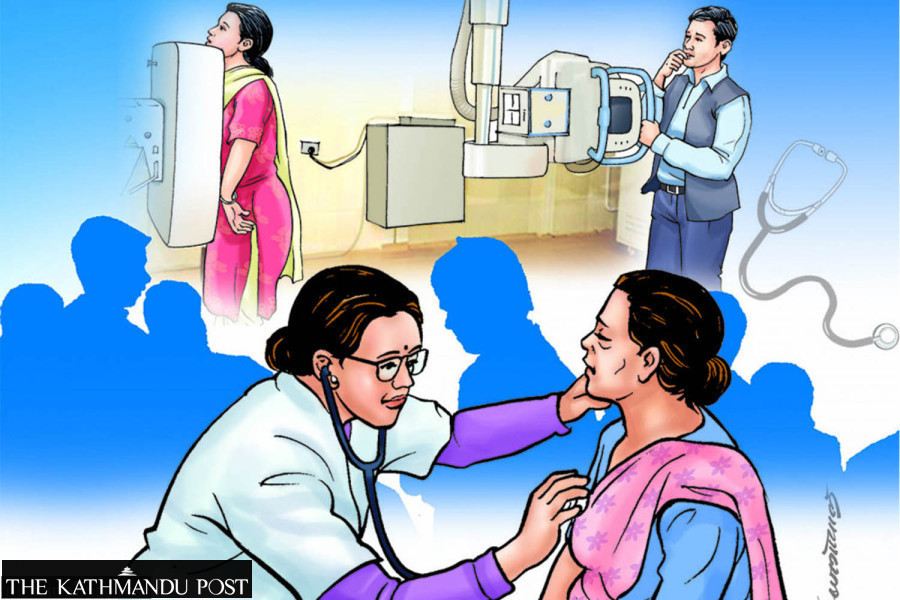
A nationwide screening of non-communicable diseases conducted in February-March shows around nine percent of the population in the age group is diabetic, and over three percent have renal diseases. Post Illustration
One in five people above 30 from across the country are found to be suffering from high blood pressure, and nearly the same number suffer from obesity, a new report of a nationwide study shows.
The burden of hypertension and obesity has emerged as a major public health problem in Nepal. These conditions are blamed on changing eating habits, sedentary lifestyle and increased stress levels.
According to the findings of the screening of major non-communicable diseases—hypertension, blood sugar, renal function and body mass index—carried out in February and March, nearly nine percent of the people above 30 suffer from diabetes, and over three percent of the population has renal diseases.
“High blood pressure, diabetes, renal disease, and obesity are all lifestyle diseases,” said Pomawati Thapa, chief of the Non-communicable Disease and Mental Health Section at the Epidemiology and Disease Control Division under the Ministry of Health. “Changing lifestyles, eating habits, lack of exercise and rising stress levels are all responsible for the rise in the burden of non-communicable diseases.”
The burden of non-communicable diseases has risen alarmingly in recent years. The Nepal Burden of Disease 2017 report attributed two-thirds (66 percent) of total deaths to non-communicable diseases, while the figure jumped to 71.1 percent in 2019. The Global Burden of Disease 2021 shows 73 percent of deaths are caused by non-communicable diseases.
Hypertension, diabetes, renal disease, liver problems, heart problems, and cervical cancer are major contributors to morbidity and mortality in the country, according to public health experts.
Of 495,595 people who took part in the study, 93,393 were found to be hypertensive, 85,143 were obese, 42,915 had high blood sugar and 16,700 had renal diseases.
According to the report, nearly 31 percent of the people in Sudurpaschim Province above 30 were hypertensive, followed by 23 percent in Lumbini, 20 percent in Gandaki, 19 percent in Koshi and 16.5 percent in Karnali.
Likewise, 14.5 percent of Sudurpaschim’s population in the age group were found to have diabetes, followed by Lumbini 10.5, Gandaki and Koshi 9, Bagmati and Karnali 8.5, and Madhesh over 7 percent.
Nearly 27 percent of the population above 30 was obese and five percent had renal disease in Sudurpaschim Province.
Health officials concede that many health facilities in the local level did not go for screening this year due to the parliamentary elections held at the same time. Even health workers were deployed in election duties, affecting the crucial health programme. Officials say most local units in Bagmati Province, including the Kathmandu Metropolitan City, did not carry out the screening.
“Due to the election code of conduct we could not carry out screening for non-communicable diseases,” said Dr Deewash Neupane, medical officer at the KMC’s health department. “We have allocated a budget for the programme to be undertaken within the ongoing fiscal year but have not started yet.”
A study conducted by the Health Department of Kathmandu Metropolitan City last year showed 39 percent of the population aged 30 and above in the city had high blood pressure or hypertension, a condition in which an individual’s blood pressure remains elevated over time.
High blood pressure is an established risk factor for ischemic heart disease (also known as coronary heart disease), stroke, and kidney disease.
Of those suffering from high blood pressure, 13 percent were unaware of their condition, and around three percent were not taking medications despite knowing their health problems. Those who are not taking any medications despite knowing were mostly young people who believed they could manage the problem through diet and exercise, and were concerned about high treatment costs.
Likewise, five percent of people in the metropolis were newly diagnosed with diabetes, while 14.5 percent of those tested said that they already had the disease. Another 2.4 percent were not taking medications despite knowing that they have high blood sugar levels, for the same reasons—diet and exercise management and concerns about medical expenses. Altogether, 22 percent of KMC residents above 30 are diabetic, according to the report.
Doctors say changes in dietary patterns, such as increased consumption of processed foods, sedentary lifestyles, and rising stress levels, are among the culprits for the rise in the burden of non-communicable diseases. Most patients seek treatment when problems worsen, and in many cases, it is already too late.
“The purpose of the screening of non-communicable diseases is also to make people aware of risk factors,” said Swostika Thapaliya, a public health officer at the NCD and Mental Health Section of the division. “This report shows alarming conditions of non-communicable diseases in the communities.”
Officials say that problems could be more serious than what the report indicates, as many local units, especially those in urban settings, have not carried out studies. They also complained of a declining budget to address the growing burden of non-communicable diseases, which are responsible for nearly three-fourths of the total deaths in the country.
The government has allocated Rs2.11 billion for non-communicable diseases for the current fiscal year, while the federal budget ceiling for non-communicable diseases is only Rs1.95 billion for the upcoming fiscal year.
Arjun Poudel is a health reporter for The Kathmandu Post. Before joining the Post, he worked for Sagarmatha Television, Naya Patrika, Republica and The Himalayan Times.




 16.27°C Kathmandu