



 16.74°C Kathmandu

Wed, Oct 14, 2026
Culture & Lifestyle
Chiya Kaka and the unfinished story of Mardi Himal
Mardi Himal is not just about landscapes. It is about people: the pioneers, the risk-takers, and the communities who bring these mountains to life.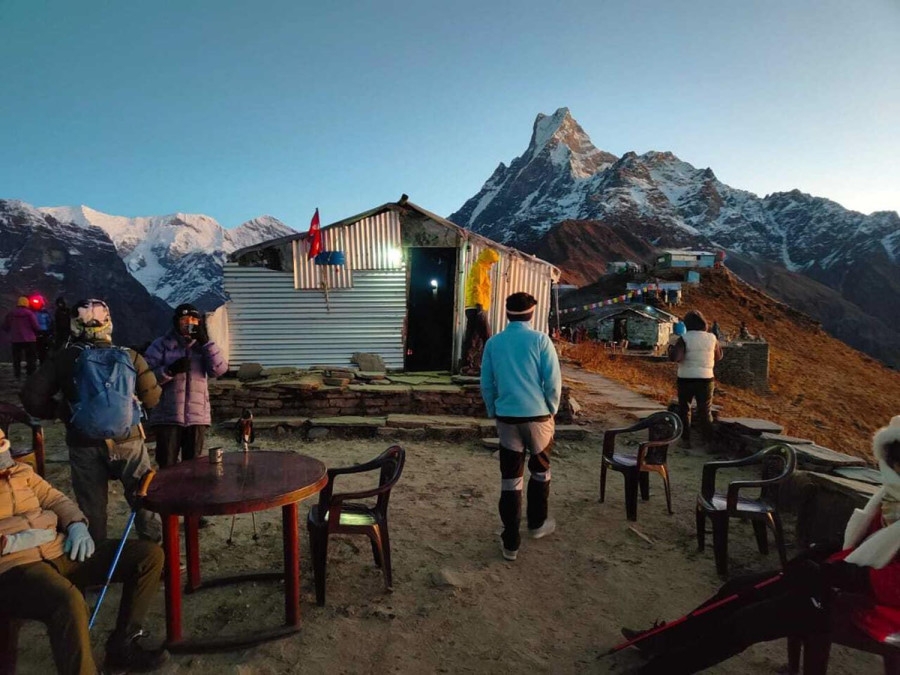
bookmark![]()
We began our ascent along a steep trail cutting through dense forests and lush greenery. ![]()
![]()
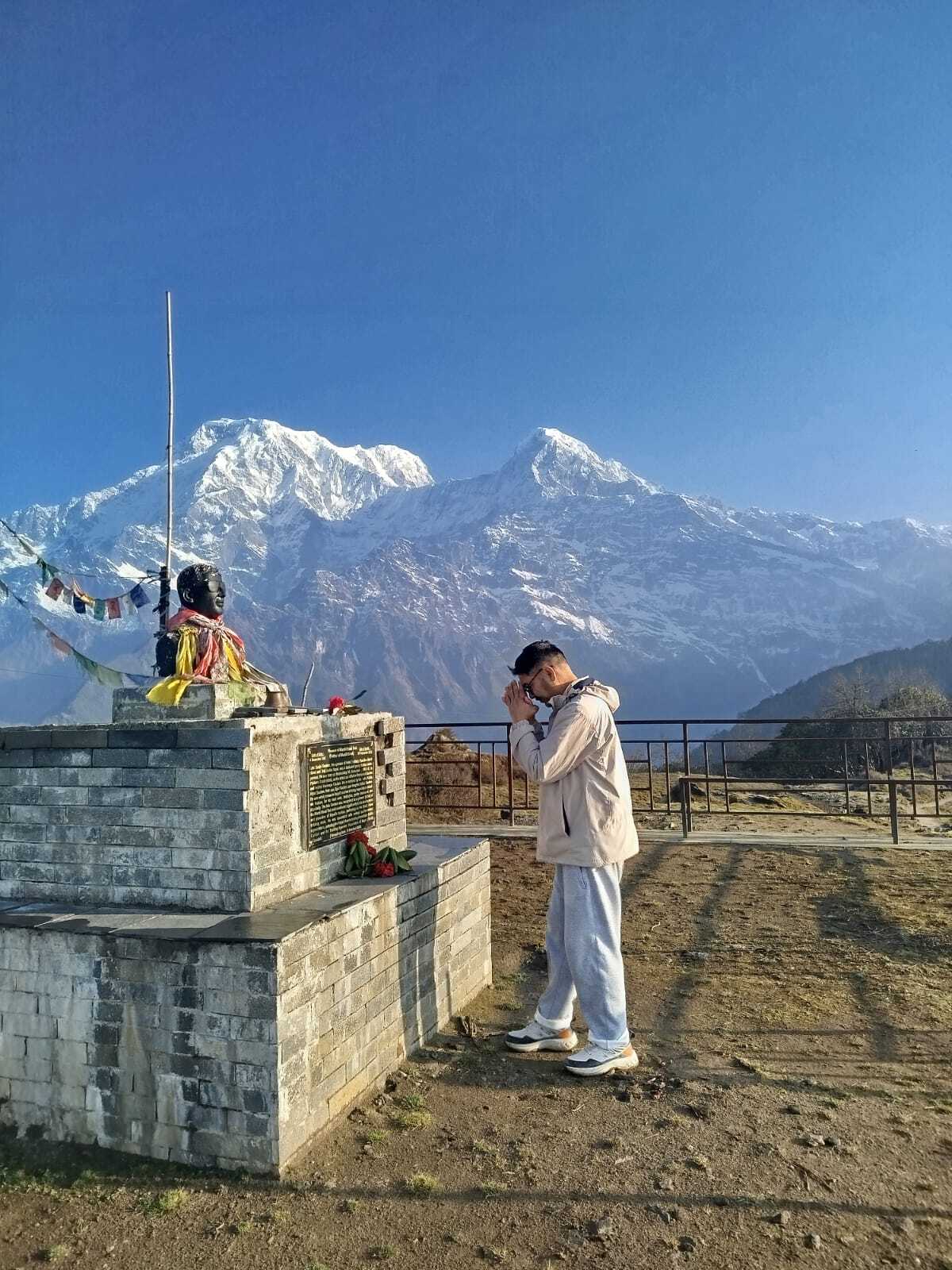
Along the trail stood a statue of Sudip Gautam. We paused, offered flowers, and remembered a young life that had shaped this journey for so many. ![]()
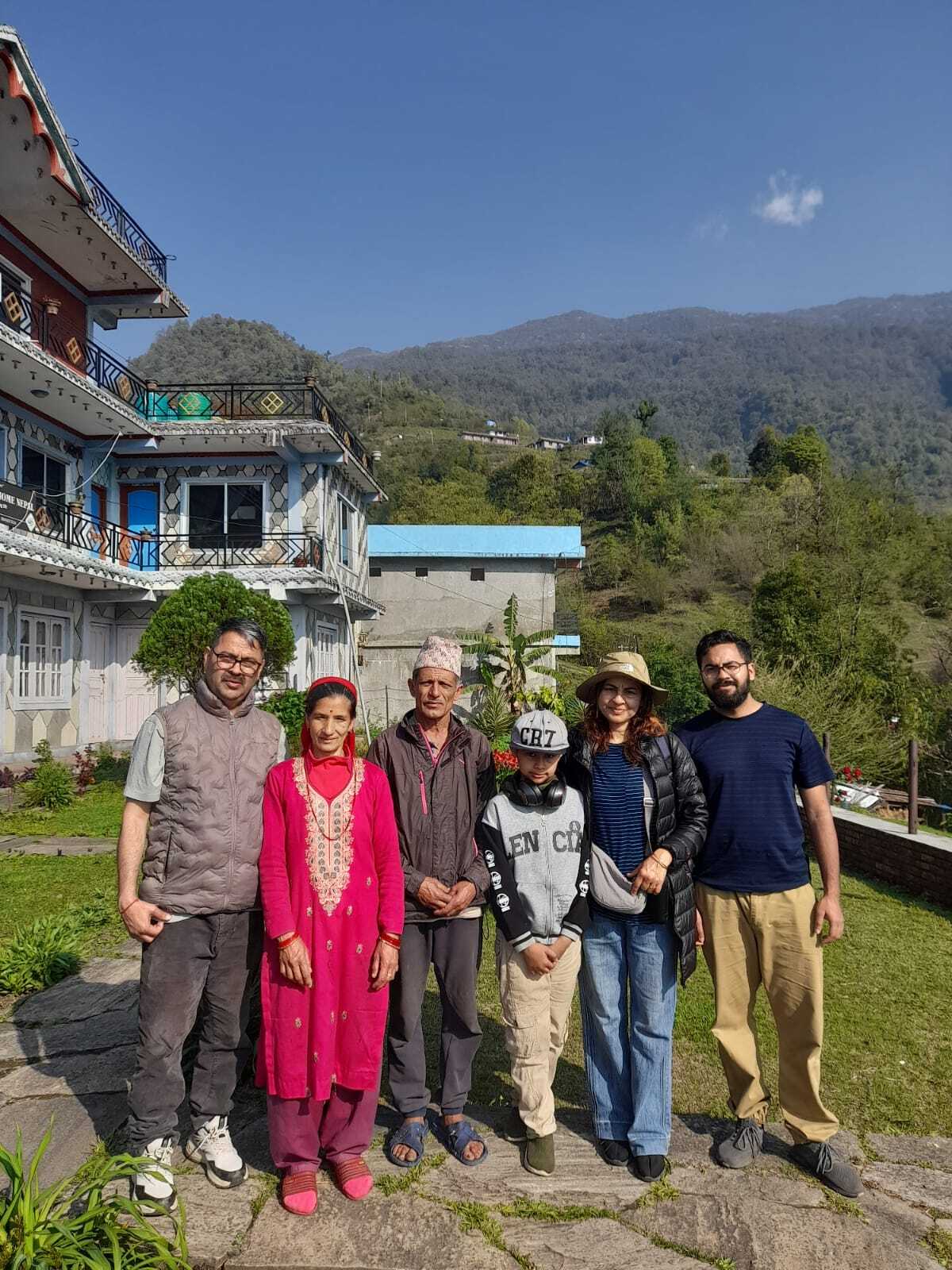
Speaking with Sudip’s parents (second and third, from left). ![]()
![]()
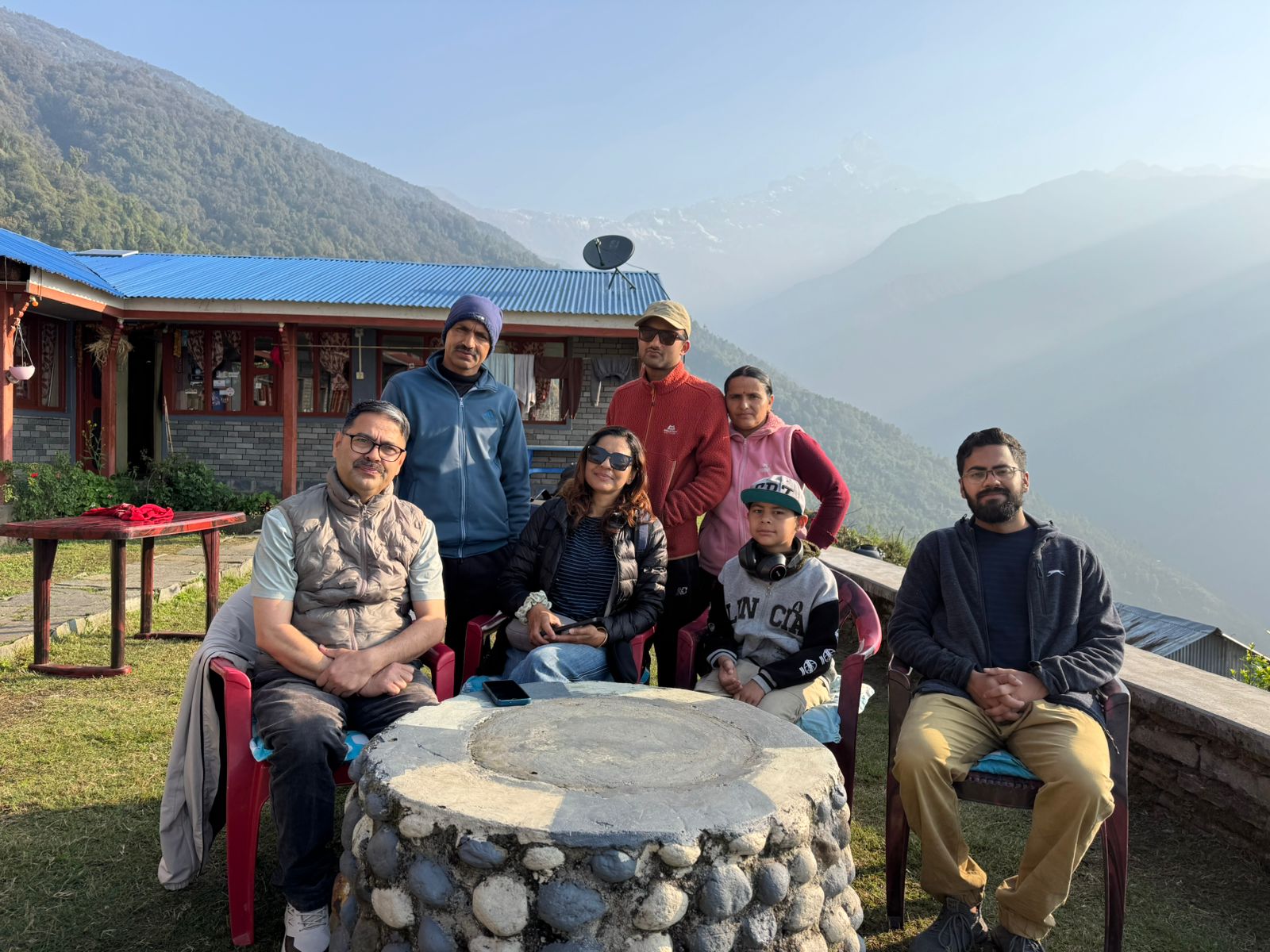
Hari Gautam (back, with his wife and younger son) returned from Hemja, Pokhara, to open Hotel Mardi Venture in his native Sidhing village.
Khim Lal Devkota
Published at : April 25, 2026
Updated at : April 27, 2026 16:27
My journey to Mardi Himal began not on a trail, but in my living room in Bhaisipati, Lalitpur. About two years ago, a man from a simple rural background visited me and addressed me as “Jwai” (son-in-law), a connection rooted in my wife’s ancestral village of Sidhing in Kaski. He had come to Kathmandu to give interviews on major television channels that very day; something quite extraordinary for an ordinary villager. Naturally, I was curious.
He introduced himself as Tanka Prasad Gautam, originally from Sidhing, now Ward No 9 of Machhapuchchhre Rural Municipality. He showed me several online news articles about him and shared his story: he had opened the first tea shop at the Mardi Himal viewpoint, where trekkers affectionately began calling him ‘Chiya Kaka’ (Tea Uncle). Before leaving, he warmly invited me to visit Mardi Himal, a simple invitation that would later turn into a meaningful journey.
The seeds of that journey had been sown even earlier. On August 11, 2022, I was in Pokhara for a provincial-level discussion organised by the Federalism Implementation Monitoring Parliamentary Special Committee of the National Assembly, which I was chairing. After a long day of meetings, a young man named Sudip Gautam approached me. At only 25 years old, he was the founding chairperson of the Mardi Himal Tourism Trek Management Committee and a pioneer who established the first hotel at High Camp.
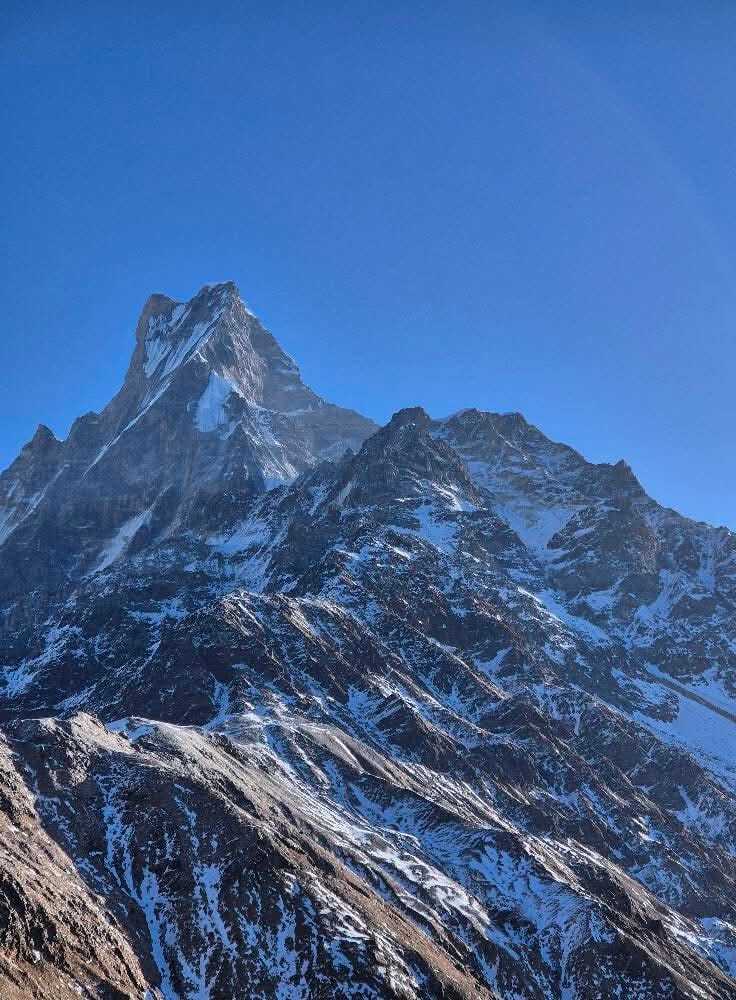
Sudip spoke with urgency and conviction. He described the immense struggle involved in developing the trekking route; navigating difficult terrain, limited infrastructure, and institutional hurdles, particularly from the Annapurna Conservation Area Project. He expressed disappointment that despite the route’s growing popularity, there was little policy support or coordinated effort to promote and sustain tourism in the region. He urged me to raise these issues in Parliament.
At the time, I told him that I would speak only after seeing the situation on the ground. He insisted I visit. Tragically, less than a month later, I heard of his untimely death. The news was widely covered; an unusual recognition for a young entrepreneur from a remote village. It became clear that Sudip had become synonymous with the Mardi Himal trail itself. His death transformed my curiosity into a quiet commitment: someday, I would go.
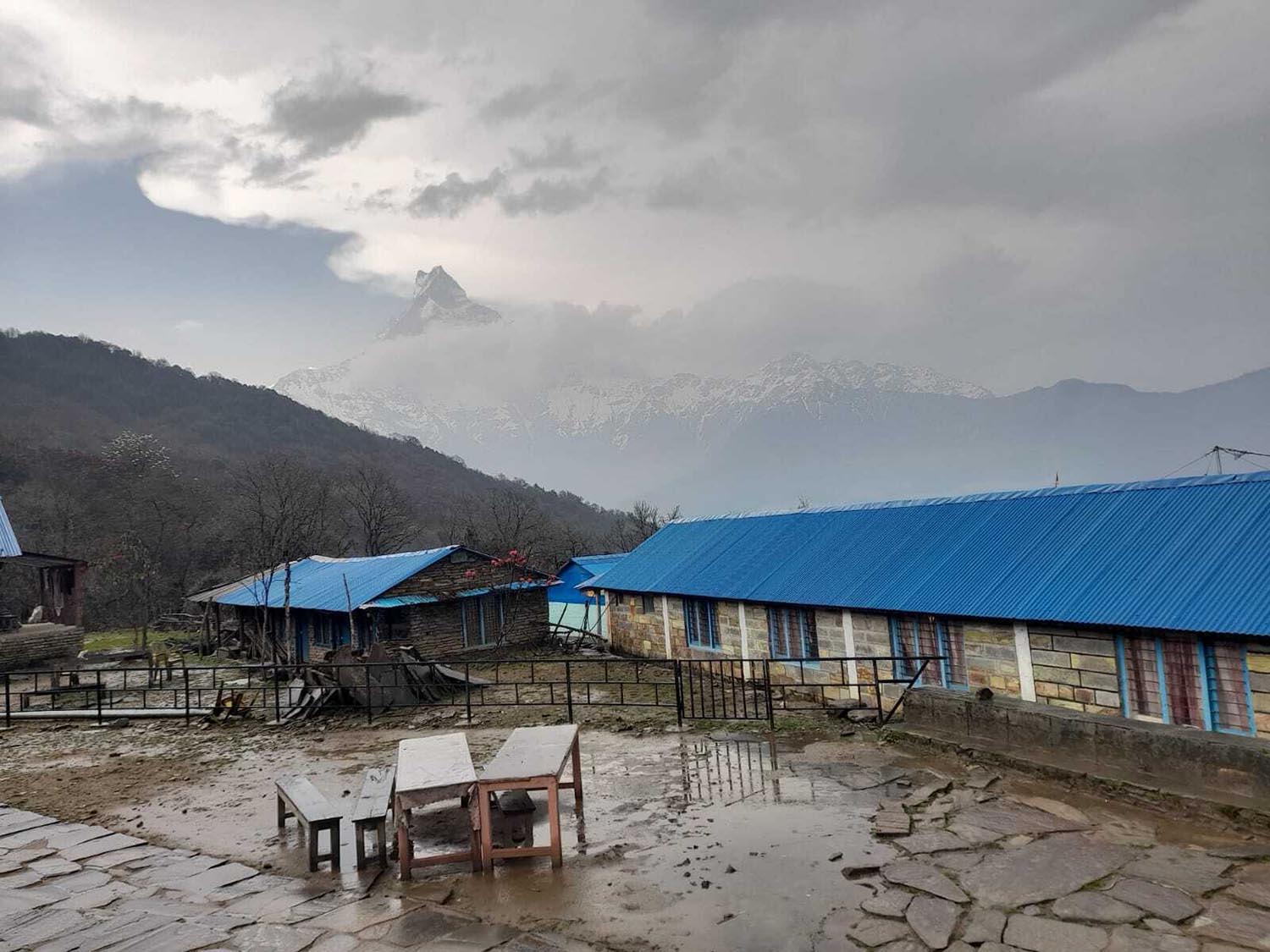
Last week, I finally did. Accompanied by my wife Shanti and our two sons, Ayush and Aayan, we travelled from Kathmandu to Pokhara and then by jeep to Sidhing. We began our ascent along a steep trail cutting through dense forests and lush greenery. After about four hours, we reached Base Camp. It had rained along the way, and the trail was demanding, yet the sight of Machhapuchhre rising close before us made every step worthwhile.
For my family, it was a first trekking experience. Despite the physical strain, the mountains brought a sense of joy that overshadowed fatigue. My younger son, just nine years old, showed remarkable enthusiasm, smiling through every difficult stretch.
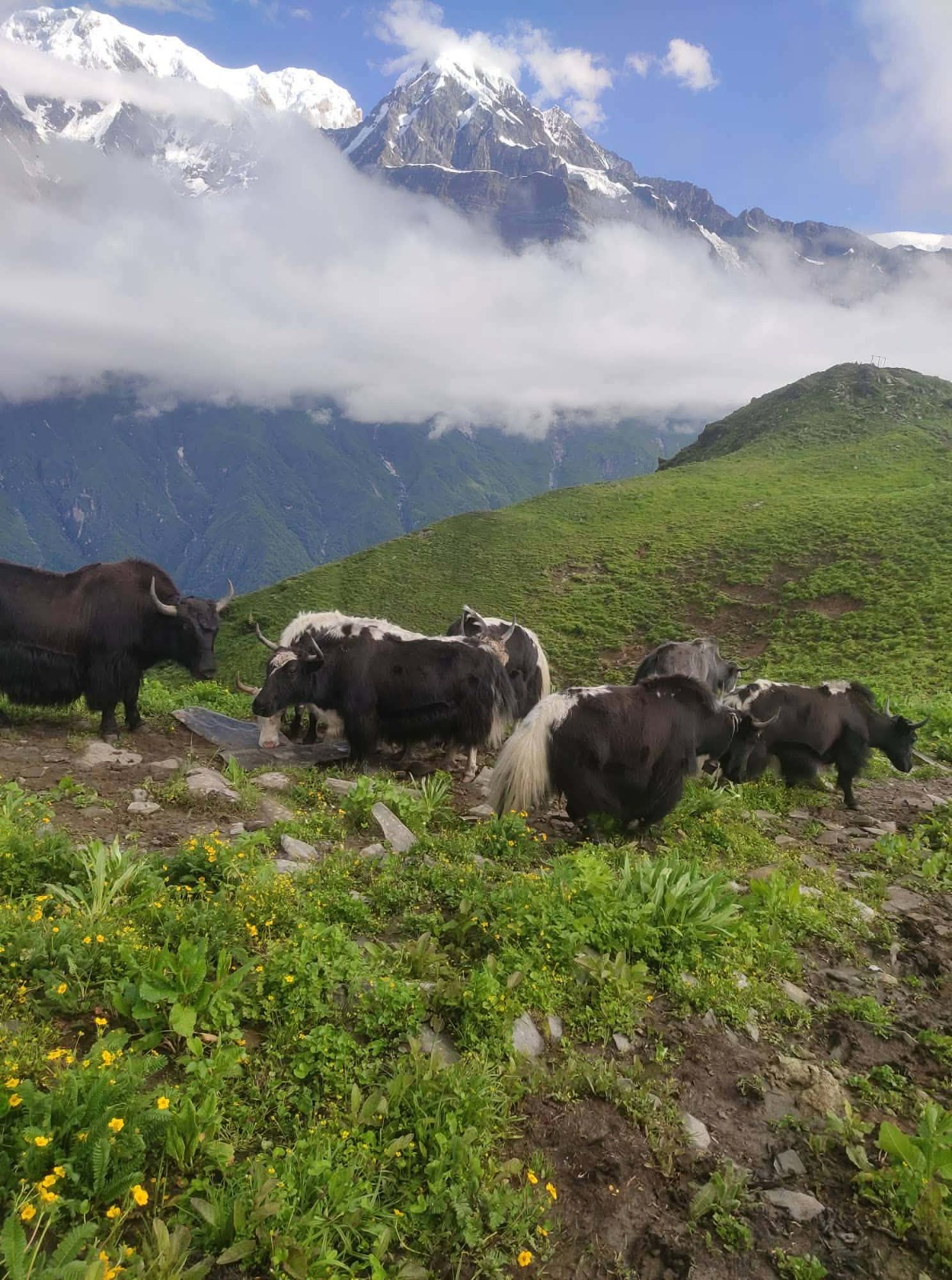
As the weather shifted unpredictably, we decided to push onward to Badal Danda and stay overnight. The effort was rewarded. Under clear skies, the entire Himalayan range revealed itself in breathtaking clarity. That evening, we stayed at a lodge run by returnee migrants who had left stable lives abroad, including permanent residency in Singapore, to invest in local tourism. Their stories echoed a broader trend: young Nepalis choosing to build livelihoods at home through tourism.
The next morning, we set out early for High Camp. However, within half an hour, my younger son began to suffer from altitude sickness, forcing my wife and elder son to return with him. With concern weighing on my mind, I continued uphill with Chiya Kaka. Along the trail stood a statue of Sudip Gautam. We paused, offered flowers, and remembered a young life that had shaped this journey for so many. We reached High Camp after about ninety minutes. The mountains stood in all directions, majestic and silent. Yet, given my son’s condition, we decided to return from there.
At the high camp, we met Raj Kumar Tamang, chairperson of the Mardi Himal Trekking Route Management Committee, who also runs Fishtail Lodge. Over tea, he shared the realities behind the growing tourism numbers. While the trail is attracting increasing numbers of visitors, local entrepreneurs face deep uncertainty.
Hotel operators live with the constant fear of eviction. Despite repeated requests to the government for clarity on land use, temporary settlement, or regulatory frameworks, their concerns remain unaddressed. Many are willing to pay taxes and contribute formally to the economy, yet lack legal recognition and security. This policy vacuum discourages investment and undermines the very foundation of sustainable tourism.
It is precisely for this reason that Chiya Kaka chose not to establish a hotel at High Camp, despite his pioneering role there. Instead, he invested in his own land in Sidhing, where he now runs a modest but growing business, ‘Hotel Mardi Chiya Kaka’.
The descent and the call for economic retention
The descent was a gruelling reminder of the physical toll these mountains exact. Gravity is often harder on the knees than the ascent, and as we limped back toward Sidhing, I noticed a troubling trend. Most trekkers were rushing past the village, desperate to reach the familiar comforts of Pokhara by nightfall.
This is a missed opportunity for local economic retention. Sidhing is not just a transit point; it is a destination. By staying in these rural wards, tourists ensure that their money stays in the community rather than flowing directly back to urban centres. We finally reached Sidhing at 7:00 pm and checked into Hotel Mardi Venture. The warmth of hot water, a fire-lit hearth, and a meal of local chicken curry provided a sense of comfort that no city hotel could replicate.
The Machhapuchhre Rural Municipality Ward No 8 and Ward No 9 Chairpersons, Ram Gurung and Rajendra Chhetri, who had been following our trip, joined us for the night meal. Their presence was a reminder that, within the federal structure, local government is the first and most important responder to people’s needs. The Municipality Chair, Min Bahadur Gurung, and Deputy Chair, Sita Adhikary, had also encouraged me to visit and raise their concerns in Parliament; they had met me during my tenure in the National Assembly.
The bigger picture and a way forward
This disconnect between grassroots initiative and policy support is striking. Mardi Himal (5,587 m), officially opened as a trekking route in 2012, has rapidly become one of Nepal’s emerging destinations. According to the Annapurna Conservation Area Project, 48,513 foreign tourists visited the Annapurna region in March 2026 alone; a clear indication of its growing appeal.
This influx supports thousands of livelihoods, including those of guides, porters, hotel operators, and transport service providers. Yet, much of the economic benefit leaks out. A majority of trekkers rush back to Pokhara, bypassing villages like Sidhing, where quality accommodation and authentic cultural experiences are available.
Encouraging tourists to stay even one night in these rural settlements could significantly strengthen the local economy. It would distribute benefits more equitably, reduce pressure on urban centres, and deepen visitors’ experience of Nepal beyond the mountains.
Mardi Himal, therefore, represents both promise and paradox. It is a story of grassroots entrepreneurship; of individuals like Sudip Gautam, who pioneered infrastructure, and Chiya Kaka, who transformed a simple tea stall into a symbol of hospitality. It is also a story of returnee migrants, local governments, and communities striving to build a sustainable tourism economy.
But it is equally a story of policy neglect. Without clear government frameworks, infrastructure support, and institutional recognition, the very people who built this destination remain vulnerable. Tourism cannot be sustained on individual effort alone; it requires a supportive ecosystem that aligns policy with practice.
Mardi Himal is not just about landscapes. It is about people: the pioneers, the risk-takers, and the communities who bring these mountains to life. If managed well, it can become a model of inclusive, decentralised, and community-based tourism. If neglected, it risks becoming another example of growth without governance.
For those planning to visit, there is a simple choice that can make a difference: do not rush back to Pokhara. Stay in villages like Sidhing. Experience the local culture, support local businesses, and ensure the benefits of tourism reach those who made the journey possible. Because in the end, the true beauty of Mardi Himal lies not only in its peaks, but in the people who call it home.
Khim Lal Devkota
Devkota is an expert in federalism.




Most Read from Culture & Lifestyle

It’s a bird … it’s a plane … it’s the Indian ambassador’s farewell tweets

How should Nepal navigate a world in reorder? Rajib Upadhya on geopolitics and foreign policy

How Anup Poudel took Nepali cinema to Cannes

A Nepali photographer rediscovers Calcutta after decades

Facebook friends: What do cross-gender friendships look like in Nepal?
Editor's Picks

Constitutional Bench caught in seniority, ‘pick and choose’ dispute

A Dom boy’s long road to becoming a doctor

From blankets to handmade dolls, two foreign women bring comfort to flood survivors

News Analysis: When institutional defence exposes institutional fault lines
It’s a bird … it’s a plane … it’s the Indian ambassador’s farewell tweets
E-PAPER | October 14, 2026

×