



 14.69°C Kathmandu

Sat, Oct 24, 2026
Money
Nepal will seek delayed LDC graduation citing economic constraints
Government officials and private sector leaders say Nepal lacks the economic strength, trade preparedness, and investor confidence needed to graduate from Least Developed Country status in 2026.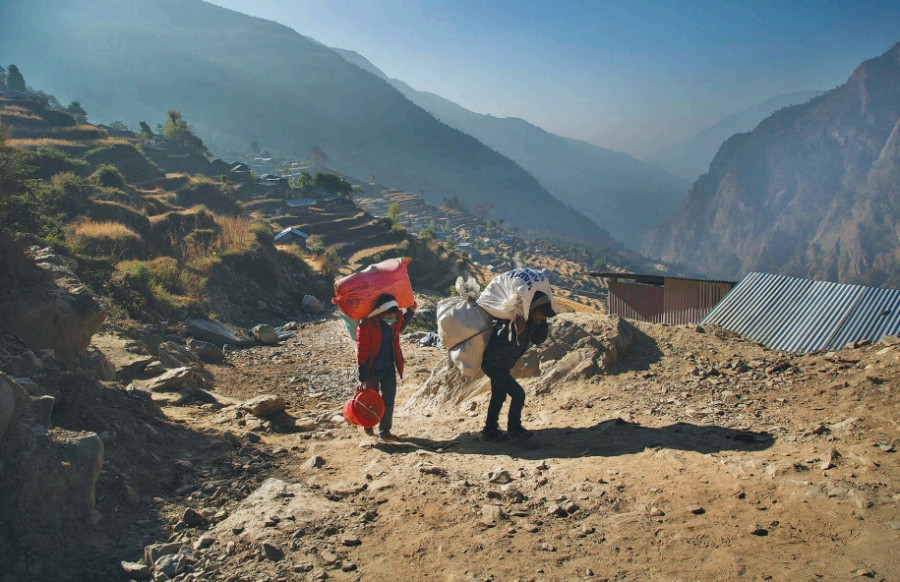
bookmark
Krishana Prasain & Sajana Baral
Published at : May 16, 2026
Updated at : May 16, 2026 21:23
Kathmandu
Nepal is preparing to ask the United Nations to defer its scheduled graduation from the category of Least Developed Countries by three years, amid concerns that the country is not economically prepared to forgo the trade and development privileges tied to its current status.
The Balendra Shah government is shortly sending a formal letter seeking a deferral of the UN’s earlier decision to schedule Nepal’s graduation for November 2026.
An official at the Office of the Prime Minister and Council of Ministers said the government decided to seek an extension, citing concerns over the loss of trade and other preferential facilities Nepal currently enjoys as an LDC, rising economic vulnerabilities triggered by tensions in West Asia, Bangladesh’s move to seek a similar deferral despite being on the same graduation track, and mounting pressure from Nepal’s private sector.
The official said Prime Minister Shah and Finance Minister Swarnim Wagle had discussed the matter and agreed to send the letter. “The government’s assessment shows that at least two to two-and-a-half years will be needed to build a strong economic foundation for the country,” the official said.
“The preparation to request a postponement is also intended to ensure that, once the graduation decision is implemented, Nepal does not face the risk of slipping back.”
The United Nations Economic and Social Council (ECOSOC) has also been informed about the proposal to defer the deadline even before a formal letter is dispatched. Currently, Lok Bahadur Thapa represents Nepal as the president of ECOSOC.
The National Planning Commission has already submitted its recommendation to the government to seek a three-year extension to the graduation timeline. According to an official at the finance ministry, “As Finance Minister Swarnim Wagle has also stated in Parliament that the country should move forward only after improving its economic condition, we have suggested seeking a deferment,” an official at the National Planning Commission said on condition of anonymity. “Preparations are moving accordingly.”
According to the official, the commission has recommended delaying the graduation process, and the Ministry of Foreign Affairs is preparing to take the matter forward.
Calls for postponement have grown louder in recent months as Nepal struggles with low productivity, sluggish growth, declining business confidence, and economic uncertainty intensified by the West Asia conflict.
The private sector has also urged the government to delay graduation.
The Federation of Nepalese Chambers of Commerce and Industry (FNCCI), the country’s apex private-sector body, has asked the government to formally seek a reassessment from the United Nations and request at least a three-year extension.
“The LDC Graduation Smooth Transition Strategy published by the National Planning Commission itself shows that Nepal still has significant implementation work left,” said Paras Kharel, executive director of the South Asia Watch on Trade, Economics and Environment (SAWTEE). “Looking at Nepal’s level of preparation, an extension appears necessary.”
The commission published the LDC Graduation Smooth Transition Strategy in February 2024 to prepare the country for what it described as a smooth, sustainable, and irreversible transition out of LDC status.
However, experts say many crucial steps outlined in the strategy remain incomplete.
Studies and negotiations related to free trade agreements with different countries have yet to begin in earnest. Nepal also still needs to ratify several international conventions required to retain duty-free market access to the European Union after graduation.
Kharel said Nepal must also negotiate special agreements such as economic partnership agreements and preferential trade arrangements, all of which require extensive groundwork, institutional capacity, and stronger negotiating ability.
In the pharmaceutical sector, Nepal will lose certain flexibilities currently enjoyed by LDCs, including provisions allowing the production of generic drugs without patent restrictions. Experts also say Nepal remains weak in both market and product diversification.
Economists argue that Nepal’s lack of preparedness is reflected in broader macroeconomic indicators. High liquidity in banks, low interest rates, and weak credit demand suggest low investor and business confidence.
Though such indicators are not direct criteria for LDC graduation, experts say the broader economic and political context matters.
Industry insiders warn that graduation could severely affect Nepal’s textile and handicraft sectors, particularly garments, pashmina, and carpets, due to higher tariffs and stricter rules of origin in export markets.
Pashupati Dev Pandey, president of the Garment Association Nepal, said the country’s garment industry would face serious challenges without continued international support mechanisms.
“The garment sector alone could lose more than 100,000 jobs,” Pandey said. “It would be a major relief for the industry if Nepal defers graduation for now.”
Concerns over Nepal’s readiness intensified after the political unrest and destruction linked to last year’s Gen Z movement.
In an article titled “Reconsidering Nepal’s Imminent Graduation from LDC Status,” published in September last year, Kharel of SAWTEE argued that the deaths, destruction, and economic disruption caused by the movement had compounded Nepal’s vulnerabilities.
“This warrants a reconsideration of the decision to graduate—beginning with a serious but swift discussion among stakeholders, followed by the collection of evidence to establish a strong case before the new government, which can formally seek a deferral with the United Nations,” the article stated.
Graduation from LDC status entails the partial or complete loss of international support measures such as preferential market access, concessional financing, and exemptions from patent protections for pharmaceuticals.
To graduate, a country must meet thresholds in at least two of three criteria—gross national income per capita, the Human Assets Index, and the Economic and Environmental Vulnerability Index—in two consecutive UN reviews.
Experts note that Nepal has never met the income criterion and was on track to be the only country to graduate from the LDC category without crossing the minimum income threshold of $1,306 per capita.
In the 2024 review, Nepal reportedly fell short of the income benchmark by just six dollars. Analysts say that despite being considered for graduation for over a decade, Nepal’s inability to meet even the minimum income requirement reflects deep structural weaknesses in the economy.
LDCs typically suffer from low productive capacity, and recent destruction of physical infrastructure—an important component of the UN’s productive capacity index—has further weakened Nepal’s standing.
The tourism sector, one of Nepal’s largest foreign exchange earners and employers, is also facing its most serious challenge since the Covid-19 pandemic.
Foreign investment has long been weak in Nepal, and economists say sustained growth will require far greater private-sector investment than the country currently attracts.
Only about a third of approved foreign investments are eventually realised, and analysts say images and videos of political unrest circulating on social media have further damaged Nepal’s image as a safe investment destination.
Concerns deepened after Nepal was placed on the Financial Action Task Force’s (FATF) grey list in February 2025, just months before the unrest, adding to worries over governance and financial transparency.
Experts say Nepal has failed to fully utilise the benefits available to LDCs over the past 35 years.
Nepal could have graduated as early as 2018, but requested postponements following the 2015 earthquake and the Covid-19 pandemic in 2020. But successive governments failed to use the additional time to strengthen the country’s preparedness.
Nepal first met the graduation criteria in 2015 and continued to qualify in the subsequent triennial reviews in 2018, 2021, and 2024 conducted by the UN Committee for Development Policy.
But with the economy weakened by repeated crises, political uncertainty, and declining investor confidence, many experts now believe Nepal’s planned transition to developing-country status needs to be reconsidered.
Krishana Prasain
Krishana Prasain is a business reporter for The Kathmandu Post covering markets. Before joining The Kathmandu Post in 2018, she spent 3 years in New Business Age magazine covering business.
Sajana Baral
Baral is a journalist with Kantipur Daily, covering communications and information technology.




Most Read from Money

Why does an hour long flight to Dhangadhi cost more than a flight to New Delhi?
Nepal travel agents threaten to stop selling Thailand trips over visa rules
Malaysia rejects Nepal’s demand to open recruitment to all manpower agencies
No school, but a graduation cap for women dairy farmers
Nepal arrests four medical service providers as Malaysia recruitment row deepens
Editor's Picks




E-PAPER | October 24, 2026

×