Is Nepal’s grand old party heading for another breakup?
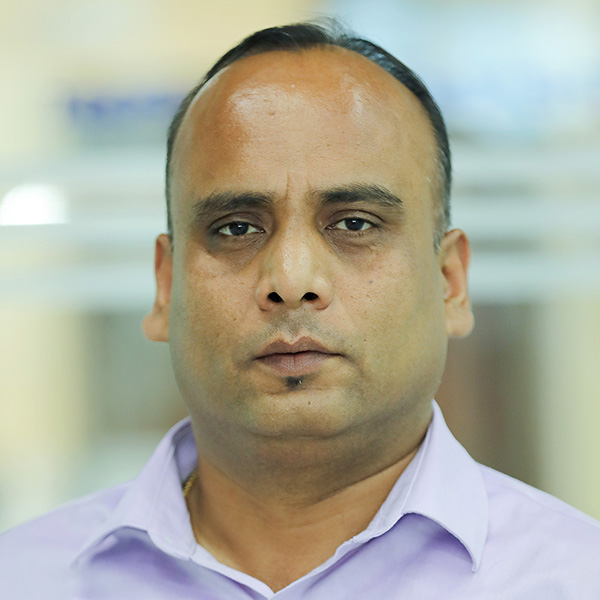
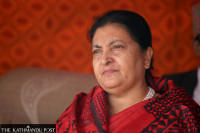
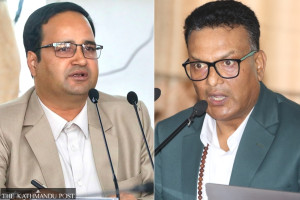
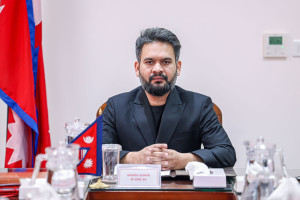
The Deuba-Khadka camp is weighing a new party as tensions with Gagan Thapa intensify over leadership, convention and Congress’s election debacle.(From left) Purna Bahadur Khadka, Gagan Thapa and Bishwa Prakash Sharma. Post file photo
All is not well with Nepal’s grand old party, Nepali Congress.
After the Supreme Court recognised the Gagan Thapa faction as the official Nepali Congress on April 17, it appeared that the feud inside the party had been put to rest. But that has not been the case. Multiple efforts to keep Congress united are yielding no results, party leaders say.
Ending the three-month-long dispute over the party’s legitimacy, the Supreme Court recognised Thapa-led Congress as official one last month, paving the way for rival factions to carry out parallel activities across the country.
The party is heading towards the split, said former vice president Purna Bahadur Khadka, who is leading the group of dissident voices inside the party. The group has been organising parallel activities and putting pressure on the Thapa-led Congress, saying Thapa has failed to become the president of the party.
A leader close to the Thapa camp told the Post that the Khadka camp is all set to form a new party on May 29, coinciding with the Republic Day.
For party unification, the Khadka camp had demanded that the present central working committee led by Thapa be dismantled and a new one be formed to convene the party’s 15th general convention.
The camp also proposed the party central committee be constituted including members from both sides. It also demanded the 15th general convention of the party be organised under the leadership of Sher Bahadur Deuba by dismantling the present central committee led by Thapa.
Deuba, who was the party president until mid-January is now living in Hong Kong after the present government sought an arrest warrant against him and his wife in a money laundering probe.
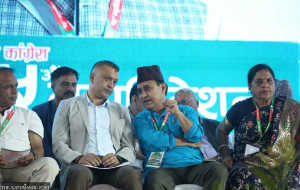
Speaking at a party event in Surkhet on Saturday, Khadka stated that, once Nepali Congress was divided due to Girija Prasad Koirala and it was also thanks to him that the party was later unified. Following the split back then, another Nepali Congress leader Sher Bahadur Deuba, who was the prime minister at the time, formed the Nepali Congress (Democratic) in 2002. Citing this, Khadka added that even now, it is entirely up to President Thapa whether to unite or split the party.
Khadka mentioned that he had expressed the same view a few days ago during discussions with Thapa and the party’s Vice President Bishwa Prakash Sharma.
“The party is on the verge of division, a path I have said we should not go down to,” Khadka said while recalling his conversation with Thapa. “Whether to unite or split the party is your [Thapa’s] responsibility.”
Khadka added, “After the Supreme Court gave legitimacy to the Thapa-led Congress after the Special Convention, I urged him [Thapa] to become the president of all Congress leaders and cadres.”
The present discontentment inside the party emerged after Thapa with the support of another leader Sharma called the special convention of the party in January. The convention elected Thapa as party president, defenestrating Deuba, who had been leading the party since March 2016.
In order to manage the factional feud, Thapa gave tickets to some senior leaders of the Deuba-Khadka faction as well as another faction led by Shekhar Koirala for the March election. Considered a “trouble shooter”, the Koirala faction has failed to bring two factions together for party unification.
Thapa’s efforts ahead of the election couldn’t quite close the gap between the two factions. Instead, the Deuba-Khadka camp kept on putting pressure on the Thapa faction for an honourable party unity.
Despite back-channel talks and discussions, no progress has been achieved so far on bringing two factions together, Congress leaders say. Both camps have been organising parallel gatherings in all provinces in recent weeks.
The Deuba-Khadka camp now seeks to open a new contact office and is looking for a house for rent, a leader said. “Eventually, that will be our new party office if the factions fail to unite,” the leader said.
Recently, Thapa held talks with Khadka and discussed a roadmap on how to keep the party intact. Thapa also held a similar kind of meeting with Koirala, who is reportedly a bit positive and soft towards Thapa. “The onus lies on Thapa and he should come up with a proposal for the party unity,” Koriala told the Post. “I am ready to sacrifice anything for party unity.”
The bone of contention now is the Khadka faction’s demand to form an organising committee to hold the 15th general convention of the party. Thapa is reportedly not positive about the demand. There is also dispute inside the Congress regarding the distribution and re-distribution of active party membership. Khadka camp has rejected the existing distribution model.
Moreover, the recent appointment of 19 Congress leaders as central working committee members has also added to the dispute inside the Congress.
Sharma, vice president of the party, admits that there is dispute and discord inside the party, while arguing that “there are certain models which can apply for the party unity.”
“Each side has its own separate model for resolving the dispute,” Sharma said. “Efforts are underway to close the gap.”
The Khadka camp has also blamed the Thapa-led Congress for the party’s humiliating defeat in the March election. Congress was reduced to 38 seats in the polls that saw the Rastriya Swatantra Party come close to a two-thirds majority.
Congress leader NP Saud, also the former foreign minister, said there is a slim chance for party unity now.
“The way both camps are engaging in parallel power exercises, I doubt the possibility of party unity now,” Saud said. “I do not know where these separate gatherings will take us.”
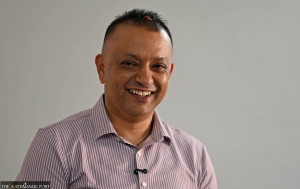
Anil Giri is a Chief Sub Editor covering diplomacy, international relations and national politics for The Kathmandu Post. Giri has been working as a journalist for more than two decades, contributing to numerous national and international media outlets.




 18.34°C Kathmandu