Fresh uncertainty has engulfed the political landscape of Madhesh with the Janamat Party on Tuesday withdrawing its support to the Nepali Congress-led provincial government. This move triggered intense manoeuvring to form a new coalition, though rifts in the Janamat Party have complicated the power struggle.
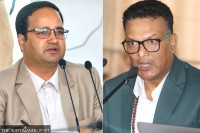
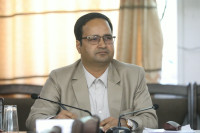
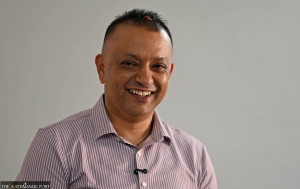
The decision, directed by Chairman CK Raut, has split the Janamat Party into two factions. Under Raut's directive, nine provincial assembly members formally withdrew support to Chief Minister Krishna Prasad Yadav. Raut swiftly appointed Chandan Singh, the party's general secretary and chief whip in the provincial assembly, as the new parliamentary party leader on Tuesday afternoon.
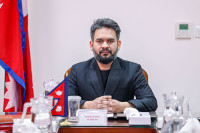
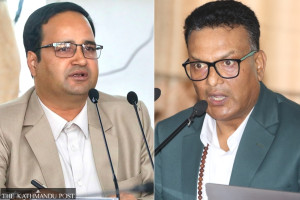
However, incumbent ministers representing the Janamat—Finance Minister Mahesh Prasad Yadav and Sports and Social Welfare Minister Basanta Kushwaha—refused to vacate their posts. In a defiant letter to Province Head Surendra Labh Karna, Finance Minister Yadav insisted the government still holds the party's official support.
"I remain the parliamentary party leader of the Janamat Party. Any decision made in a meeting I did not convene is unauthorised,” the minister’s letter stated. “The official support for Chief Minister Krishna Prasad Yadav continues, and I request the administration to ignore these external claims."
The Janamat Party leadership has threatened disciplinary action against the ministers if they do not resign. Meanwhile, newly appointed parliamentary party leader Singh is already in talks with the Janata Samajbadi Party (JSP), the Lokatantrik Samajbadi Party (LSP), and the Nepali Communist Party to forge a new alliance.
While the Janamat pushes for immediate change, other stakeholders remain cautious. Newly appointed parliamentary party leader Singh has intensified talks with political stakeholders to form a new coalition following a ‘green signal’ from the CPN-UML.
According to a JSP provincial lawmaker, the party is closely monitoring the shifting political landscape triggered by Janamat’s withdrawal. "Informal discussions are underway. However, a change in government may not be decided solely by the leaders and members present in Janakpur. All parties are currently in consultation with their central leadership,” said the lawmaker, asking not to be named to discuss the developments.
Reporters were summoned to the Province Head’s office at 2:30 pm, under the impression that the formal letter of withdrawal would be submitted. Despite a large media presence, leaders kept the press waiting until nearly 4:00 pm, repeatedly claiming over the phone that they were “just about to leave”. According to a provincial assembly member from the Nepali Communist Party, the delay in reaching a final understanding is due to ongoing efforts to build a consensus among the coalition partners regarding the transition.
Meanwhile, Lalbabu Raut, the JSP general secretary and former chief minister, clarified that his party has not yet held any discussion on a change of the provincial government. "The party has made no decision regarding the provincial government. For now, the JSP's support for the Congress-led coalition remains intact," he told reporters in Janakpur.
The Janamat Party justifies the move by citing the administration's inefficiency. "The current government failed to spend the budget and showed no urgency in strengthening federalism," Chandan Singh told the Post. "Madhesh has not felt the presence of this leadership. We aim to form a new government led by Madhesh-based forces."
The province has seen a cycle of instability after then-chief minister Satish Kumar Singh resigned during the Gen Z movement. Following Singh’s ‘forced’ removal by his own Janamat Party, Jitendra Sonal of the LSP stepped in as chief minister. However, Sonal was soon ousted when two Maoist lawmakers, Rahbar Ansari and Mala Karna, rebelled during his vote of confidence.
The situation took a controversial turn when then-Province Head Sumitra Subedi Bhandari appointed UML parliamentary party leader Saroj Kumar Yadav as chief minister. The appointment—conducted at dawn in a private cottage in Mahottari under the premise that the UML was the largest party—was challenged in the Supreme Court.
The court subsequently declared Yadav’s appointment unconstitutional and ordered him to seek a vote of confidence. Sensing he would lose the floor test, Yadav resigned. This paved the way for the current government led by Nepali Congress parliamentary party leader Krishna Prasad Yadav, supported by a seven-party coalition some five months ago.
The 107-member provincial assembly currently has 101 active members. The UML holds 24 seats, the JSP 26, the Congress 22, the Nepali Communist Party 15, and the Janamat 12. The Nagarik Unmukti Party and the Nepal Sanghiya Samajbadi Party have one seat each. With several members suspended or resigned to contest federal elections, the threshold for a majority is 51.
Abhiram Sharma of the LSP, Saroj Singh Kushwaha of the JSP, and Kanchan Bichchha of the Rastriya Prajatantra Party remain suspended. Meanwhile, Satish Kumar Singh of the Janamat, Bharat Prasad Sah and Rahbar Ansari of the Nepali Communist Party resigned from their positions as provincial assembly members to contest the House of Representatives elections.




 20.28°C Kathmandu