Taskforce floats directly elected president, overseas voting in constitutional reform push
Panel formed to prepare a charter revision working paper has proposed sweeping changes to the governance system, electoral model, judiciary and federal structure. Members of the taskforce during a discussion at Singha Durbar last week. RSS
A government taskforce preparing a working paper on constitutional amendment has floated proposals ranging from a directly elected executive president and voting rights for Nepalis abroad to the reappointment of judges at all levels of courts.
The recommendations are part of 54 proposed agendas prepared by the “Taskforce for Drafting a Discussion Paper on the Constitution Amendment-2026”, which is currently consulting political parties, legal experts, former officials and other stakeholders before finalising its report.
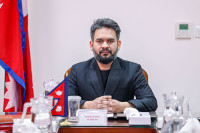
The panel, coordinated by Prime Minister Balendra Shah’s adviser Asim Shah, has grouped the proposals under seven broad categories, including governance, the electoral system, federalism, provincial and local structures, the judiciary and constitutional bodies.
Taskforce officials say the proposals are not final recommendations but discussion points aimed at collecting wider political and public feedback on possible constitutional reforms.
“These are agendas prepared for discussion,” Shah said. “The purpose is to collect suggestions from different sectors and build a broader consensus.”
The panel has proposed seven agendas related to the governance system, eight on the electoral framework, two on federalism, eight concerning provincial structures, three related to local governments, 11 on the judiciary, six on constitutional bodies and nine miscellaneous issues.
Among the most politically significant proposals is a review of Nepal’s current system of governance.
The taskforce has suggested discussions on whether Nepal should continue with the existing parliamentary model, move towards a fully parliamentary system, adopt a modified parliamentary structure or shift to a directly elected executive president.
The proposal comes amid growing frustration among major parties over chronic political instability, frequent changes in government and coalition bargaining.
The panel has also proposed debating whether ministers should continue to be selected from among elected lawmakers or whether subject experts should be appointed to the Cabinet.
Under the current constitutional arrangement, the prime minister is elected by Parliament, while ministers are generally selected from among lawmakers. The constitution, however, allows non-lawmakers to serve as ministers for up to six months.
The directly elected presidential system has remained one of the most contentious constitutional issues in Nepal since the promulgation of the constitution in 2015. Supporters argue that such a model could provide political stability and stronger executive leadership, while critics warn it could weaken parliamentary accountability and centralise power.
The taskforce has not endorsed any single model but has instead included multiple options for debate.
Electoral reform forms another major part of the proposed amendment agenda.
The panel has proposed discussions on whether Nepal should continue with the existing mixed electoral system, adopt a fully proportional representation model or move towards a fully direct election-based system.
Nepal currently elects 165 lawmakers through the first-past-the-post system and 110 through proportional representation.
The panel has also proposed introducing a “None of the Above” (NOTA) option in elections, granting voters the right to recall elected representatives and ensuring voting rights for Nepalis living abroad.
The issue of overseas voting has remained unresolved for years despite repeated public demand and a Supreme Court directive instructing the government to make arrangements for Nepalis abroad to vote.
Successive governments have argued that legal and administrative hurdles have delayed implementation.
The proposals also include discussions on regulating coalition culture during elections and reviewing the role of the National Assembly chairperson and vice-chairperson.
Another key focus area is federalism.
The taskforce has proposed discussions on strengthening administrative and financial federalism across the federal, provincial and local levels.
Since the implementation of the federal structure, provincial and local governments have repeatedly complained about inadequate authority, limited financial autonomy and overlapping jurisdictions.
The panel has proposed reviewing how powers and resources are distributed among the three tiers of government.
The proposals concerning provinces include directly elected chief ministers and provincial ministers, reducing the number of ministries, reviewing the number of provinces and elected representatives and clarifying the role of provincial chiefs.
The taskforce has also proposed discussions on what should happen if provincial chiefs fail to authenticate bills passed by provincial assemblies.
At the local level, the panel has suggested discussions on improving accountability and governance effectiveness.
It has also raised questions about whether local elections should continue to be party-based or shift towards a non-partisan model.
Another proposal concerns reforms to local judicial committees, which have often faced criticism over their effectiveness and legal competence.
Judicial reform forms one of the largest sections of the proposed amendment agenda.
The taskforce has proposed reappointing all judges at the Supreme Court, High Courts and District Courts as part of efforts to reduce political interference and strengthen judicial independence.
The proposal is expected to trigger strong reactions within legal and political circles, particularly because it directly concerns judicial continuity and constitutional safeguards.
The taskforce has also proposed structural reforms to the Judicial Council and Constitutional Council.
Among the issues raised is whether the law minister, a jurist appointed on the recommendation of the prime minister and a representative of the Nepal Bar Association should continue to remain members of the Judicial Council.
The proposals also question whether the chief justice should continue as a member of the Constitutional Council.
The panel has further proposed discussions on the qualifications, tenure, age limits and ethical standards of the chief justice and other judges.
Another major issue concerns allegations of irregularities, political influence and the role of middlemen within the judiciary.
The taskforce has proposed measures aimed at ensuring a more independent, impartial and competent judicial system.
It has also suggested expanding the authority of High Courts to reduce the increasing caseload at the Supreme Court.
The necessity of the constitutional bench has also been questioned in the proposals.
The Nepal Bar Association has long argued that several structural arrangements related to judicial appointments and constitutional bodies allow political influence in the judiciary.
The task force has also proposed discussions on constitutional bodies and commissions.
These include reviewing the number of constitutional commissions, reforming the appointment process for office-bearers and balancing institutional autonomy with accountability.
The proposals further seek discussions on the relevance of parliamentary hearings and impeachment provisions.
Constitutional bodies in Nepal have frequently faced criticism over politically influenced appointments, delays in appointments and questions regarding effectiveness and independence.
The final category of proposals covers a wide range of miscellaneous constitutional and governance issues.
These include automating parliamentary proceedings, defining the rights of non-resident Nepalis, introducing age and term limits for elected representatives and gradually implementing the directive principles outlined in the constitution.
The taskforce has also proposed discussions on provisions related to pardons, suspension and commutation of sentences, as well as whether the chief attorney should continue in the current structure or be granted prosecutorial authority.
The panel has been consulting a broad range of stakeholders as part of the constitution amendment deliberation.
According to coordinator Shah, consultations have already been held with political parties, former judges, former attorneys general, constitutional experts, senior advocates, former chief secretaries, administrators and media representatives.
While one group of Gen Z activists reportedly boycotted the consultations, other youth groups participated and submitted suggestions.
“We are midway through the process of preparing the discussion paper,” Shah said. “We still need to gather suggestions from several stakeholders, including former prime ministers.”
After incorporating public feedback and holding final consultations with political parties, the panel plans to submit the document to the prime minister.
The panel has also asked political parties to submit written suggestions on constitutional amendment.
In a public notice on Friday, the drafting panel requested citizens to send their suggestions within a week through email or WhatsApp.
The taskforce was formed after the government endorsed a 100-point governance reform agenda.
The first Cabinet meeting led by Prime Minister Balendra Shah approved the roadmap, which included a commitment to prepare a discussion paper on constitution amendment and build political consensus on lasting governance reforms.
The 100-point agenda, made public on March 27, proposed the formation of a dedicated committee for that purpose.
A Cabinet meeting on March 30 formed the panel under Asim Shah’s coordination, and the consultation process formally began on April 23.
The taskforce includes representatives from nine political parties and government institutions.
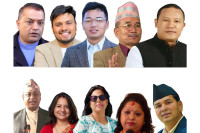
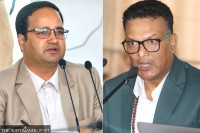
Its members include Mohanlal Acharya from the Rastriya Swatantra Party, Bhishma Raj Adhikari from the CPN-UML, Dev Prasad Gurung from the Nepali Communist Party, Dhruva Raj Rai from the Shram Sanskriti Party and Gyan Bahadur Shahi from the Rastriya Prajatantra Party, alongside representatives from the Nepali Congress.
Pushkar Sapkota, law secretary representing the Office of the Prime Minister and Council of Ministers, and Indira Dahal, secretary at the Law Commission, are also members of the panel.
Meanwhile, the Congress has formed a separate constitutional reform taskforce led by Pushpa Bhusal. Other parties have also started internal discussions on possible constitutional amendments.
Following two rounds of consultations with the government taskforce, the Congress and the Nepali Communist Party are reportedly preparing written proposals on constitutional reform.
The UML, however, has yet to form an internal committee to study amendment proposals.
Constitutional amendment has remained a recurring issue in Nepal’s political discourse since the constitution came into force in 2015.
When the NC-UML coalition government was formed in June 2024, the two parties had similarly agreed to pursue constitutional amendments, particularly electoral reforms aimed at raising the electoral threshold and reducing the number of smaller parties in Parliament for the sake of political stability.




 21.66°C Kathmandu