They went to build the city of the future in Saudi Arabia. They’re returning home with nothing
The collapse of Neom’s ambitions is costing Nepali labourers more than jobs — it is upending lives built around remittances that may not return. A handout photo by Saudi Arabia's Neom in 2022 shows the design plan for one of its cities. Neom
Jayaram Rai went to Saudi Arabia to build the city of the future. He came back carrying his own uncertain one.
For sixteen months, the 37-year-old from Khotang district worked scaffolding on Trojena, the ski village being carved into the mountains of northwest Saudi Arabia as part of the $500 billion Neom megaproject — Crown Prince Mohammed bin Salman’s audacious bid to transform a petrostate into a global destination for tourism, technology, and green energy. On March 27, construction halted. On April 29, eight months before his contract was due to expire, Rai packed his bags and flew home.
“We went to build the city of the future,” he said. “We came back with our own futures in the dark.”
He is far from alone. Roughly 80,000 Nepali workers, an estimate from senior employees at Neom contractor companies, are believed to have been employed across the megaproject’s various sites, making Nepal one of the largest sources of labour for what was once the most ambitious construction undertaking in human history. As contracts are terminated and camps empty out, thousands are returning home each month, and the prospect of all of them leaving represents a monthly remittance loss of at least Rs 2.36 billion, according to estimates based on average worker earnings.
The reasons for Neom’s retrenchment are multiple and mutually reinforcing. Oil prices have remained below the roughly $80-per-barrel level that economists say Saudi Arabia needs to balance its budget, squeezing the Public Investment Fund that finances Neom. Internal audits leaked to Western media have placed the true eventual cost of The Line — the 170-kilometre mirrored linear city at Neom’s core — at as much as $8.8 trillion, nearly nine times Saudi Arabia’s annual GDP, a figure that bore no relationship to original projections. The Iran-Israel conflict further disrupted Gulf shipping and oil exports.
On top of this, Saudi Arabia’s own priorities have shifted: the kingdom is now preparing to host the 2030 World Expo in Riyadh and the 2034 FIFA World Cup, competitions awarded after Neom was launched, which now command attention and funds. On September 16, 2025, the PIF formally suspended construction on The Line. In January 2026, the Asian Winter Games scheduled at Trojena for 2029 were postponed indefinitely. MBS himself, according to the Financial Times, has privately accepted that what eventually gets built will be far smaller than what was announced. The Line’s original target of housing at least one million residents by 2030 has since been quietly revised to 300,000 — and independent analysts have projected the full 170-kilometre vision could slip to 2045, 2080, or perhaps never.
The human toll of that retreat extends well beyond the South Asian labourers who built Neom’s foundations. At its peak, the project employed approximately 5,000 full-time salaried staff from 100 countries, including European and American architects, engineers, and urban planners, according to former CEO Nadhmi Al-Nasr. CNBC reported that the number of active construction workers had been cut by roughly 35 percent by April 2025, months before the formal suspension. Semafor reported that Neom was planning to lay off more than 1,000 full-time employees — about 20 percent of its professional staff — and relocate another 1,000 or more from the remote construction site to Riyadh, a move that would strip them of on-site housing and meals and amount to a significant pay cut. Only 2.4 kilometres of The Line’s 170-kilometre planned span — roughly 1.4 percent of the vision — has any foundational work completed.
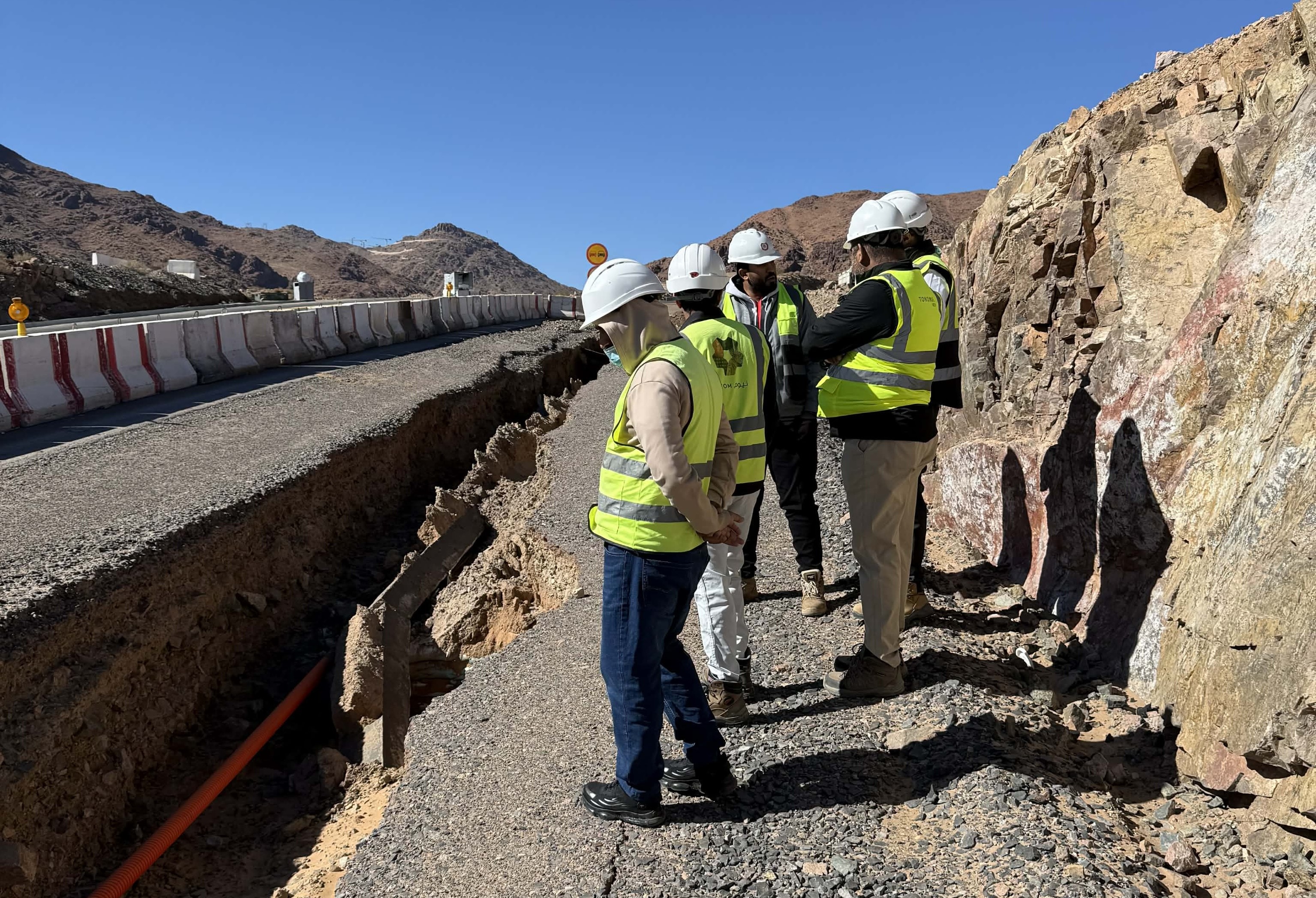
Roughly 80,000 Nepali workers are believed to have been employed across Neom's various sites. Courtesy of Ganesh Thapa
For the scaffolders, welders, and site workers from Nepal, Bangladesh, India, Pakistan, and the Philippines who made up the bulk of the site’s labour force, the shutdown has been abrupt and disorienting.
Three thousand Nepalis worked on the Trojena ski village alone, according to Rai. The contract was held by Eversendai Corporation, which won a structural steelwork agreement in March 2024 in partnership with Al-Bawani. Eversendai confirmed in a statement that it received a termination notice effective March 26, 2026, attributing it to “the evolving geopolitical situation in the Middle East.” By its own account, it had fulfilled all contractual obligations until that point. Around 2,500 Nepalis have already left the site, Rai said. A small number have been transferred to other projects.
The earnings loss for migrant workers is tangible. Rai’s monthly take-home was around Rs 60,000. Getting a comparable posting would likely cost Rs 200,000 to 300,000 in recruitment fees. “There's no guarantee of a good company or steady pay,” he said.
At The Line itself — the twin mirrored structures, 500 metres tall and 200 metres wide, that were meant to run from the Red Sea into the Saudi interior — the collapse of ambition is equally visible. Three worker camps, each holding up to 10,000 people, have been emptied. Umesh Tiwari, a foreman from Butwal who worked there for three years, described watching thousands of workers leave in waves. “All of them worked only on the Line project,” he said. A separate $1-billion tunnel contract, awarded to a consortium including South Korea’s Hyundai Engineering, Samsung C&T, and Greek firm Archirodon, was formally cancelled by Neom in March.
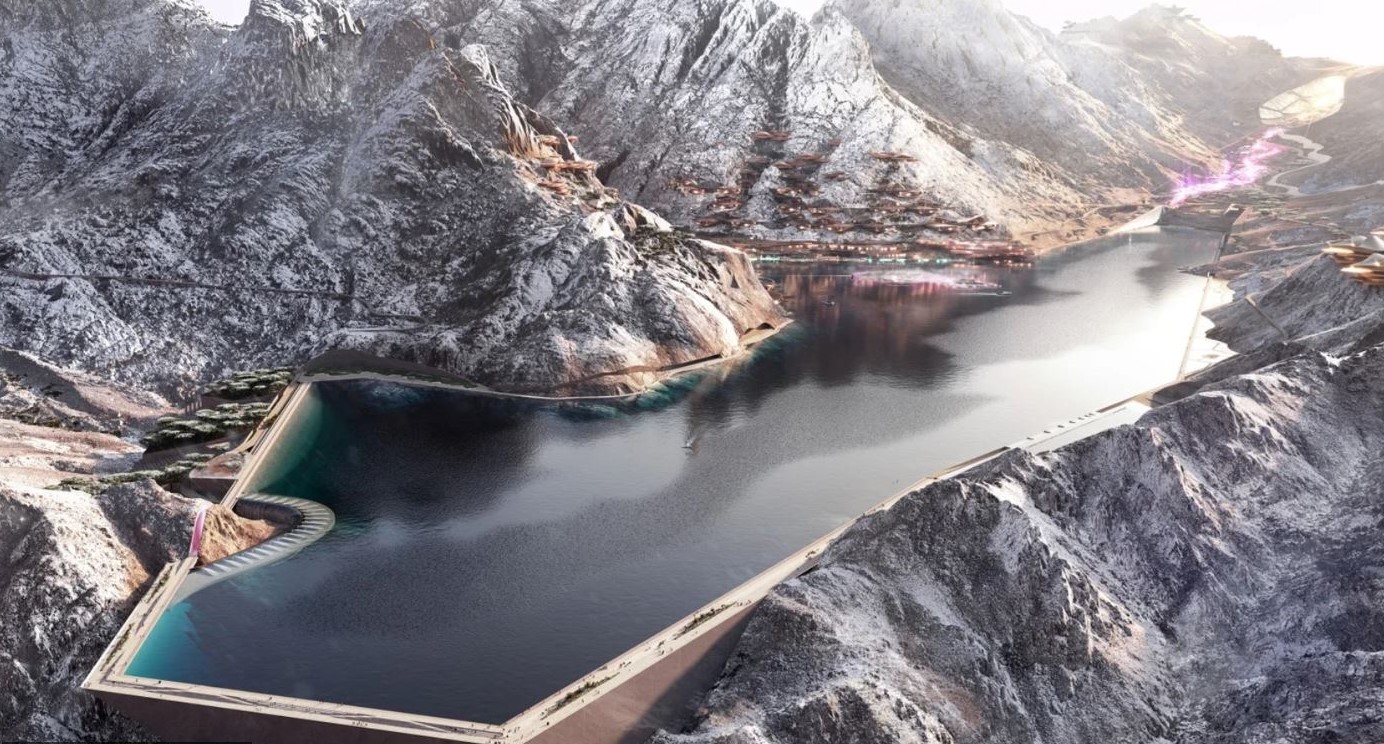
Nearby, three dams on Trojena meant to feed a 2.8-kilometre lake — part of a $4.7 billion infrastructure package awarded to Italian firm Webuild in January 2024 — were halted on March 29. The work was roughly 30 percent complete.
A handout photo by Neom shows a view of the design plan for Trojena. Neom
Among those stranded in the halt is Ganesh Thapa, a site foreman who has been without steady work for seven months. “Hospitals, colleges, helipads, roads — it was all being built,” he said. “Then one day the notice came saying no more work. We were devastated.” Thapa returned to Nepal for four months and then went back to Saudi Arabia again, still without a new posting, caught between staying and returning home for good.
The conditions workers described while employed were, by regional standards, remarkably good, a point that makes the departure more bitter. Ganesh Karki from Nawalparasi, who has since returned to Nepal, recalled four-person rooms, regular laundry service, jarred drinking water, and food delivered to worksites. “In other Saudi projects I’d worked on, it was like housing animals,” he said. “In Neom, it was actually pleasant.” Rajaram Mishra from Dhanusha said his base pay of 800 riyals (about Rs 32,500) grew to 1,400 with overtime, arriving by the 10th of every month, without fail. “I never had to spend on food. All of it came home,” he said. “Leaving a job like that hurts.”
The Nepali consulate in Jeddah, which covers the Tabuk region where Neom is located, acknowledged it has been receiving information about workforce reductions for five months, but said it has no precise count of departures. Consul Paras Pandit noted that the absence of wage complaints or stranded-worker cases suggests the exits have been relatively orderly — contractors appear to be honouring contracts, paying severance, and covering repatriation costs. Webuild confirmed in its March 25 statement that Neom would bear all costs from the termination date, including site clearance and demobilisation of workers and equipment. Bikash Gurung, who hails from Lamjung, received two months’ extra salary and a gratuity payment on departure.
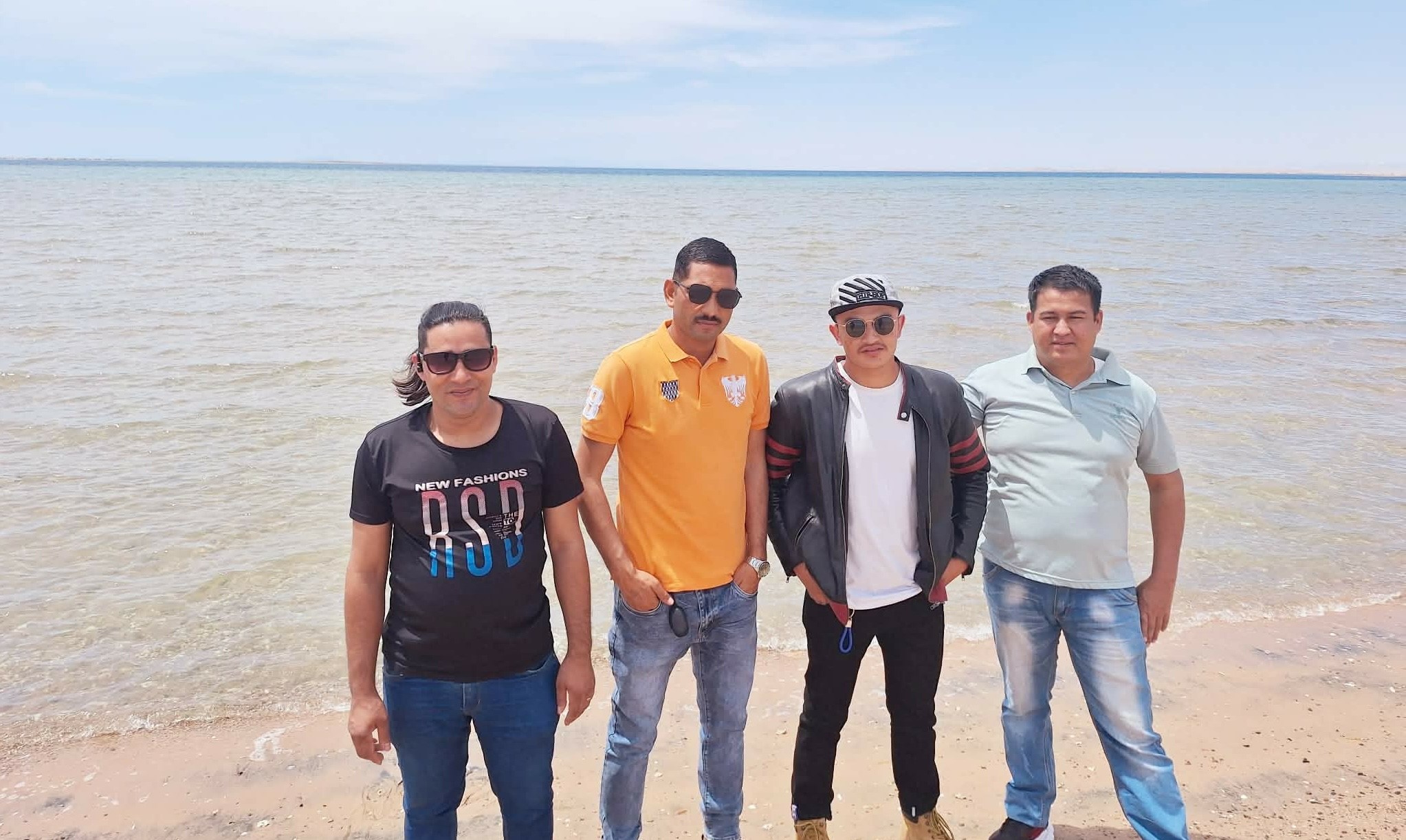
Ganesh Thapa, second from left, worked at Neom, with his friends Khem Raj Khadka (left), Salyan Karki (second from right) and Ganesh Karki. Courtesy of Ganesh Thapa
But orderly or not, the disruption lands heavily in communities that built financial lives around Neom wages. The president of the Non-Resident Nepali Association in Tabuk, Buddhi Prasad Bastola, said that the commercial hub near Neom sites, where Nepali workers spent their spare time, has visibly hollowed out. “People had taken loans to build houses. They had children in good schools. They are asking what happens now,” he said. “These days, only people buying luggage bags and chocolates come to the market.”
Nepal’s former ambassador to Saudi Arabia, Udaya Raj Pandey, said the timing was particularly difficult. Gulf employment opportunities had already contracted following the Iran-US tensions, he noted, and the loss of a project of Neom’s scale compounds the pressure. “When a project like this slows or stops, thousands of workers lose income, and we are severely affected,” he said.
Saudi officials have offered a carefully worded rebuttal that strains against the weight of evidence on the ground. Yasir Al-Rumayyan, governor of the PIF, told the Arabic broadcaster Al-Arabiya in April that “no projects within Neom have been cancelled,” drawing a distinction between cancellation and what he called delay or scope revision. He identified Oxagon, the industrial port on the Red Sea, as the priority, and said completing The Line by 2030 was not a requirement.
The distinction is difficult to sustain. Workers have left by the thousands. Three major contracts have been formally terminated. The PIF has written down $8 billion. An internal audit put the eventual cost of The Line at $8.8 trillion. The crown prince himself has privately conceded the project will be “far smaller” than announced. What Al-Rumayyan describes as a “scope revision” looks, from the emptied camps of Tabuk, like the managed unwinding of the most expensive architectural fantasy ever commissioned.
For Jayaram Rai, abstract reckoning is a secondary concern. He has a home loan with a monthly instalment of Rs 35,000, two children in school, and a recruitment market that, as he describes it, has no good postings coming in. “I still need a few more years abroad,” he said. “But the manpower companies say no good demand has come in.”
For Rai, and thousands of others, the future city left them before they could leave it.
Hom Karki is a reporter with two decades experience covering migrant workers issues and the Nepali diaspora. He was previously based in the Gulf for Kantipur Daily.




 24.18°C Kathmandu