New rules tilt balance towards lower house in constitutional amendments
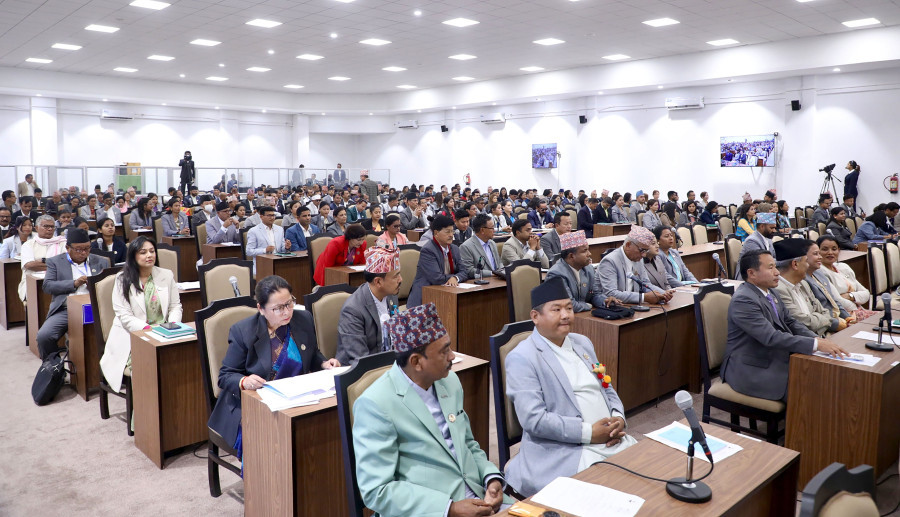
Amendments can now be passed on the basis of a combined two-thirds majority of both houses instead of separate two-thirds majority in each. House of Representatives meeting. File Photo
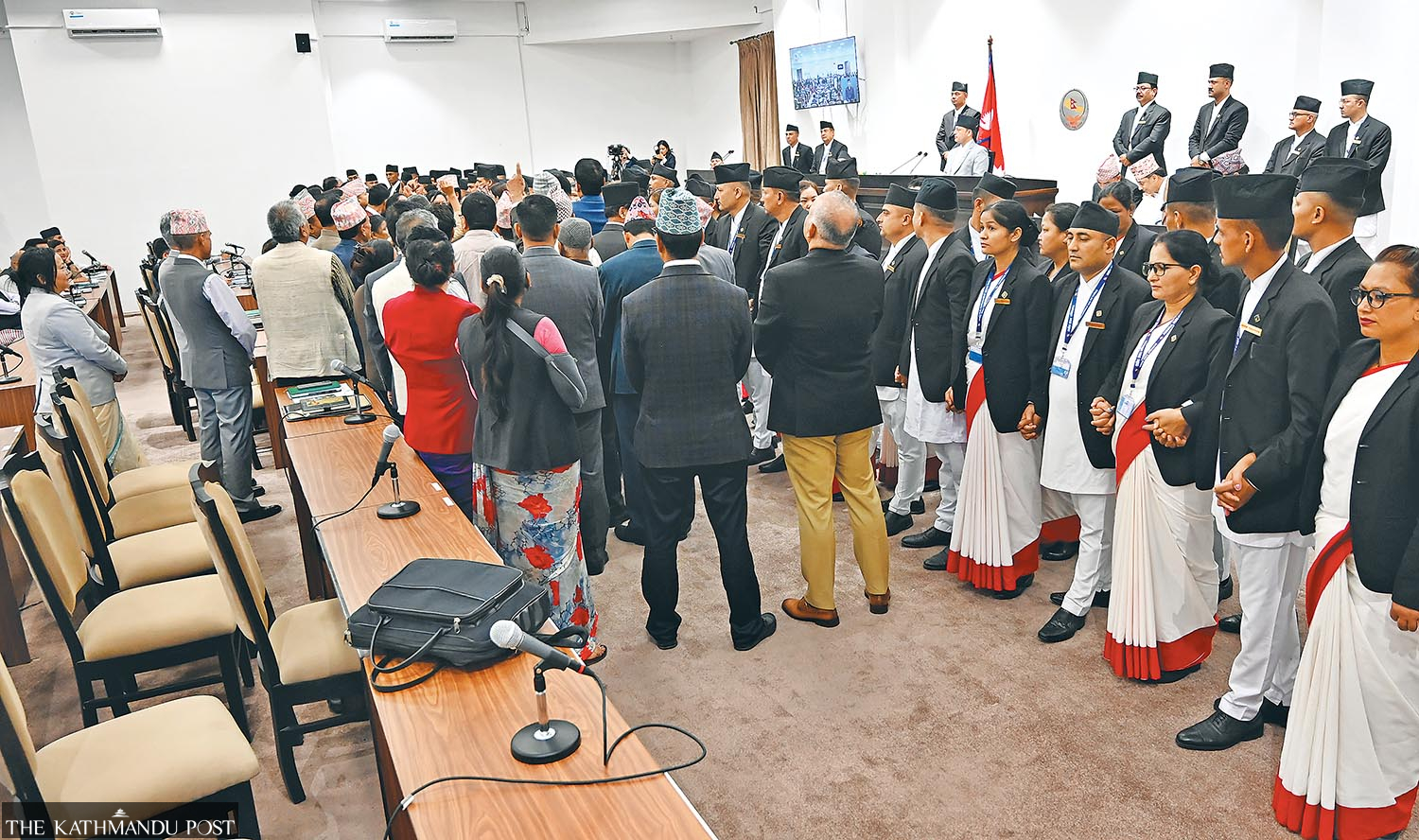
The House of Representatives on May 31 passed its new rules of procedure, the House of Representatives Rules, despite fierce opposition from rival parties. As opposition lawmakers scuffled with ruling party members and parliamentary marshals in the well of the House, Speaker DP Aryal, surrounded by marshals, put the rules to a vote.
The new House of Representatives Rules, 2026, contain provisions that expand the Speaker’s authority in the constitutional amendment process and declare the rules a special federal law applicable to the House, its committees and members, notwithstanding prevailing laws.
One of the most contentious provisions relates to constitutional amendments. Rule 140(11) states: “Upon receipt of a message regarding a constitution amendment bill passed by the House of Representatives and forwarded to the National Assembly, if the total votes cast in favour of the motion amount to at least a two-thirds majority of the total existing membership of both Houses combined at that time, the Speaker shall certify the constitution amendment bill and forward it to the President for authentication.”
Under existing practice, a constitutional amendment bill must secure a two-thirds majority in each house of the Federal Parliament. In the 275-member House of Representatives, this requires at least 184 votes. In the 59-member National Assembly, at least 40 members must vote in favour.
Article 274(8) of the Constitution states: “A bill which does not require the consent of the Provincial Assembly or which has been approved by a majority of Provincial Assembly pursuant to clause (5) must be passed by a majority of at least two-thirds of the total number of the then members of both Houses of the Federal Parliament.”
The new rule allows the Speaker to determine whether the combined votes of both houses meet the required threshold of two-thirds of the Federal Parliament’s total membership. If the total reaches 223 votes out of 334 members, the Speaker may certify the bill and forward it to the President for authentication, even if the National Assembly has not separately approved it by a two-thirds majority. No such provision existed in the previous rules.
Constitutional expert and senior advocate Chandra Kanta Gyawali said the provision contradicts established constitutional norms.
“A constitution amendment bill must be passed by a two-thirds majority in separate sittings of both houses. A two-thirds majority in just one house is insufficient. If the National Assembly does not pass it by a two-thirds majority, it cannot be amended by coming downstairs and combining the numbers to claim a two-thirds majority. A constitution amendment bill is not like amending an ordinary law,” Gyawali said.
“Even in non-parliamentary systems of governance, there are two houses. Wherever there are two houses, bills are passed by a two-thirds majority in each house; this is a universal constitutional principle. It is also the core value and norm of the Constitution. A constitution cannot be amended by going outside these values and norms.”
The National Assembly Rules contain a separate requirement for constitutional amendments to be passed by a two-thirds majority of that House. Rule 129(9) states: “If the proposal that the bill to amend the Constitution be passed is approved by a majority of at least two-thirds of the total existing membership of the House, the bill shall be deemed to have been passed.”
Nepal’s Constitution has been amended twice, with both amendments receiving separate two-thirds approval in the House of Representatives and the National Assembly.
Advocate Apurba Khatiwada argued that the House rules cannot curtail the constitutional authority of the National Assembly.
“In a bicameral parliamentary system, one chamber cannot use its own rules to diminish the powers of the other,” Khatiwada said. “How can the House of Representatives decide that the National Assembly does not need a two-thirds majority to approve a constitutional amendment? That goes against both the letter and spirit of the Constitution. One House cannot encroach on the authority of another.”
He said rules adopted by the House of Representatives cannot override provisions of the Constitution or existing laws.
Gyawali said that if the Speaker forwards a constitutional amendment bill that has not secured a two-thirds majority in the National Assembly, the President could refuse authentication.
“In the capacity of the guardian of the Constitution, the President is not required to approve a constitution amendment bill that arrives for authentication without securing a two-thirds majority in one house, as it would constitute an outright, prima facie violation of the Constitution itself,” he said.
The rules also introduce a provision declaring them a special federal law. Rule 259 states: “Notwithstanding anything contained in the prevailing laws, these rules shall apply as a special law in the capacity of a federal law with respect to the House, its committees, and its members. These rules shall constitute a privilege of the members of the House of Representatives.”
The rules provide no explanation for the inclusion of the provision or its intended legal effect.
Another notable change concerns impeachment motions against the Chief Justice, Supreme Court justices, members of the Judicial Council and officials of constitutional bodies. Rule 169(11) allows an impeachment motion that remains unresolved when the House’s term expires to be carried over to the next House of Representatives.
Opposition lawmakers protest at the well of the lower house after the ruling RSP pushed through amendments to the House of Representatives rules on Sunday to allow constitutional amendments to pass on the basis of a combined two-thirds majority of both houses instead of separate two-thirds approval in each chamber. Experts say House rules should not curtail the constitutional authority of the National Assembly. Angad Dhakal/TKP
Previously, such motions lapsed into the parliamentary record after the House’s dissolution. Under the new rule, “An impeachment motion that could not be concluded even through an expedited process, or which remains on the record, shall be maintained as a record for the new House of Representatives. The newly elected House of Representatives must accept such a record within five months of the formation of the House and make the necessary decision within the subsequent five months.”
The rules also define unparliamentary language for the first time within the definitions section. They state: “Unparliamentary language shall be understood to mean impolite, obscene, derogatory, or objectionable words, or language contrary to public decency or morality, as well as words that demean, adversely affect, discriminate against, lower the dignity of, make unsubstantiated allegations against, or reflect geographical discrimination towards any individual, caste, religion, language, or gender.”
The size of the Business Advisory Committee has been reduced from 21 members to 15, reflecting the smaller number of parties represented in the current House compared to the parliament elected in 2022.
The rules also require parliamentary documents and notices to be made available through the Secretariat’s official app in addition to pigeonholes and official email. Rule 18 states: “The Secretary shall also arrange to make the documents and notifications to be provided to members available in the pigeonhole corresponding to the member, the member's official email, or the Secretariat's official application. Documents and notifications provided in this manner shall be deemed to have been received by the member concerned.”
Procedural timelines for introducing bills have also been revised. The waiting period for a motion seeking leave to introduce a bill has been extended from seven days to nine days, while the period for government bills has increased from five days to seven.
Rule 105 extends the notice period for opposing a motion seeking leave to introduce a bill from one day to two days.
The rules also relax the requirement for ministers to attend committee meetings. While ministers must still be present during committee deliberations on bills, attendance for other agenda items will be required only when necessary.
Rule 178(4) states: “The presence of the minister shall be mandatory during discussions on a bill within the committee. For discussions on other agenda items, the minister shall mandatorily attend as required.”
The previous rules required ministers to attend discussions on all committee agenda items.
The new rules took effect immediately upon their passage. They were drafted by a 15-member committee chaired by Ganesh Parajuli, deputy leader of the RSP parliamentary party.




 26.19°C Kathmandu