Stakeholders welcome PM’s outreach, but experts question absence of line ministers
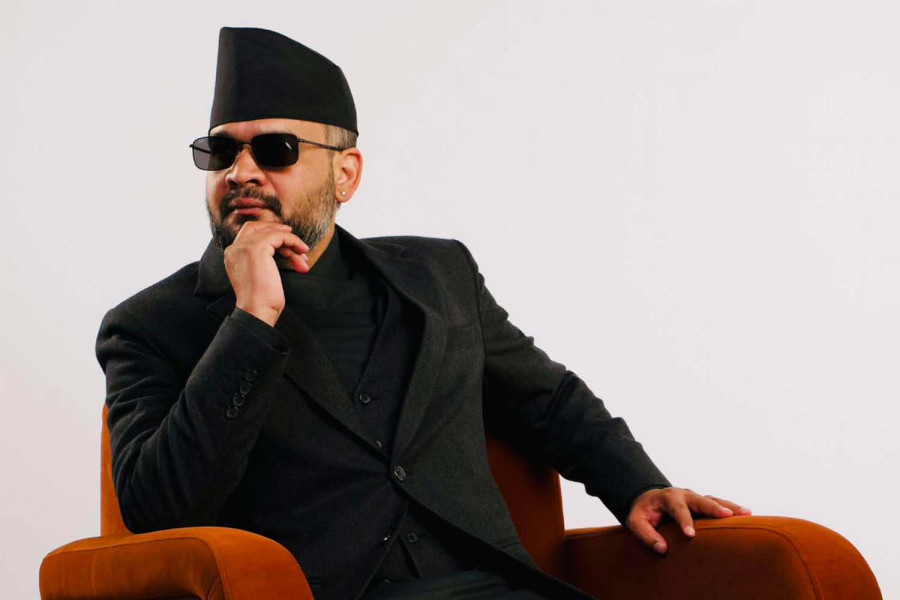
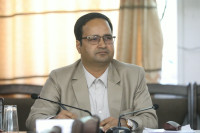
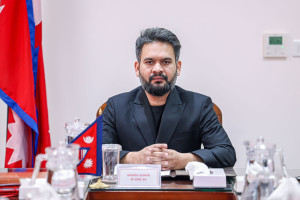
Business leaders say the meetings have renewed confidence, but observers argue implementation ultimately depends on ministries that were largely missing from discussions. Balendra Shah Photo: Courtesy of Balendra Shah
After 100 days in office Prime Minister Balendra Shah has held marathon consultations with business leaders, professionals and other stakeholders in an apparent bid to restore confidence in an administration struggling to convince the private sector that it can deliver economic reforms.
The meetings have been widely welcomed by attendants, who say the prime minister has spent hours listening to their concerns and promising solutions. Yet they have also prompted questions over why responsible ministers have been absent from most of the interactions.
Finance Minister Swarnim Wagle did not attend meetings with representatives of the private sector, capital market or insurance industry. Minister for Industry, Commerce and Supplies Gauri Kumari Yadav was also absent from discussions with industrialists and manufacturers. Energy, Water Resources and Irrigation Minister Biraj Bhakta Shrestha did not participate in talks with independent power producers, while Infrastructure Development Minister Sunil Lamsal was absent from discussions with construction contractors.
Only a handful of meetings included the relevant ministers. Education Minister Sasmit Pokharel accompanied Shah during discussions with newly appointed vice-chancellors of various universities on July 14, while Culture, Tourism and Civil Aviation Minister Khadak Raj Paudel attended a meeting with Hotel Association Nepal representatives a day later.
The present government was formed on March 27 under the leadership of the Rastriya Swatantra Party senior leader Shah. The Shah government completed its 100 days on July 4. Although the administration has claimed it laid the foundation for good governance and initiated several major reforms during the period, economic indicators have remained weak and business confidence has continued to decline. Against that backdrop, the prime minister himself has taken the lead in reaching out to different sectors.
Participants in several meetings, however, said they were surprised not to find the ministers directly responsible for implementing many of the commitments being discussed.
Prime Minister Shah has held more than 10 formal consultations with different groups. Despite the breadth of the agenda, ministers from related portfolios have featured quite rarely.
The absence has fuelled debate because any commitments made during the meetings ultimately require implementation through line ministries. Officials and governance experts say excluding ministers from such discussions risks creating uncertainty over responsibility and decision-making.
Former chief secretary Bimal Koirala downplayed concerns, arguing that the prime minister, as the head of government, has every authority to hear grievances directly and steer solutions.
"It does not carry a significant meaning if ministers are absent from these meetings," said Koirala. "Whether the knife falls on the apple or the apple falls on the knife, it is the apple that gets cut. The important thing is solving the problem. If the prime minister himself listens to concerns and seeks solutions, that is even better. After all, the ministers are members of his Cabinet."
Former minister Kulman Ghising, however, believes the discussions would have been more effective had ministers participated alongside the prime minister.
"It is a positive step, even if it has come rather late," said Ghising. "But involving cabinet members in these meetings would make follow-up action more effective and send the right message."
According to Ghising, rebuilding confidence among entrepreneurs and the wider public remains primarily the prime minister's responsibility, but ministers should be visibly involved in that process. "The prime minister has every right to decide how he wants to run the government because it is his cabinet. Still, working with ministers in confidence and respecting the chain of command would send a stronger message and help produce quicker results,” he asserted.
Umesh Mainali, former secretary and chairperson of the Public Service Commission, also stressed the importance of involving officials recognised by the constitution and law in discussions that concern public administration.
"When the prime minister consults the private sector or other stakeholders, those recognised by the constitution and the law should be involved," said Mainali, hinting at the involvement of the members of the prime minister’s secretariat. "The offices legally accountable are those of the prime minister, ministers, chief secretary and secretaries. People who have no legal authority should not dominate the governance process."
Mainali welcomed the prime minister's direct engagement with businesses but warned against weakening institutional responsibility by relying too heavily on advisers or unofficial channels.
"Ministers should be allowed to perform their responsibilities and secretaries should be encouraged to do their jobs. A secretary is the principal adviser to a minister, while the chief secretary advises the cabinet. These institutions should be taken into confidence. I feel that has been somewhat lacking, though I believe the prime minister can still make corrections,” said Mainali.
Mainali also argued that constitutional responsibility for the performance of individual ministries ultimately rests with the respective ministers. "One principle must be clearly understood," said Mainali. "Departmental ministers must be held fully accountable for the work of their ministries. The constitution states that ministers are individually responsible for their ministries and collectively responsible for cabinet decisions. Therefore, whether things go well or badly, the departmental minister must bear responsibility."
The debate has unfolded as the Prime Minister’s Office continues to defend its approach, insisting that ministerial participation depends on the nature of each meeting rather than a fixed practice.
PM Shah's press and research adviser Deepa Dahal said the participation of ministers depends on the nature of each discussion rather than a fixed protocol. Once the agenda is determined, the Prime Minister's Office decides whether the minister concerned or officials from the relevant ministry should attend.
She said representatives from the Ministry of Finance participated in discussions on the capital market, securities business, and insurance sector, while officials from the Ministry of Industry joined meetings with manufacturers.
"Officials from the Finance Ministry attended Monday's discussion, and representatives from the Industry Ministry participated during Tuesday’s meeting," Dahal said. "The prime minister also invites ministers whenever necessary. The finance minister, for instance, attended one of the earlier meetings. The prime minister personally wants to understand stakeholders' concerns in depth before seeking solutions. He often spends hours listening to them, while ministers remain occupied with their own responsibilities. That is why ministers are invited based on necessity."
Members of the prime minister's secretariat have, however, been present almost throughout the consultation series. According to Dahal, the practice is intended to ensure follow-up after the meetings. Secretariat officials responsible for different sectors can coordinate with stakeholders if problems arise while implementing the prime minister's directives.
"If stakeholders later complain that instructions issued by the prime minister have not been implemented, relevant members of the secretariat facilitate coordination with the ministries," she said.
Official records from the Prime Minister's Office show that chief adviser Kumar Byanjankar, political adviser Asim Shah, policy, administration and governance adviser Sudip Dhakal, information technology adviser Bibek Mishra, chief personal secretary Subash Sharma and personal secretary Nabin Bhandari attended meetings with construction contractors, independent power producers and hoteliers. The same team has also accompanied the prime minister during several other consultations.
Business leaders who attended the meetings acknowledged the value of Shah's direct engagement but admitted that the absence of line ministers was noticeable.
"Whatever commitments the prime minister makes ultimately have to be implemented by the relevant ministries, particularly the Ministry of Finance," one businessman who attended the meetings said. "So we did feel something was missing when ministers were absent. Still, hearing assurances directly from the prime minister has encouraged us."
Another participant said Shah's separate meetings with the presidents of the Federation of Nepalese Chambers of Commerce and Industry, the Nepal Chamber of Commerce, banking chief executives and other business leaders represented a significant departure from past practice. "The absence of ministers was meaningful because it broke with tradition," said the participant.
At the first meeting, Shah discussed industrial investment, the business climate and economic reforms with representatives of the private sector. The meeting came after businesses complained that the government's crackdown on entrepreneurs had damaged investor confidence and discouraged new investment.
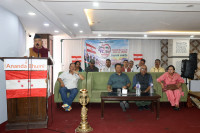
Prime Minister Shah met Anjan Shrestha, president of the Federation of Nepalese Chambers of Commerce and Industry; Rajesh Kumar Agrawal, immediate past president of the Confederation of Nepalese Industries; Kamlesh Kumar Agrawal, president of the Nepal Chamber of Commerce; and other business leaders. Participants later said they had expected both the finance and industry ministers to attend.
During the discussion, Shah pledged to remove policy and procedural barriers to create a more dynamic and investment-friendly economy. He also promised to boost private sector confidence, expand employment and address problems affecting production.
On July 9, Shah chaired a meeting of the Medical Education Commission, where Health and Food Safety Minister Nisha Mehta and Education Minister Pokharel attended in their official capacities.
Later the same day, Shah held talks with construction entrepreneurs. But Infrastructure Development Minister Sunil Lamsal was unable to attend because he was outside Kathmandu. During the meeting, Shah said timely completion of development projects required transparent, responsible and result-oriented cooperation among all stakeholders. Federation of Contractors' Associations of Nepal President Nicholas Pandey was among those present.
On July 14, Shah met newly appointed vice-chancellors of various universities alongside Education Minister Pokharel, urging them to strengthen academic standards, financial discipline, good governance and an improved educational environment. According to the Prime Minister's Office, the vice-chancellors also pledged to prevent partisan political activities, including student union interference, from disrupting university operations.
The same day, the PM met representatives of Hotel Association Nepal in the presence of Tourism Minister Khadak Raj Paudel. He assured hoteliers that the government's tourism promotion campaign had already begun and expressed confidence that their longstanding concerns would soon be addressed.
Subsequent meetings included discussions with the Federation of Women Entrepreneurs' Associations of Nepal, Nepal Rastra Bank Governor Biswo Nath Paudel, the Footwear Manufacturers' Association of Nepal, capital market stakeholders, the Nepal Ready-Made Garment Industry Association and, most recently, the Federation of Handicraft Associations of Nepal. During a meeting with garment manufacturers, Shah even telephoned Industry Minister Yadav after entrepreneurs complained that a proposal to set up a Textile and Clothing Development Council had stalled at the ministry, directing that the process move forward immediately.




 14.2°C Kathmandu